
Pine Side Table Drawers
Pine side table drawers provide utilitarian storage in domestic spaces, built from sturdy softwood and finished with paint or natural grain.
Pine Side Table Drawers
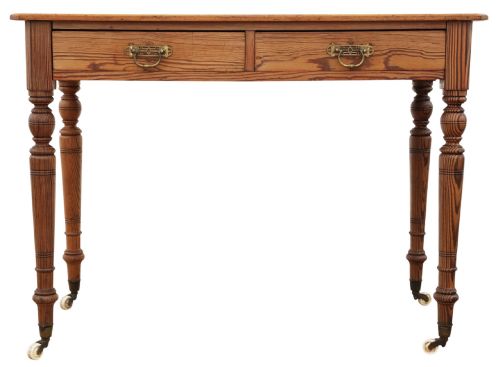
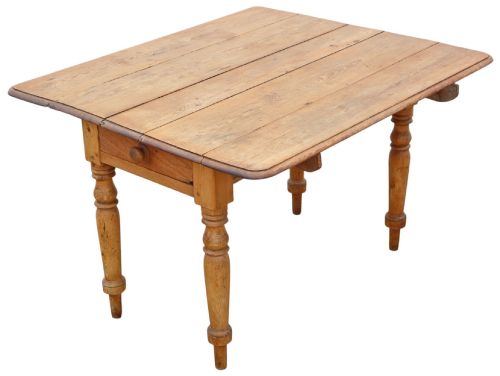
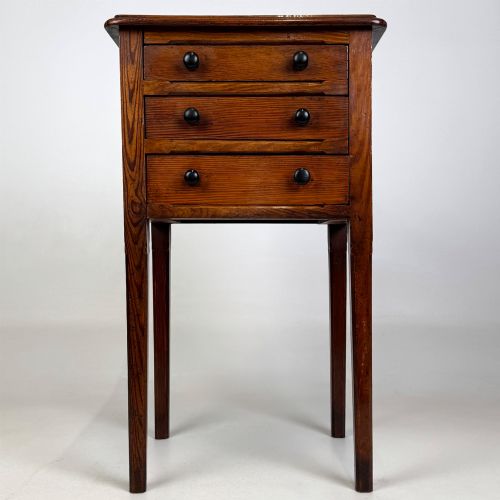
These pieces encompass functional utility furniture built primarily for domestic work, serving, and storage across centuries of rural and urban homes. The selection spans straightforward side tables, servers, and console tables equipped with integrated drawers for everyday storage.
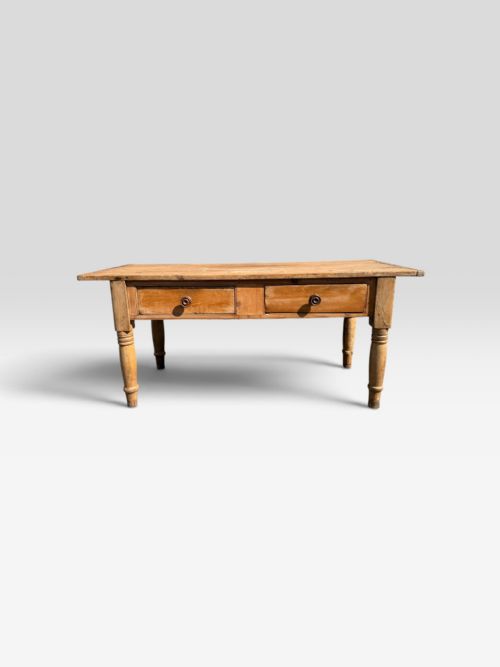
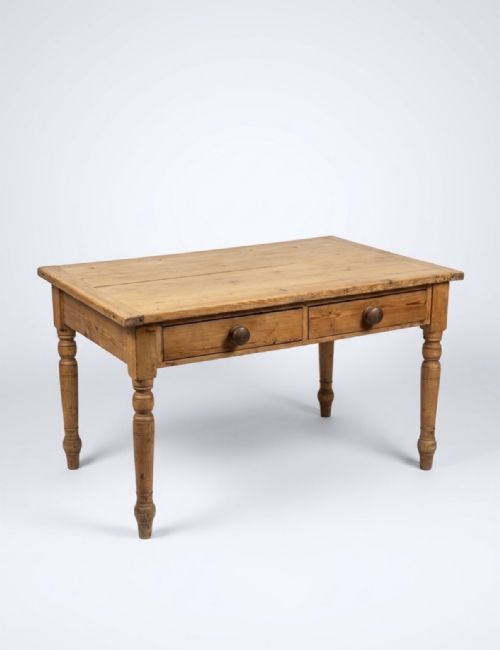
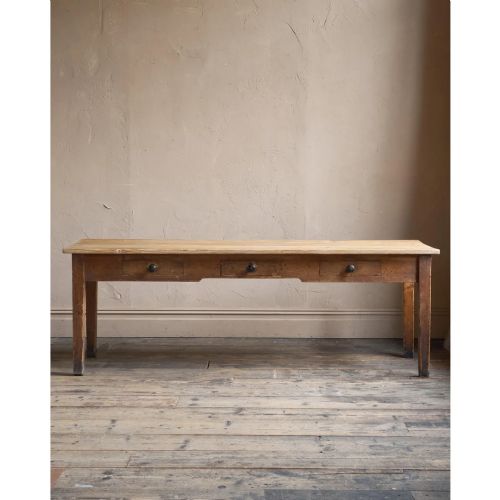
Most examples originate from the nineteenth century, including Victorian country pieces and rustic farmhouse forms. Buyers frequently encounter single or twin drawer configurations integrated into the front frieze of tables, washstands, and writing desks.
Materials and construction methods
Makers utilised solid pine and denser pitch pine for primary surfaces, framing, and drawer linings, often combining softwood bodies with sturdy metal or brass hardware. Structural elements frequently rely on straightforward joinery suited to practical utility furniture.
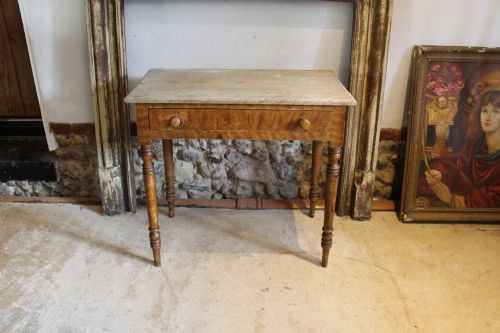
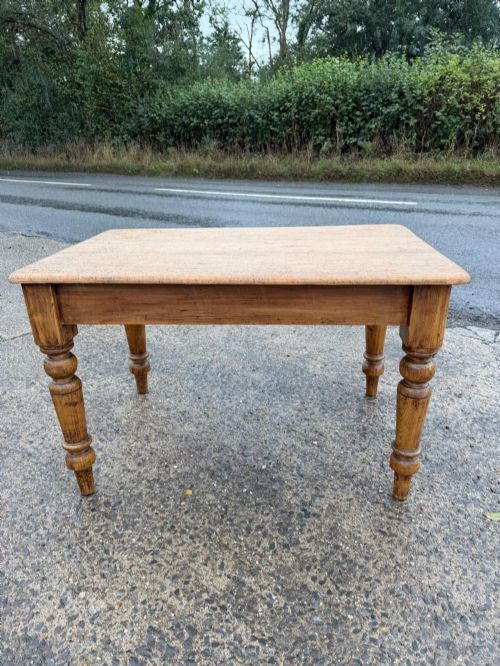
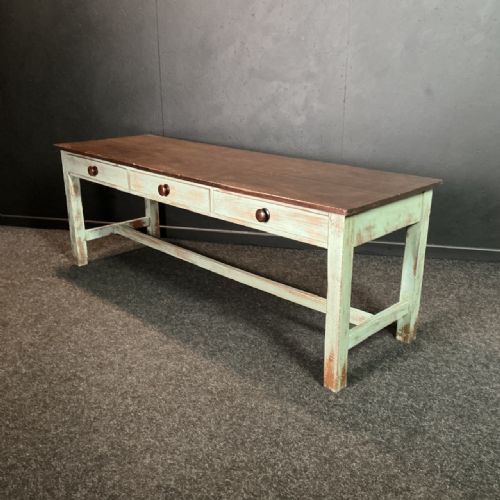
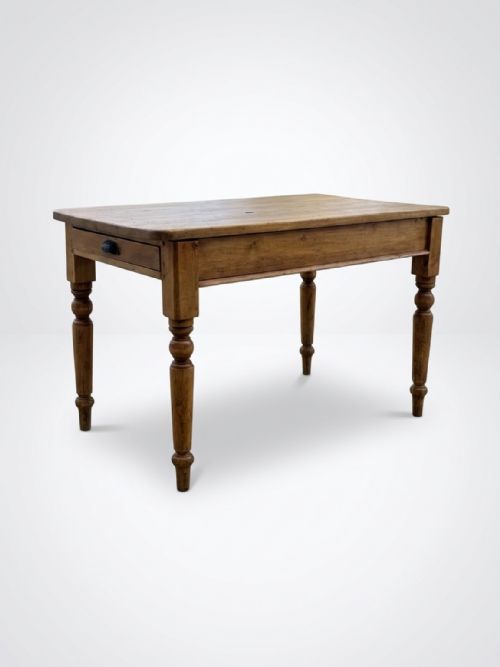
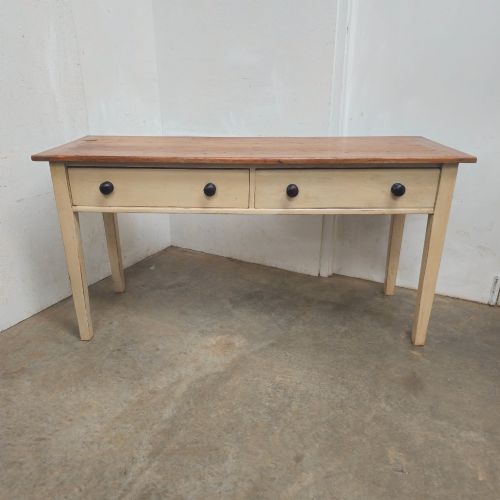
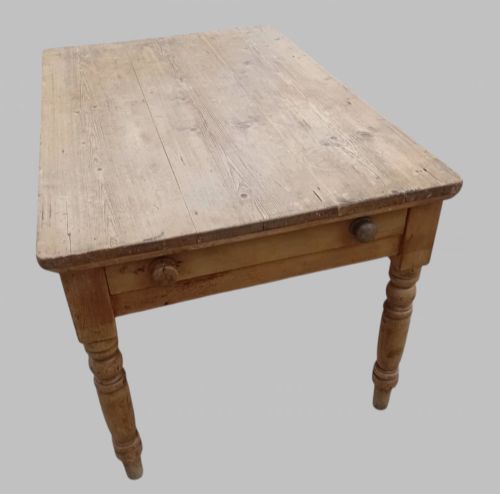
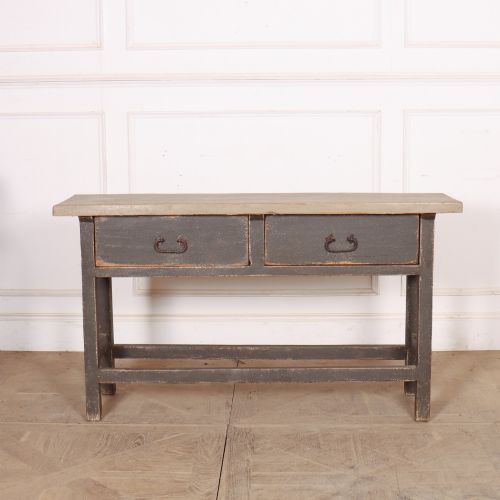
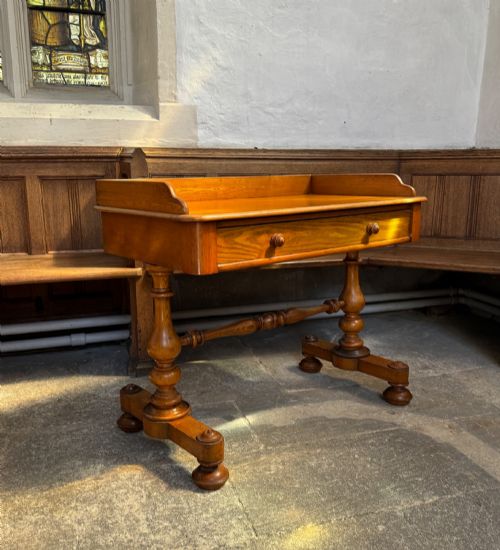
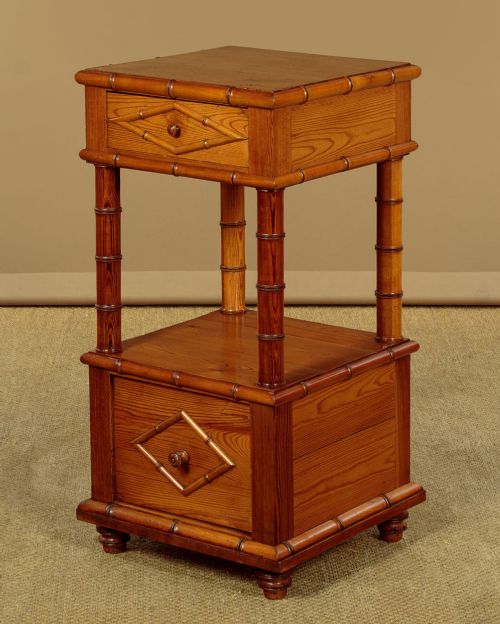
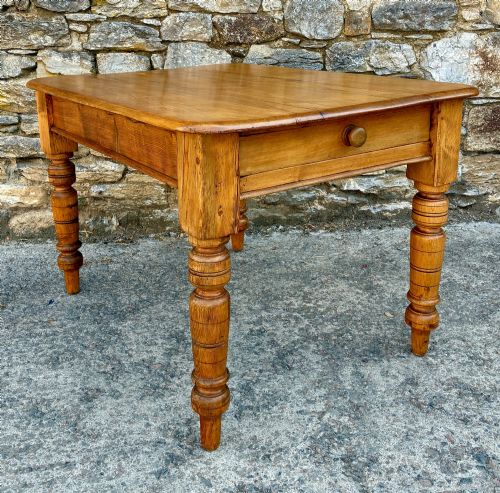
Surfaces display various finishes ranging from stripped natural timber to original scumble paint, dairy paint, and later decorative layers. Some pieces incorporate turned legs, gallery backs, or faux bamboo detailing to elevate the domestic appearance.
Materials recorded in the inventory include standard pine, pitch pine, painted wood, iron, and brass.
Assessing quality in construction and finish
Distinction across the range lies in the preservation of original surfaces, such as early paint finishes or scumble work, compared to later stripped or repainted states. The integrity of the timber, particularly dense pitch pine versus standard softwood, marks a difference in substance.
Construction details such as drawer linings, original brass or metal handles, and well-executed turned legs or gallery backs separate standard utilitarian items from finer examples. Proportion and utility remain central to the design, with superior pieces showing careful attention to structural joints.
The Pine Side Table Drawers Glossary
- Pitch pine
- A heavy, resinous softwood known for its durability and distinct grain pattern, frequently utilised in nineteenth-century utility furniture.
- Scumble paint
- A decorative glazing technique applied over a base coat to imitate the grain of more expensive hardwoods or to create mottled patterns on pine.
- Frieze
- The horizontal band situated directly beneath the tabletop, commonly housing one or more storage drawers in these tables.
- Gallery back
- A low raised upstand along the rear edge of a table or washstand designed to prevent items from sliding off the surface.
- Dairy table
- A functional surface historically utilised in food preparation and dairy work, typically constructed with scrubbed pine tops.
Pine Side Table Drawers: Frequently Asked Questions
What rooms suit pine side table drawers?
These tables adapt well to kitchens, hallways, and living spaces where surface area and enclosed storage are required. Their utilitarian origins allow them to function effectively as servers, writing desks, or bedside surfaces.
The compact proportions of side tables with drawers make them suitable for spaces needing practical storage without dominating the room.
How do I care for painted pine furniture?
Maintenance involves dusting with a dry cloth and avoiding excessive moisture, particularly on pieces with original or historic paint finishes. Direct sunlight and heat sources should be avoided to protect the timber and surface coatings.
Preserving original paint requires gentle handling rather than chemical cleaning or aggressive stripping.
Are these tables solid pine?
The majority of pieces are constructed from solid pine or dense pitch pine throughout their frames, tops, and drawer linings. Softwood construction was standard for domestic utility furniture of this period.
Secondary woods may occasionally appear in internal framing or drawer components, as seen in mixed-material furniture.
How can I tell Victorian pine from earlier periods?
Victorian pieces frequently display characteristic turned legs, scumble paint finishes, or standard pine construction typical of the nineteenth century. Earlier examples from the eighteenth century or Georgian period often exhibit different proportions, hardware, and surface wear.
Examining the drawer construction, fixings, and overall wear patterns helps establish the chronological context of each piece.