
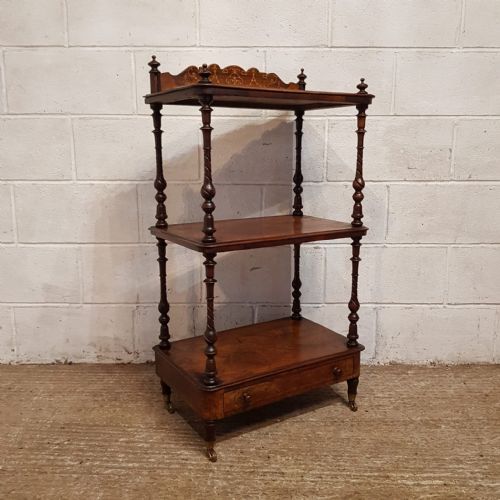


Tiered Marquetry Whatnot Stand
A tiered marquetry whatnot stand brings multiple display surfaces and intricate floral or geometric veneers into a room.
Tiered Marquetry Whatnot Stand
A tiered marquetry whatnot stand is a multi-shelved display piece primarily found from the Victorian and Edwardian periods, utilising walnut, burr walnut, and mahogany timbers.
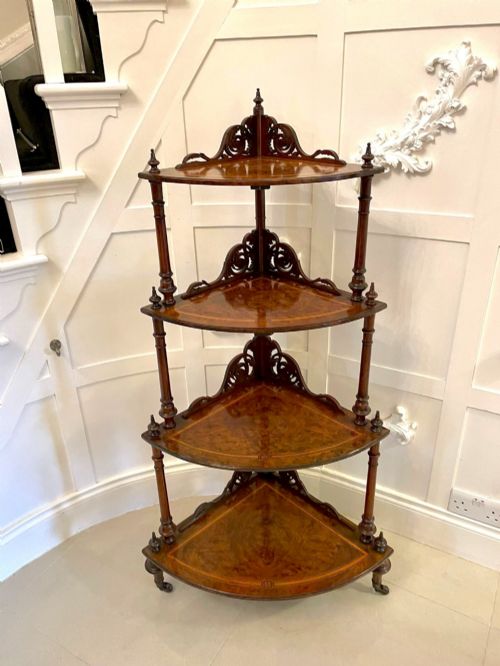
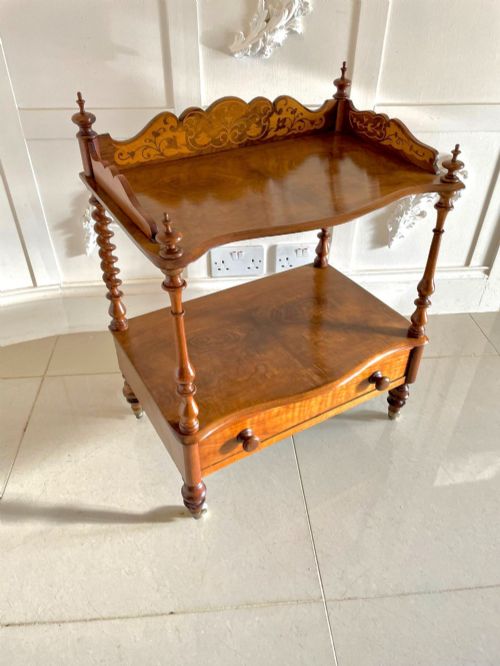
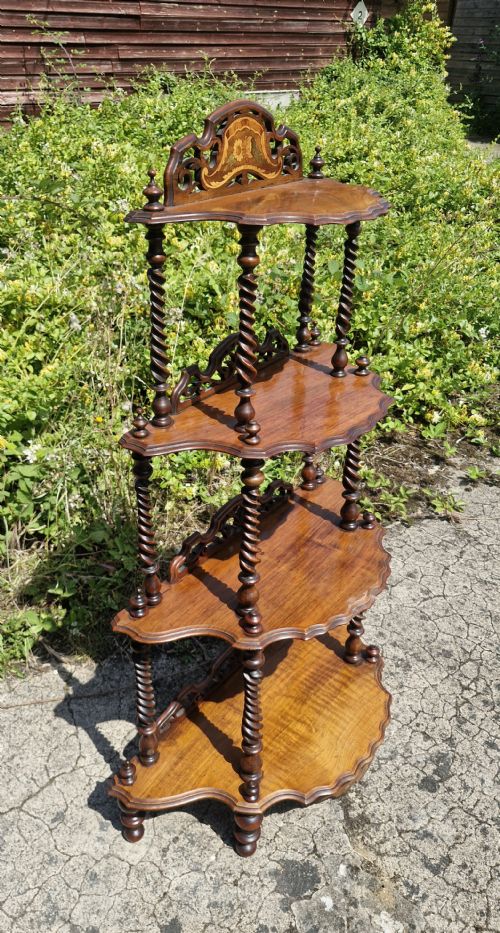
The pieces on this page appear in various configurations, including standard rectangular three-tier and four-tier models, oval display shelves, jewellery cabinet hybrids, and corner stands.
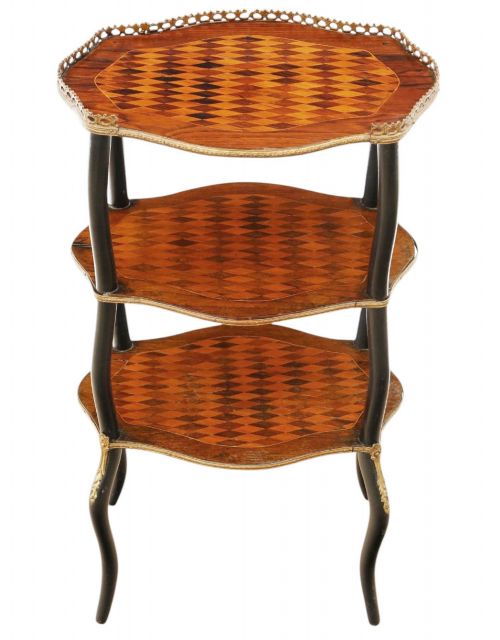
Makers of these stands drew on French Revival, Louis XV Style, and Belle Epoque influences, often incorporating brass or ormolu mounts alongside intricate wood veneers.
Materials and construction methods
Cabinet makers built these stands using walnut and burr walnut as foundational timbers, frequently pairing them with ebonised wood for structural contrast and framing.
Marquetry and parquetry techniques provided decorative surfaces, employing boxwood inlay and mixed timbers to create elaborate floral patterns and geometric motifs across the tiers.
Metal elements such as brass galleries and ormolu mounts were added to secure items on the shelves and elevate the visual profile of the furniture.
Listings feature walnut, burr walnut, and mahogany timbers combined with boxwood inlay, ebonised wood, and ormolu mounts across Victorian and Edwardian periods.
Distinctions in quality
Quality rests in the precision of the marquetry and parquetry work, where tighter joints and sharper contrast in the wood veneers separate finer examples from simpler production.
The choice of timber creates a distinct tier; highly figured burr walnut and carefully selected boxwood inlay demand greater skill than plain walnut or mahogany surfaces.
Structural complexity also defines the piece, with corner stands and multi-tiered etageres requiring more sophisticated joinery to support upright columns and multiple shelves safely.
The Tiered Marquetry Whatnot Stand Glossary
- Marquetry
- Decorative veneer work arranged in pictorial or floral patterns across a surface. Craftsmen cut thin slices of various woods to form detailed designs.
- Whatnot
- A piece of furniture consisting of multiple open shelves for displaying ornaments and small objects. It gained popularity during the nineteenth century.
- Etagere
- A set of open shelves used for displaying ornaments, similar in function to a whatnot. The term originates from French furniture design.
- Ormolu
- Gilded bronze mounts applied to furniture for decorative effect. It provides a metallic accent against polished wood surfaces.
- Parquetry
- Geometric mosaic woodwork used for floors or furniture surfaces. It utilises contrasting timber blocks to create repeating patterns.
Tiered Marquetry Whatnot Stand: Frequently Asked Questions
What is a whatnot stand used for?
These pieces were designed to hold decorative objects, books, and small curiosities across multiple open levels within a reception room or parlour.
Today, they serve a similar function as display furniture while adding nineteenth-century character to an interior.
How do I date a Victorian whatnot?
Dating relies on identifying timber choices, stylistic influences like French Revival or Louis XV Style, and construction methods recorded in pieces from the mid to late nineteenth century.
Later Edwardian examples often feature lighter framing and specific marquetry patterns characteristic of the turn of the twentieth century.
Where should I place a corner whatnot?
Corner stands fit directly into room angles, making efficient use of overlooked spaces while offering tiered surfaces for ornaments.
They pair well with existing wooden furniture and provide height variation in rooms with limited wall space.
What is the difference between an etagere and a whatnot?
Both terms describe multi-tiered shelving units, though etagere often implies a French design influence with ormolu mounts and lighter proportions.
Whatnot is a broader British term encompassing various open-shelved stands from the Victorian period onwards.