





Tiered French Console Table
A tiered french console table brings architectural elegance and useful surface space to a hallway or drawing room through multi-level French design.
Tiered French Console Table
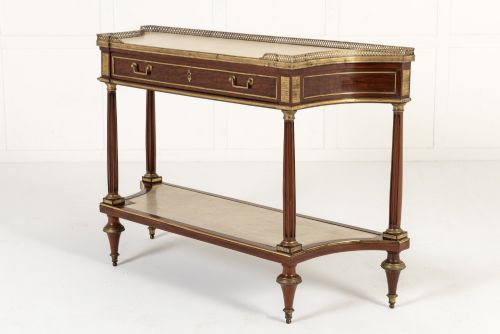
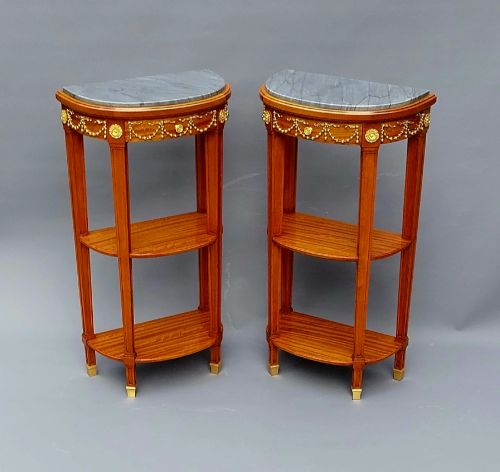
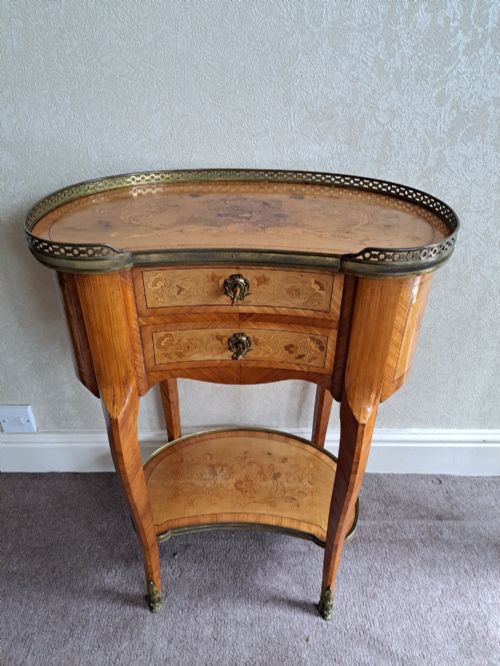
When you search for a tiered french console table, you enter a domain of side furniture rooted in French Provincial, Louis XVI, and Regency Revival traditions spanning the eighteenth, nineteenth, and early twentieth centuries. These forms serve as narrow display or work surfaces, often taking demilune, kidney, or rectangular shapes designed to sit against a wall.
The selections available here range from simple two-tier oak work tables and drapers tables to more ornate pairs featuring gilt bronze mounts and marble tops. You will encounter occasional tables, side tables, and display pieces originating from French workshops as well as British revivals.
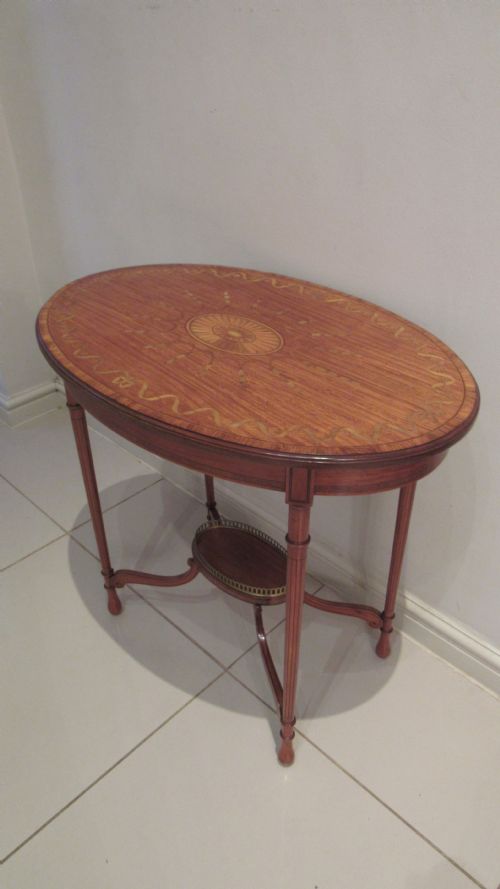
Makers and designers working in these styles utilise specific regional vernaculars, moving from rustic fruitwood and alder country pieces to formal satinwood and marquetry creations. Each piece offers distinct tier configurations intended for practical use or decorative display within domestic interiors.
Materials and construction
Timbers employed in these pieces include mahogany, oak, walnut, fruitwood, alder, satinwood, and rosewood, frequently enhanced by intricate marquetry work and decorative parquetry. These woods provide the structural integrity and varied grain patterns necessary for multi-tiered surfaces.
Mounts and decorative details utilise cast or chased ormolu and gilt bronze, often paired with inset marble slabs on the primary surfaces. Additional textures appear through the use of cane and hand-carved ornamentation across the frames and supports.
Tiered French Console Table Retail Price Guide 2026
Typical asking prices for tiered french console table among the pieces listed under this phrase on Sellingantiques today, from the lower quarter to the upper quarter. They describe what is for sale here now, not the wider market.
Listings feature 19th-century periods alongside materials including mahogany, marble, brass, ormolu, cane, satinwood, and rosewood across various French regional styles.
The markers of quality
Quality rests upon the selection of timber and the precision of the joinery connecting the tiers and uprights, where tighter tolerances distinguish finer workshop production from simpler provincial output. The crispness of hand carving and the weight of ormolu mounts further separate standard utility pieces from high-status decorative objects.
The integration of materials like matched marble tops and detailed marquetry patterns indicates a higher tier of craftsmanship. Superior pieces maintain structural rigidity across multiple levels without reliance on visible secondary bracing.
Donald Ross·Gillows
The Tiered French Console Table Glossary
- Demilune
- Half-moon shape in plan, typical of console tables designed to stand flat against a wall. This profile saves floor space while providing a prominent front curve.
- Ormolu
- Gilt bronze applied as decorative mounts, feet, and edging on furniture frames. The technique involves a mercury gilding process historically used on high-end French pieces.
- Marquetry
- Inlaid wood veneers arranged in pictorial or geometric patterns across table tops and aprons. It relies on contrasting wood colours and grains to create visual depth.
- Console table
- A table supported by wall brackets or console legs, historically built to stand against vertical surfaces. They frequently feature marble tops and decorative aprons.
Tiered French Console Table: Frequently Asked Questions
What is a tiered french console table used for?
These pieces function primarily as display surfaces or narrow side tables in hallways, living rooms, and drawing rooms. The multiple tiers provide additional levels for lamps, decorative objects, or books without occupying excessive floor space.
In historical contexts, certain variations served specialised functions as work tables, florists tables, or shop display surfaces. Their narrow profiles allow them to anchor wall spaces efficiently while offering varied storage or display elevations.
How do I identify a Louis XVI style table?
Louis XVI style tables typically display neoclassical restraint, featuring straight tapered legs, fluting, and geometric symmetry. Decoration often incorporates classical motifs such as acanthus leaves, bead and reel mouldings, and ormolu mounts.
Unlike the curved and asymmetric lines of earlier Rococo designs, these pieces emphasise architectural clarity and rectilinear balance. Gilt bronze details and inset marble tops are common attributes found within this stylistic group.
Where should I place a console table?
Console tables are traditionally positioned against flat walls in entrance halls, beneath mirrors, or behind sofas. Their shallow depth ensures they do not obstruct primary walking paths in domestic interiors.
Pairing a console with complementary lighting or wall art enhances its visual weight within a room. Multi-tiered variants also work effectively in dining spaces or libraries for supplementary display.
How do I care for marble top tables?
Marble surfaces require gentle cleaning with warm water and mild, non-acidic soap to preserve the polish and prevent staining. Avoid placing acidic liquids or citrus directly on the stone to prevent etching.
Using coasters and protective pads safeguards the porous surface from moisture and physical impact. Regular dusting with a soft, dry cloth maintains the natural lustre of the material.