




Three Tier Serving Trolley
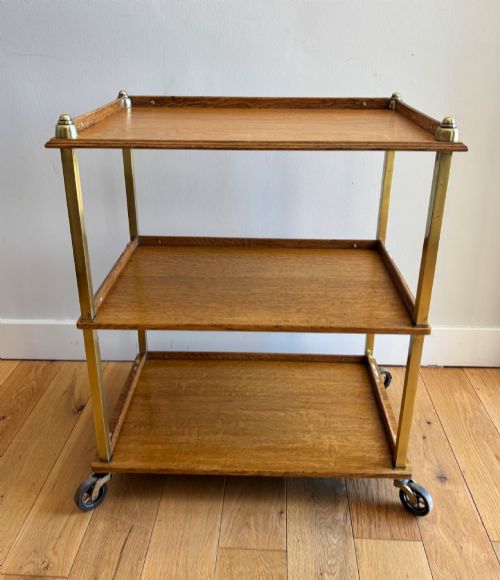
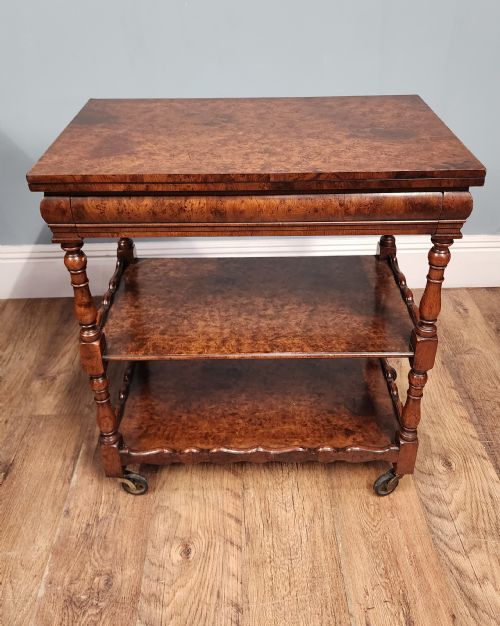
A three tier serving trolley offers tiered mobility for hospitality, moving easily between dining spaces in rich mahogany, walnut, oak, and brass.
Three Tier Serving Trolley
A three tier serving trolley provides multi-level surface space for food, drinks, and books, evolving from earlier forms like dumb waiters and buffets. These pieces span the nineteenth and twentieth centuries, including Victorian, William IV, Edwardian, and Art Deco eras.
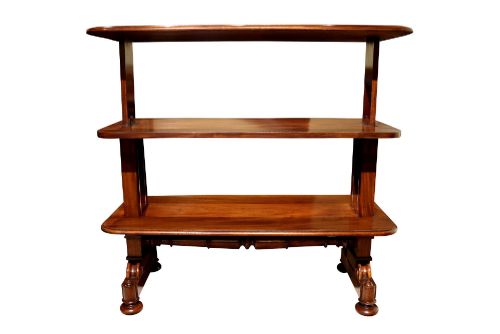
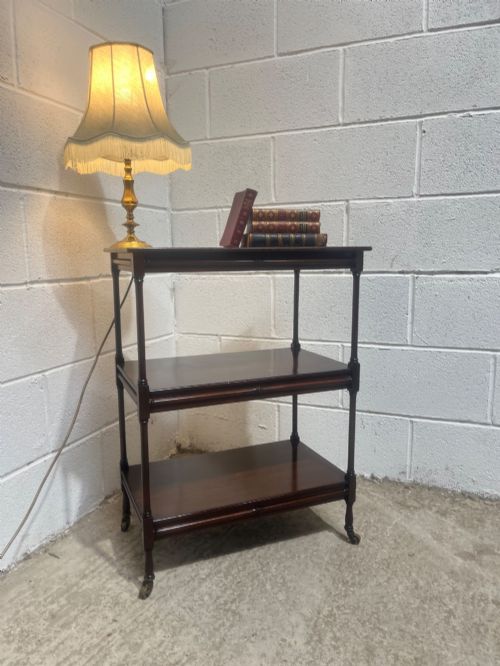
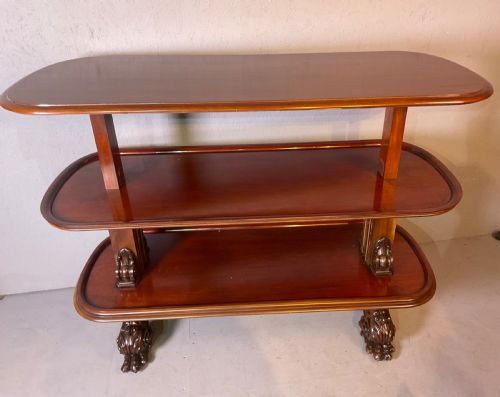
You are most likely to encounter Victorian and nineteenth-century examples in solid mahogany or walnut, often featuring three graduated tiers supported by turned columns or castors. These functional servers were designed to assist with domestic service in dining rooms and libraries.
The format ranges from formal mahogany serving tables and dumb waiters to circular walnut Art Deco bar carts and brass-framed glass etageres. Each variation reflects the prevailing social habits of its period, from grand Victorian dining to interwar cocktail culture.
How they were made
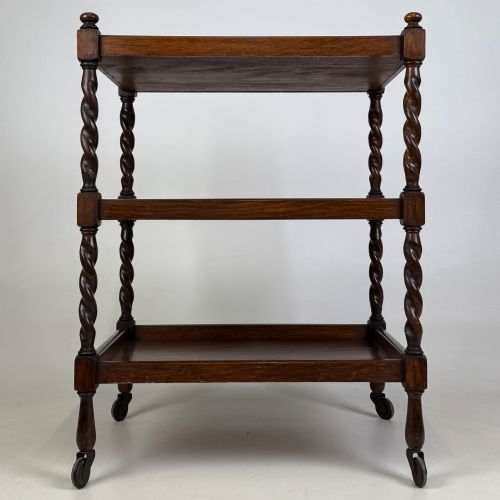
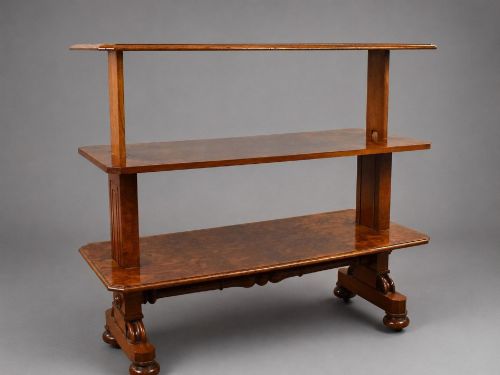
Cabinet makers utilised dense hardwoods such as mahogany, walnut, pollard oak, and burr walnut veneer, selecting timber for deep grain patterns. Structural elements often rely on turned pillars, barley twist supports, and carved details that uphold the multiple shelves.
Metal components play a structural and decorative role, with brass fittings, galleried edges, and original castors allowing these heavy pieces to move smoothly. Glass panels appear in twentieth-century iterations, paired with metal or wood frames to create lighter display tiers.
Some Victorian dumb waiters feature clever telescopic mechanisms designed so guests could adjust their own dessert tiers mid-meal without summoning staff.
What varies in quality
The refinement of the timber selection and carving dictates the standing of a piece, with figured burr walnut and pollard oak marking out more ambitious commissions. Original hardware, including functioning rise-and-fall mechanisms or telescopic posts, distinguishes superior examples from standard utility items.
Proportion and joinery integrity separate standard production from fine workshop output. Pieces retaining their original castors and structurally sound tiered platforms demonstrate better preservation and higher initial craftsmanship.
Maple & Co
The Three Tier Serving Trolley Glossary
- Dumb Waiter
- A tiered serving stand designed to hold dishes or drinks without the need for a human servant during a meal. These pieces often feature graduated shelves supported on a central pillar or corner columns.
- Buffet
- A serving table or sideboard used for laying out food and tableware in a dining room. In three-tier formats, they provide stacked surfaces for efficient hospitality.
- Etagere
- A set of open shelves for displaying small objects, ornaments, or serving items. They appear in brass, glass, and wood configurations across the nineteenth and twentieth centuries.
- Barley Twist
- A decorative turning style resembling a twisted rope, commonly found on the upright supports of Edwardian and Victorian wooden trolleys. This technique adds texture and visual weight to the frame.
- Rise and Fall
- A mechanical adjustment feature allowing shelves or tiers to change height. This clever engineering is typically found on nineteenth-century dumb waiters and buffets.
Three Tier Serving Trolley: Frequently Asked Questions
What is a three tier serving trolley used for?
These pieces served originally to hold food, wine, and tableware in dining rooms, allowing diners to help themselves without servants present. Today, they function well as mobile drinks carts, bedside storage, or display shelving for living spaces.
The tiered design maximises floor space by stacking surfaces vertically, making them adaptable for modern entertaining or organising collections of books and ceramics.
How do I distinguish a Victorian trolley from an Art Deco one?
Victorian examples generally feature dark hardwoods like mahogany or walnut, with turned columns, carved details, and heavy castors. They emphasise traditional joinery and formal dining utility.
Art Deco trolleys from the 1930s favour circular shapes, figured walnut veneers, and streamlined frames or glass tiers. They reflect a shift towards cocktail culture and modern interior design.
Are these trolleys sturdy enough for daily use?
Most antique trolleys are built from solid hardwoods like oak, mahogany, and walnut, making them structurally robust for holding heavy items like bottles and glassware. Original castors also allow them to glide across floors with ease.
Checking that the upright supports and tier joints remain tight ensures the piece will safely handle regular movement in a busy home.