
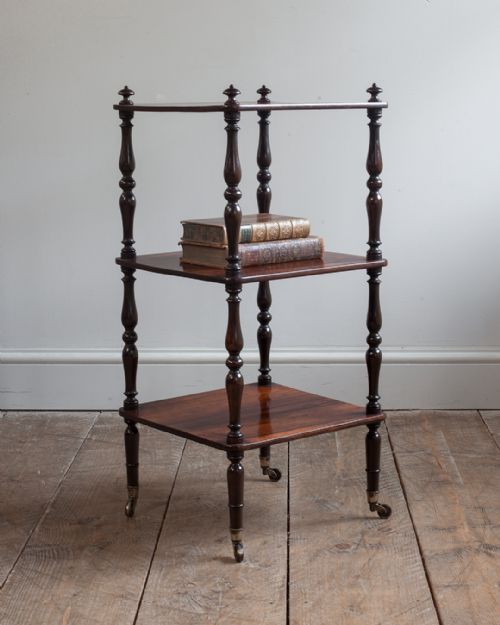
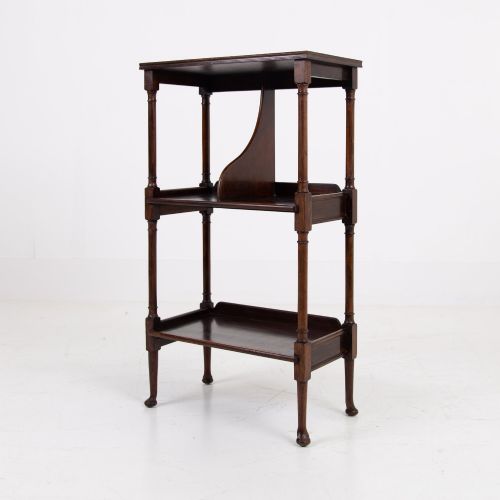
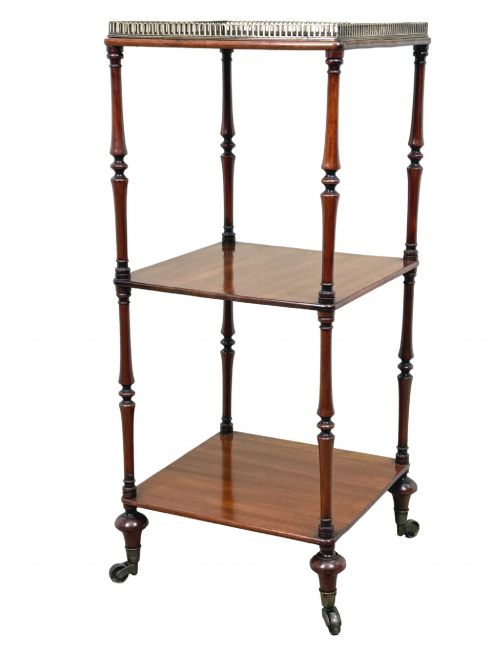
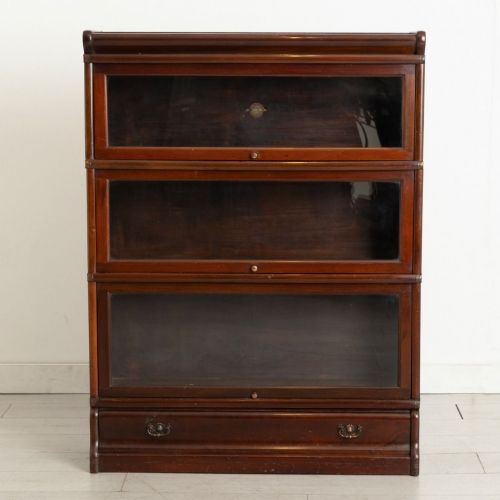


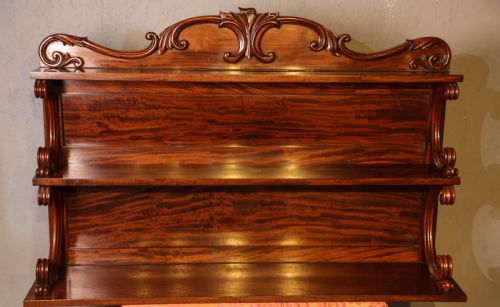


Three Tier Mahogany Shelf
A three tier mahogany shelf offers tiered display space in rich timber, bringing practical vertical storage to any room.
Three Tier Mahogany Shelf
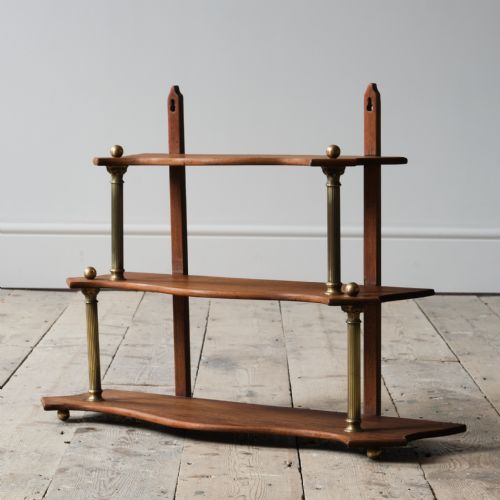
A three tier mahogany shelf encompasses practical open storage forms like étagères, whatnots, buffets, and wall-hanging shelves designed for display and utility. These pieces appear predominantly across 19th-century periods, including Georgian, Regency, William IV, and Victorian eras.
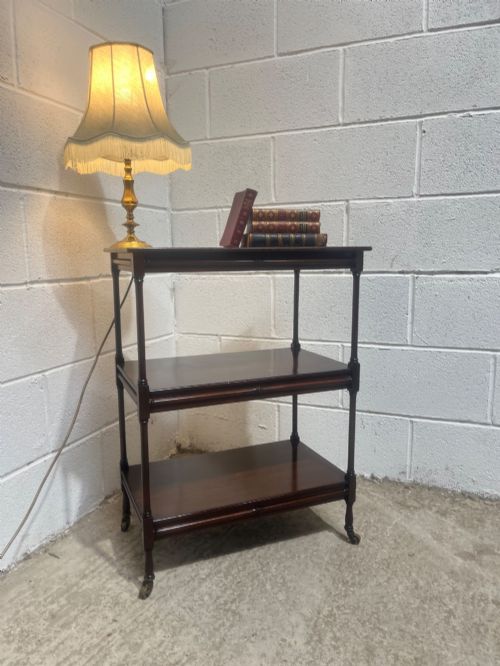
Buyers seeking this phrase encounter items ranging from compact wall-hanging bookshelves to floor-standing trolley units and sectional display stands. The form adapts readily from corner placements to bedside functions and general room organisation.
Construction origins lean heavily on traditional British cabinet-making traditions, with revival pieces also appearing from around 1900. The core utility remains constant: tiered platforms held by uprights, balancing decorative presence with open access.
How they were made
Makers utilised solid timber and veneers, frequently selecting mahogany and flame mahogany veneer for its deep grain and warm tone. Occasional variants incorporate rosewood or walnut alongside structural brass fittings and cast iron components.
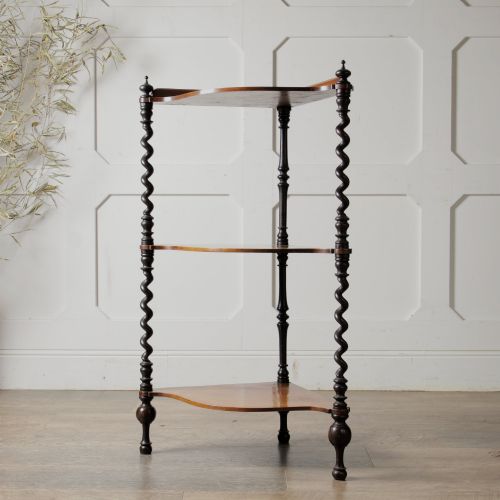
Joinery methods rely on stable framing to support multiple tiers, sometimes enhanced by turned barley twist columns, fretwork panels, or slender upright supports. Surface finishes range from polished polish to painted highlights on selected hanging models.
Listings feature mahogany, rosewood, walnut, brass, and cast iron across Georgian, Regency, and Victorian periods.
What varies in quality
The degree of refinement in timber selection and turning marks the distinction between standard utility items and finer workshop commissions. Select examples display crisply carved details, superior grain matching, and integrated brass accents that elevate the piece beyond basic utility.
Proportion and structural integrity dictate the standing of a piece within its type, where balanced scaling and original hardware contribute to a cohesive presence. Simpler provincial variants prioritize straightforward function, while pieces linked to known cabinet-makers reflect higher standards of design economy.
Globe Wernicke·Heal's·Gillows·James Shoolbred And Co
The Three Tier Mahogany Shelf Glossary
- Whatnot
- An open shelving unit with multiple tiers, designed for displaying ornaments, books, or tableware. This form became popular in the Georgian and Victorian periods.
- Étagère
- A French term for a piece of furniture consisting of a set of open shelves for displaying small objects. They often feature delicate upright supports and tiered platforms.
- Flame mahogany veneer
- A sliced section of mahogany timber showing a distinctive flickering flame-like grain pattern. Cabinet-makers applied this to prominent surfaces for visual depth.
- Barley twist
- A type of turned wooden column resembling the spirals of a barley sugar stick. This decorative turning appears frequently on Victorian supports and legs.
- Dumb waiter
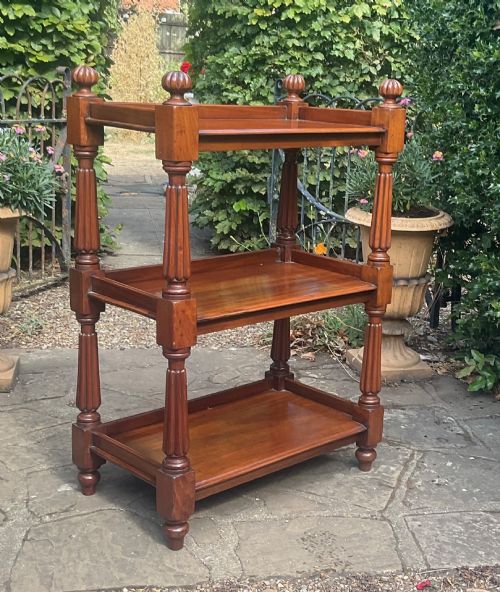
- A tiered serving table or stand used to hold dishes or books without requiring a servant's constant attendance. These typically feature three graduated circular or square shelves.
Three Tier Mahogany Shelf: Frequently Asked Questions
Where should I place a three tier mahogany shelf?
These versatile shelves suit living rooms, hallways, or bedrooms where vertical display space is needed without blocking light.
Wall-hanging versions fit neatly above desks or sideboards, while floor-standing étagères serve as independent display units for books and ceramics.
How do I care for antique mahogany shelves?
Keep timber surfaces away from direct sunlight and sudden temperature shifts to protect the polish and prevent wood splitting.
Dust regularly with a dry cloth and apply a quality beeswax sparingly when the wood appears dry.
Can these shelves support heavy books?
Most three tier pieces handle moderate loads of books or decorative objects comfortably, depending on their construction and size.
Wall-hanging variants require secure fixings into wall studs, whereas floor-standing models distribute weight evenly across their upright supports.
How do I tell a Regency piece from a Victorian one?
Regency pieces often display restrained classical lines, subtle reeding, and lighter proportions reflecting early nineteenth-century tastes.
Victorian examples frequently introduce bolder turnings, such as barley twists, richer golden mahogany tones, and sturdier frames designed for heavier domestic use.