
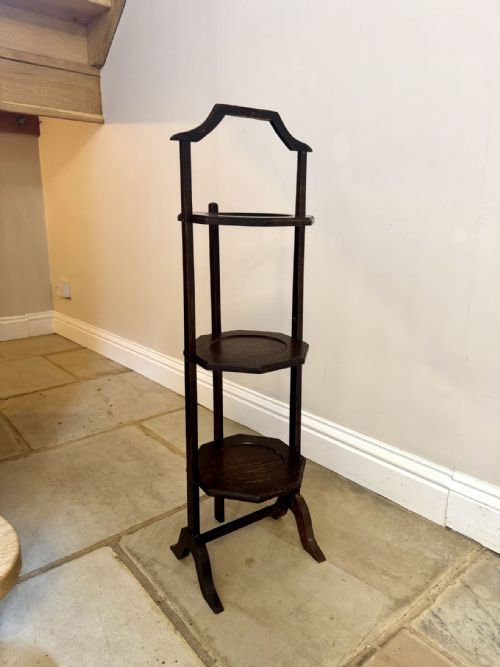


Three Tier Afternoon Tea Stand
A three tier afternoon tea stand is an ingenious tiered server designed to hold cakes and small bites for afternoon tea.
Three Tier Afternoon Tea Stand
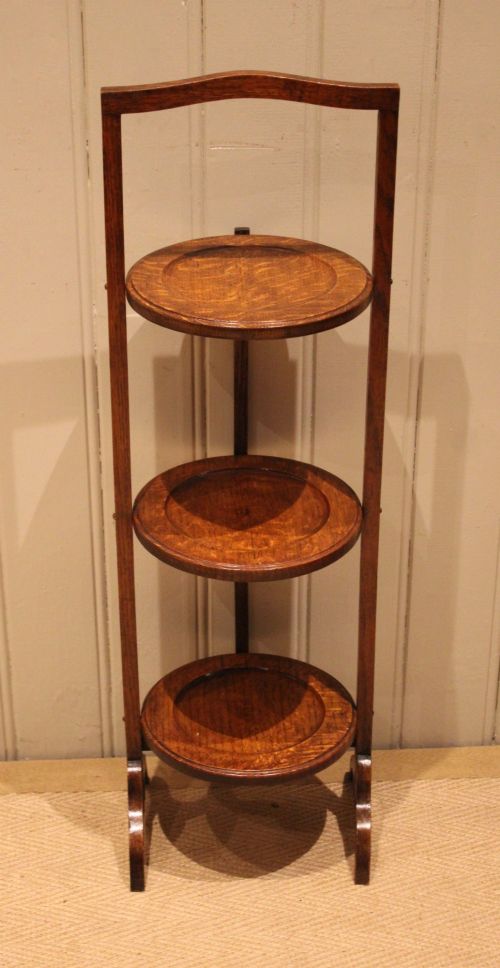
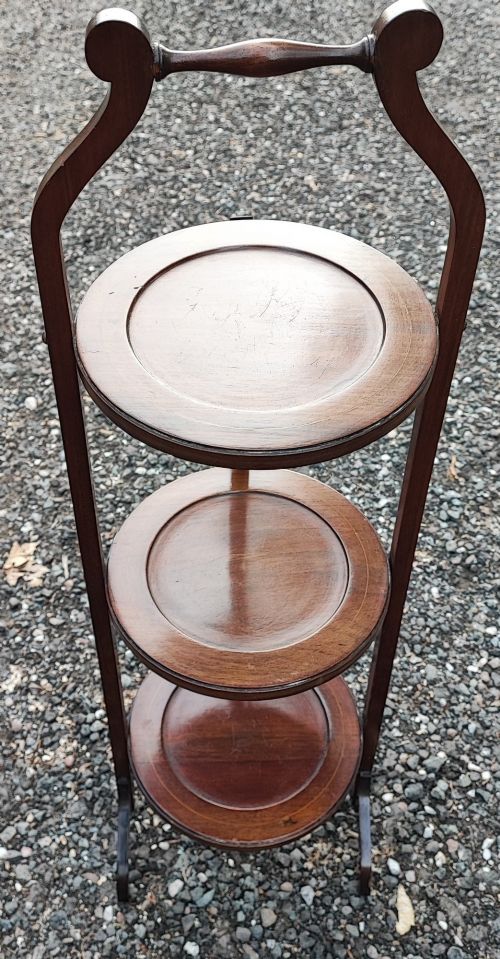
A three tier afternoon tea stand is a tiered server designed for serving cakes and tea time treats across multiple levels. When searching for a three tier afternoon tea stand, buyers frequently encounter Edwardian folding models made from mahogany and oak, dating primarily from nineteen hundred to nineteen twenty.
The pieces appearing here include tiered stands, cake stands, and folding tea tables suited for compact spaces. Edwardian and Sheraton Revival styles dominate the selection, often featuring circular or graduating tiers linked by central folding stems.
How they were made
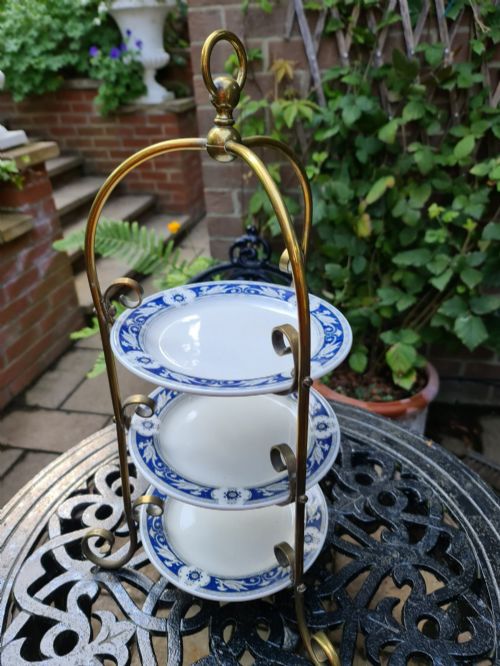
Makers utilised solid timbers such as mahogany and oak for the structural frames and folding mechanisms, sometimes adding boxwood inlay for decorative contrast. Certain specialised examples incorporated brass fixtures and even sterling silver elements.
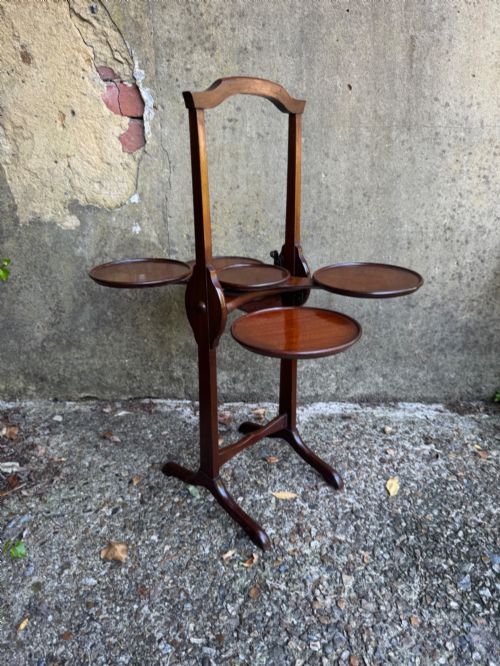
Joinery techniques focused on folding hinges and pivoting tiers so that the furniture could be collapsed and stored flat when not in use. Surfaces were finished to highlight the natural grain of the mahogany or oak.
The listings here feature oak, mahogany, brass, and sterling silver pieces spanning the Edwardian period up to nineteen twenty.
What varies in quality
The standard of timber selection and inlay work marks the distinction between ordinary utility pieces and finer examples. Sharper detailing in boxwood inlay and more robust folding hinges indicate superior workshop production.
Proportion and stability also separate better pieces from simpler ones. Stands that remain rigid and balanced when fully extended demonstrate careful original construction and thoughtful balance across the three tiers.
The Three Tier Afternoon Tea Stand Glossary
- Boxwood inlay
- A contrasting light wood embedded into a darker timber surface to create decorative lines or geometric patterns. It provides crisp visual detail on mahogany frames.
- Sheraton Revival
- A late nineteenth and early twentieth century design movement that reinterpreted eighteenth century classical furniture forms. It favoured elegant proportions and delicate inlaid decoration.
- Folding mechanism
- The pivoting hardware or hinged timber joints that allow the stand to collapse flat. This ingenious feature made the tier easy to store away after tea.
- Edwardian
- Pertaining to the reign of King Edward VII, spanning nineteen hundred to nineteen ten. Furniture from this era often lighter in build than Victorian pieces.
Three Tier Afternoon Tea Stand: Frequently Asked Questions
How were three tier afternoon tea stands used?
These stands were brought out during afternoon tea to present cakes, sandwiches, and pastries without cluttering the main tea table.
The graduating tiers allowed hosts to organise different food items by type while saving valuable surface space in the drawing room.
Are these stands difficult to store?
Most examples incorporate clever folding hinges that enable the tiers to collapse flat into a narrow profile.
This practical design meant households could easily tuck the stand away in a corner or cupboard when tea service ended.
How do I identify an Edwardian stand?
Edwardian stands typically show lighter timber construction, often utilising mahogany or oak with subtle boxwood inlay.
They date from the early twentieth century and reflect a preference for slender, functional furniture that could fold away.
Can I use an antique stand today?
These stands remain entirely functional for serving food or displaying items in a modern home.
Careful handling of the folding mechanism ensures the timber and joints remain stable during everyday use.