
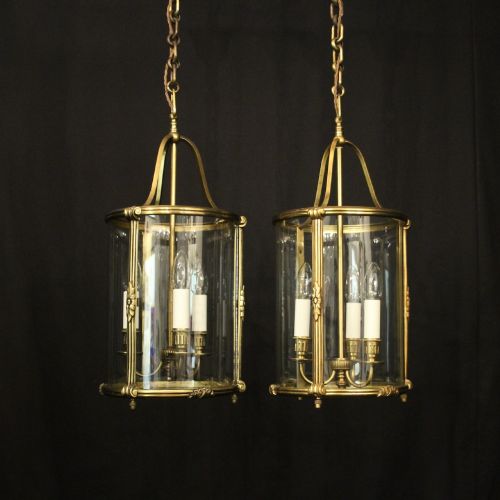


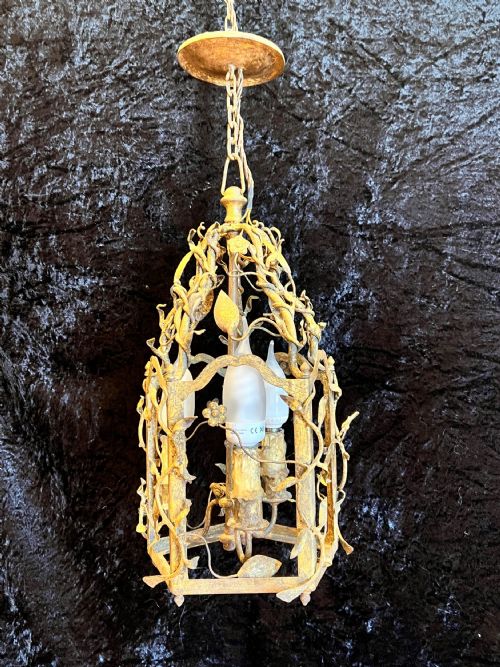


Three Light Hall Lantern
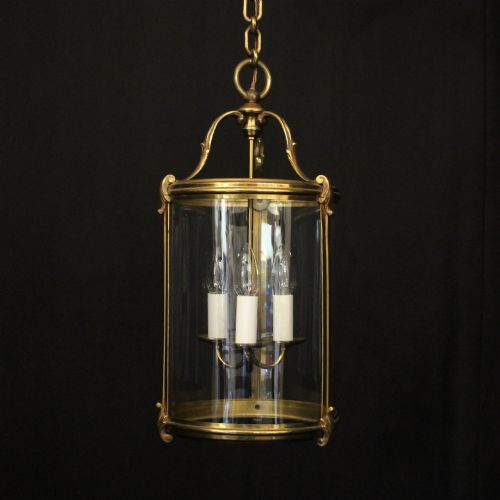
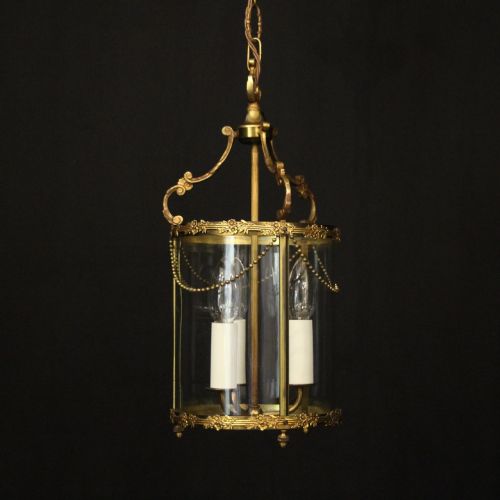
A three light hall lantern offers a grand entrance illumination, combining warm metalwork and glass to anchor a hallway.
Three Light Hall Lantern
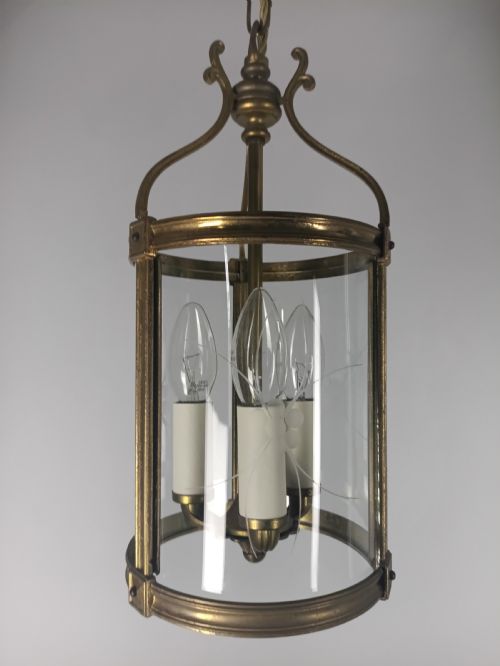
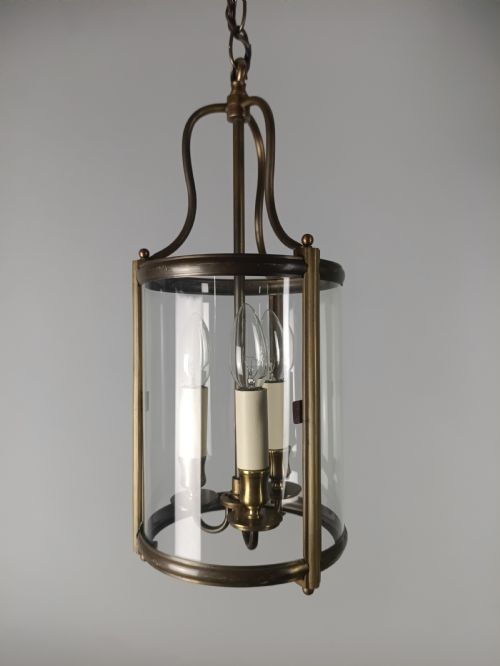
A three light hall lantern provides suspension lighting specifically scaled for entrance halls, corridors, and vestibules. These fixtures hold three internal lights within a glazed metal framework, casting light evenly across a threshold.
Most examples found here originate from the early twentieth century, spanning the nineteen hundreds to the nineteen thirties. French designs dominate the selection, alongside English and Italian pieces.
Forms vary from convex and circular shapes to hexagonal and simpler designs. Architectural influences range across French Rococo, Neoclassical, Empire, and Edwardian styles.
How they were made
Construction relies on cast and sheet brass, bronze, and gilt metal frames fitted with glass panels. Metals receive gilt finishes or polished treatments to enhance reflection.
Glazing takes several forms, including etched glass and curved convex panes that diffuse the internal illumination. Cast brass and bronze elements provide structural integrity to the hanging fixtures.
The selection spans the 1900s, 1920s, and 1930s, utilising brass, bronze, gilt metal, and glass.
What varies in quality
The refinement of the cast metalwork separates standard output from finer pieces. Crisp detail in the brass or bronze mounts indicates superior workshop production.
The quality of the glass panels and the proportion of the metal framing dictate the visual balance of the lantern. Convex or etched glass panels require greater skill to produce than flat panes.
The Three Light Hall Lantern Glossary
- Convex glass
- Curved glass panels that project outward, softening the internal light source. This technique adds depth and complexity to the silhouette.
- Gilt bronze
- Bronze metal treated with a gold-coloured surface application. It provides a rich finish that resists tarnishing.
- Hall lantern
- A ceiling-hung lighting fixture designed for narrow spaces like corridors and entrances. These pieces direct illumination downwards and outwards.
- Edwardian
- A stylistic period spanning the early twentieth century. Designs from this era often balance traditional forms with simpler execution.
Three Light Hall Lantern: Frequently Asked Questions
Where should a hall lantern hang?
These fixtures suit entrance halls, high-ceilinged corridors, and stairwells where overhead suspension works practically. They provide central illumination for transitional spaces.
Ensure adequate ceiling height and clearance for passage beneath the hanging drop of the lantern.
How do I date a brass lantern?
Dating relies on stylistic markers, construction methods, and materials recorded from the period. Pieces from the early twentieth century often show specific revival styles.
Examining the cast metal components and glass types helps place the object within its production era.
How do I clean an antique lantern?
Dust glass panels gently with a soft cloth and avoid harsh chemical cleaners on gilt or polished metal surfaces. Preservation of the original finish remains important.
Wiring should be checked by a qualified professional to ensure safety standards are met.