


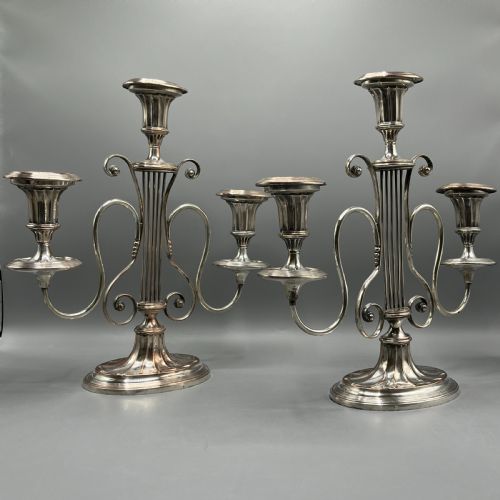


Three Light Candelabrum
A three light candelabrum brings structured illumination and classical symmetry to a room, offering branched candle holders designed for dining tables or sideboards.
Three Light Candelabrum
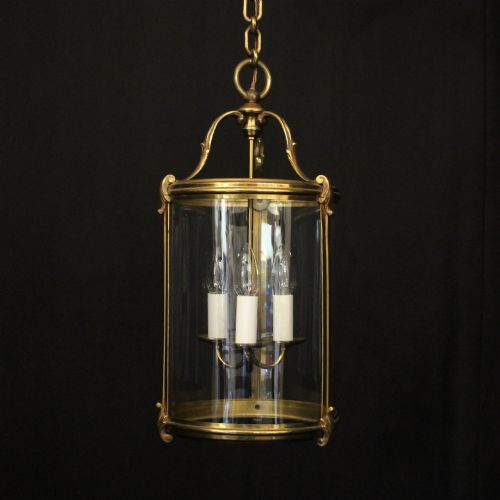
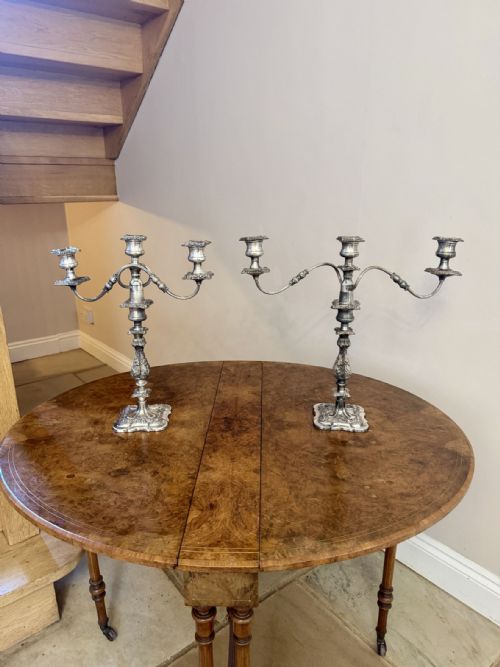
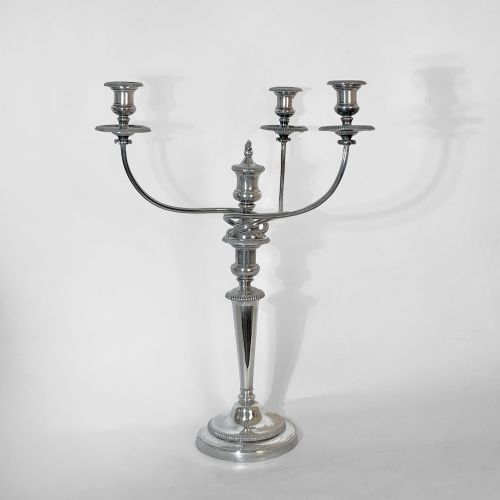
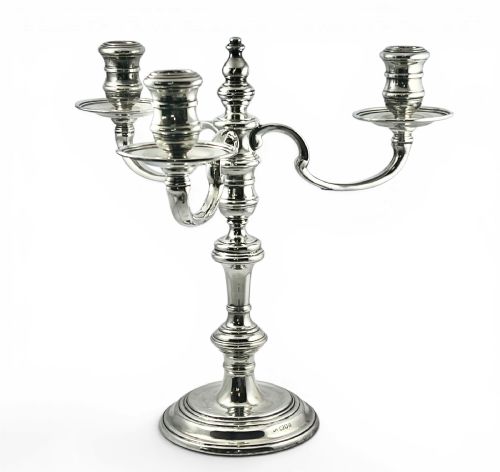
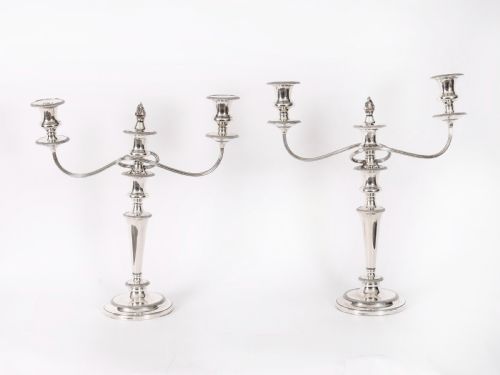
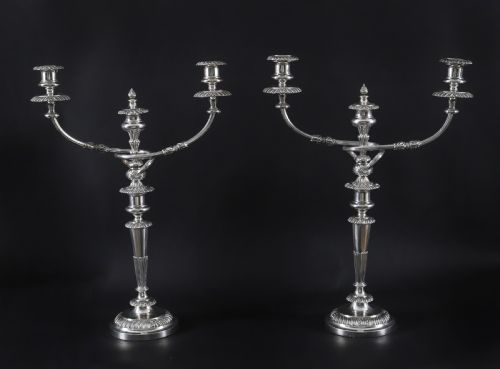
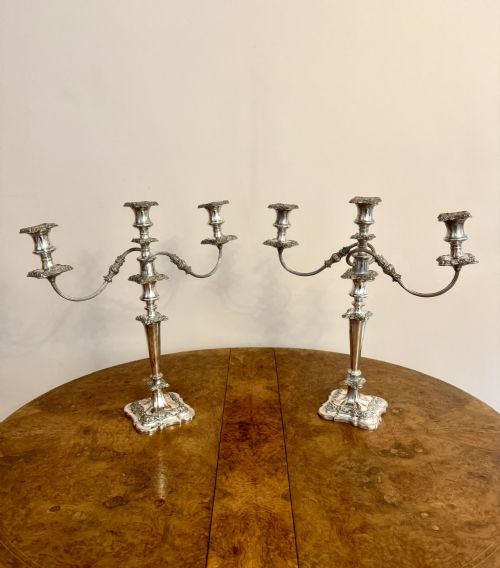
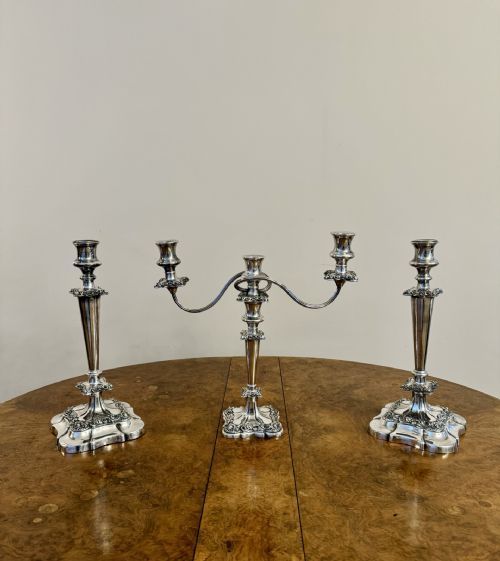
A three light candelabrum provides a branched structure for three candles, appearing frequently in Victorian and Regency forms alongside Edwardian interpretations. These pieces frequently manifest as matched pairs or individual table centrepieces intended to hold tapers securely.
The materials span silver plate, brass, bronze, gilt bronze, glass, and ormolu, reflecting the decorative tastes of the nineteenth and early twentieth centuries. Makers applied styles ranging from French Rococo and Neoclassical to heavy Victorian ornamentation.
Beyond standard tabletop candelabra, the selections encompass related lighting variants including wall sconces, wall lights, and chandeliers sharing the characteristic triple arm configuration. These diverse objects demonstrate how makers adapted the three-light design for walls, ceilings, and surfaces.
Materials and construction
Metals form the core of these pieces, utilising cast bronze, brass, and copper chased and finished with fire-gilding or ormolu to create contrasting matte and polished surfaces. Silver plating over copper base metals appears extensively in Sheffield plate and later electroplated items.
Decorative elements incorporate glass components, crystal drops, and porcelain sections, particularly in French and Meissen examples from the nineteenth century. Artisans assembled these multi-part objects using threaded posts, pins, and hidden fixings to join branches to central stems.
Assessing craftsmanship
The refinement of the casting and chasing separates standard production from exceptional examples, visible in the crispness of acanthus leaves, figures, and scrollwork. Hand-chiselling after casting provides depth and definition that mechanical finishing misses.
Weight and stability indicate the substance of the metalwork, where solid bronze or heavy silver plate denotes superior fabrication compared to thin pressed sheet metal. Maker attribution, such as signed works by known founders, further elevates the standing of a piece.
Matthew Boulton·Garrard & Co·Wm. Tonks & Sons·Barker Ellis·Rabiat
The Three Light Candelabrum Glossary
- Ormolu
- Finely ground high-carat gold applied to a bronze base using a mercury amalgamation technique, producing a rich golden lustre. This finish typifies high-status French decorative arts from the eighteenth and nineteenth centuries.
- Sheffield Plate
- An early method of fusing a thin sheet of sterling silver to a thicker copper ingot by heat and pressure. Items made this way often reveal a thin line of copper at the edges where the metals meet.
- Candelabra
- A branched candlestick holding multiple tapers from a single base, distinguished from a simple single-light candlestick. The arms branch outward symmetrically to distribute light evenly.
- Bouillotte Lamp
- A traditional French table lamp featuring a central shaft, an adjustable shade, and a tray base with multiple candle arms. They were originally designed for use during card games.
Three Light Candelabrum: Frequently Asked Questions
How do I clean tarnished silver plated candelabra?
Silver plate requires gentle cleaning with a soft cloth and a specialised non-abrasive silver polish to preserve the thin plating over the base metal. Avoid harsh dipping solutions that can strip remaining highlights and damage underlying copper.
Regular dusting with a dry microfiber cloth prevents heavy tarnish accumulation in the detailed recesses of Rococo or Victorian ornamentation. Store pieces away from direct heat sources and damp environments to maintain the metal finish.
What is the difference between Sheffield plate and silver plate?
Sheffield plate involves mechanically fusing silver and copper sheets together through heating before rolling them into plates for fabrication. This older technique yields a distinctive sandwich structure visible on unpolished edges.
Standard silver plate utilises an electroplating process developed later in the nineteenth century, depositing a thin layer of silver onto a base metal via an electrical current. Electroplated items generally show an even, bright silver coating across the entire object without edge lines.
How do I date a nineteenth century candelabrum?
Stylistic clues such as heavy cast ornamentation, naturalistic floral motifs, and classical revival details help narrow down the production period. Marks stamped on the base, including maker ciphers or registry numbers, provide precise chronological markers.
Construction methods also guide dating, as hand-chased bronze work and early Sheffield plate give way to machine stamping and electroplating towards the end of the Victorian era. Comparing the casting quality against documented examples from makers like Matthew Boulton assists verification.