


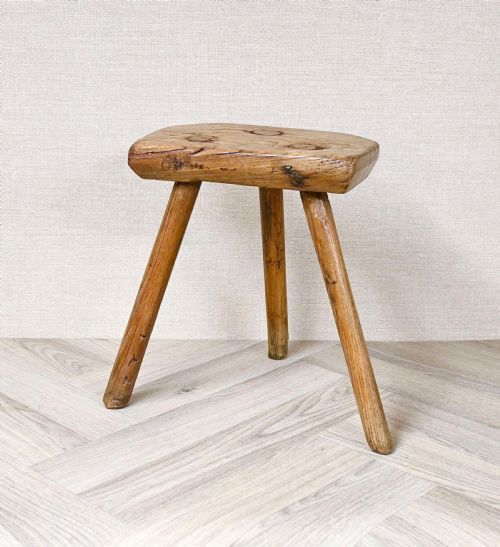
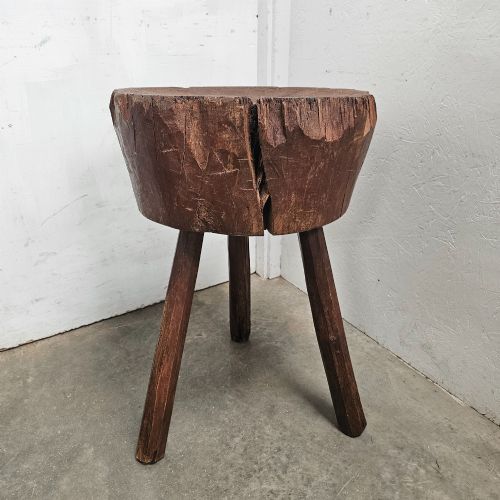


Three Legged Tripod Stool
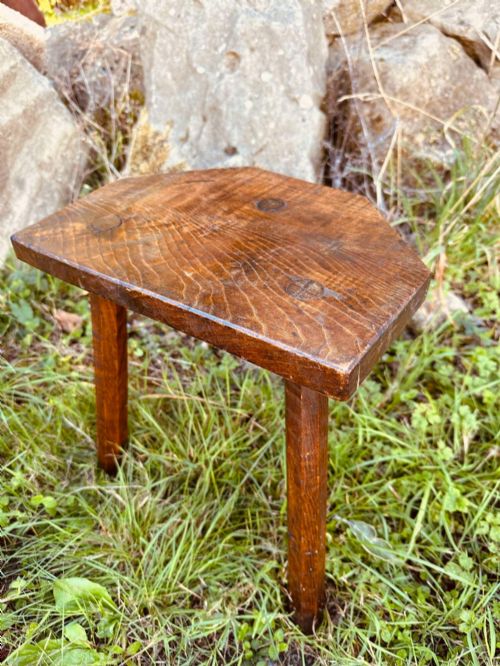
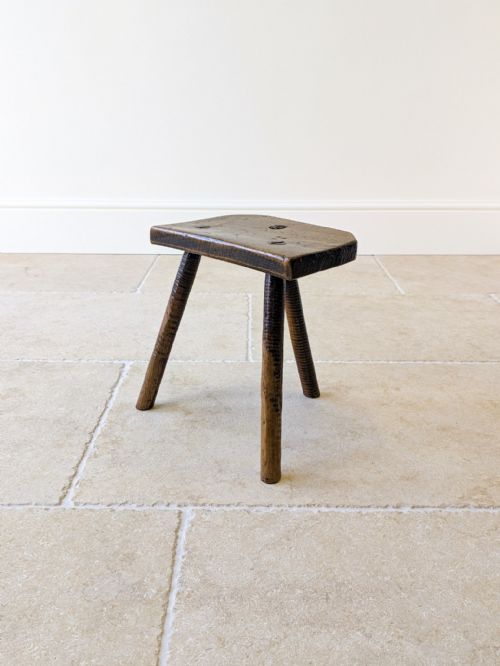
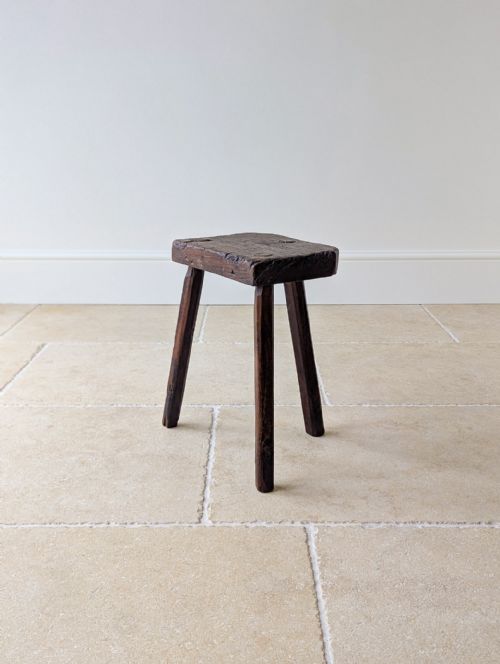
A three legged tripod stool is a sturdy piece of vernacular furniture built for everyday utility, offering a simple seat that sits level on uneven floors.
Three Legged Tripod Stool
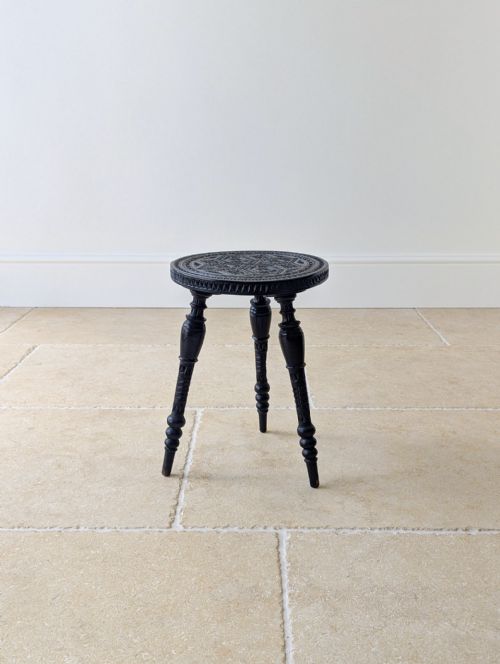
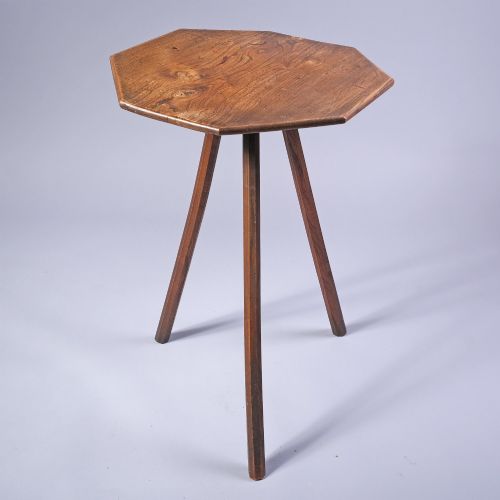
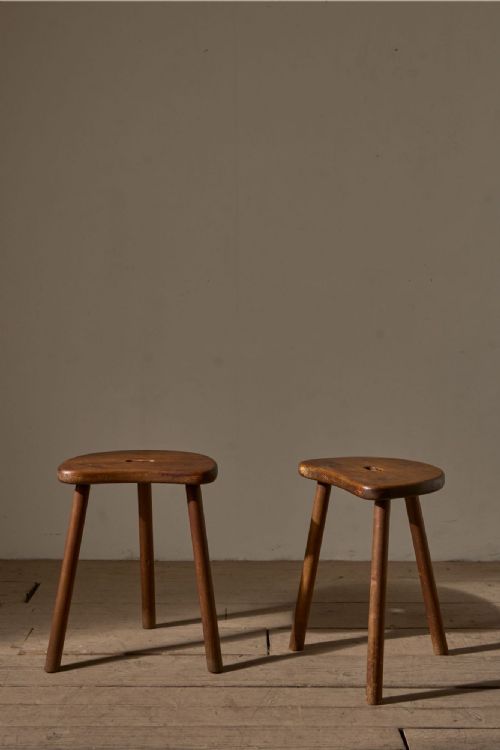
A three legged tripod stool is a practical piece of seating rooted in rural and industrial working life, appearing in forms such as cutler's stools, milking stools, and butcher's blocks. Buyers seeking this phrase encounter practical seating and small tables produced during the Georgian, Victorian, and early twentieth-century periods.
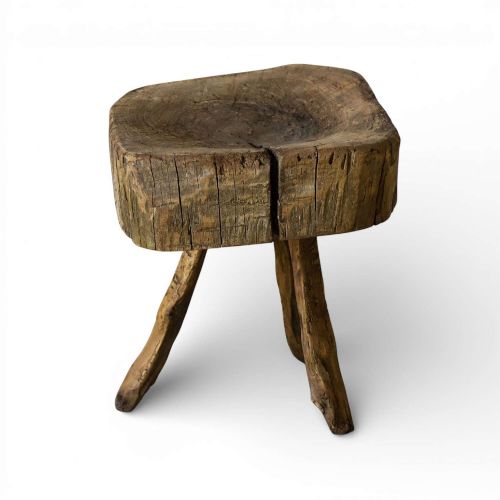
The versions most common on this page are vernacular country items fashioned from native timbers like elm, ash, and oak. These pieces range from low milking seats to taller industrial workshop stools, often retaining the marks of daily labour and workshop use.
How they were made
Makers fashioned these pieces using solid native woods such as elm for scooped seats and ash or oak for turned legs. Carpenters secured the legs into the underside of the seat using wedged tenons or simple holes bored straight through the timber.
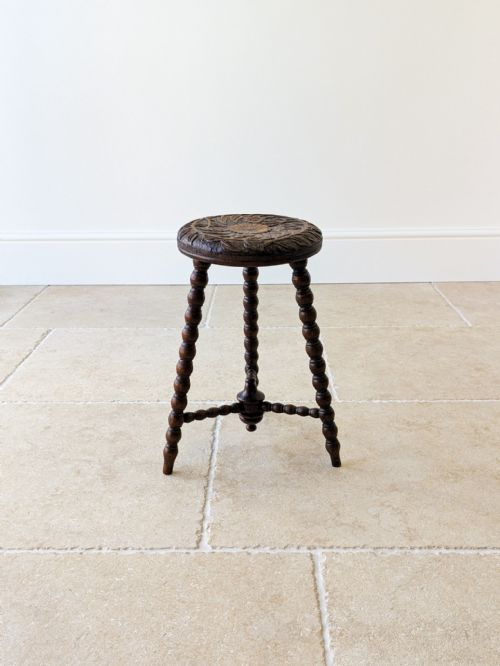
Surface treatments remained straightforward, relying on natural friction polish, wax, or occasional ebonising to finish the wood. Some examples feature chip-carving, pokerwork decoration, or parcel gilt highlights applied to the solid timber top.
Three Legged Tripod Stool Retail Price Guide 2026
Typical asking prices for three legged tripod stool among the pieces listed under this phrase on Sellingantiques today, from the lower quarter to the upper quarter. They describe what is for sale here now, not the wider market.
One recorded nineteenth-century Scottish stool carries pokerwork lettering declaring 'Touch me wha daur'.
What varies in quality
Quality rests in the balance of the proportions and the character of the timber used for the seat and legs. A well-chosen slab of elm with pronounced grain or an original gnarled base elevates a piece above standard utility items.
Integrity of construction defines the better examples, where legs remain firmly pegged into the seat without excessive replacement parts. Original surface patination accumulated through decades of use separates superior survivals from heavily restored pieces.
J. Shoolbred·James Shoolbred
The Three Legged Tripod Stool Glossary
- Vernacular
- Everyday utilitarian furniture made by local carpenters or craftsmen rather than high-style urban cabinetmakers. These items served specific practical functions in homes, farms, and workshops.
- Elm
- A tough, interlocking timber frequently utilised for stool seats because it resists splitting under heavy downward pressure. Its distinct grain pattern is a common feature on country seating.
- Cricket table
- A small three-legged occasional table with a round wooden top, traditionally used in British cottages. The three-legged design ensured stability on uneven stone floors.
- Ebonised
- Wood treated with a dark stain or finish to imitate ebony. This technique appears on decorative Victorian seating and small tables.
- Pokerwork
- A decorative technique involving heated metal points burned into the surface of the wood to create designs or lettering. Examples occasionally feature Scottish inscriptions or folk motifs.
Three Legged Tripod Stool: Frequently Asked Questions
What were three legged tripod stools used for?
These items served practical roles in rural and industrial settings, functioning as seats for milking cows, working in cutler's workshops, or resting beside hearths.
Their simple construction made them versatile enough to double as low side tables or chopping blocks in everyday domestic life.
Why do these stools have three legs?
A three-legged base guarantees that the piece rests firmly on uneven flagstone floors without wobbling.
This practical engineering choice made tripod seating the standard format for agricultural and workshop environments.
How do I care for an antique wooden stool?
Keep the timber away from direct heat sources and sudden temperature shifts to prevent the solid wood from splitting.
Apply a traditional beeswax polish occasionally to nourish the surface and maintain the natural lustre of the grain.
How can I tell the period of a stool?
Examine the tool marks, timber selection, and joint construction underneath the seat for clues regarding the maker's era.
Georgian and Victorian examples often display distinct turning styles on the legs and specific wear patterns consistent with their age.