
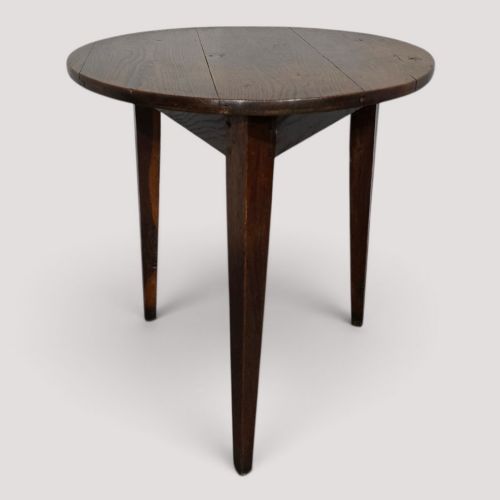
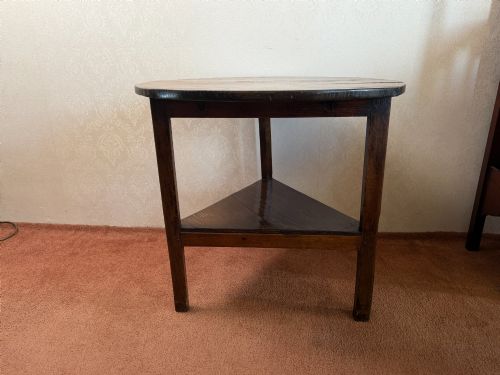
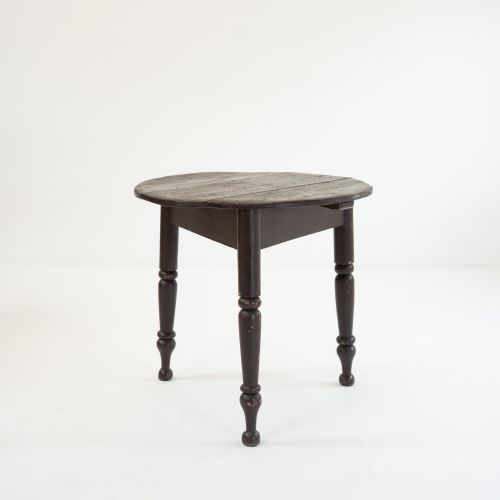


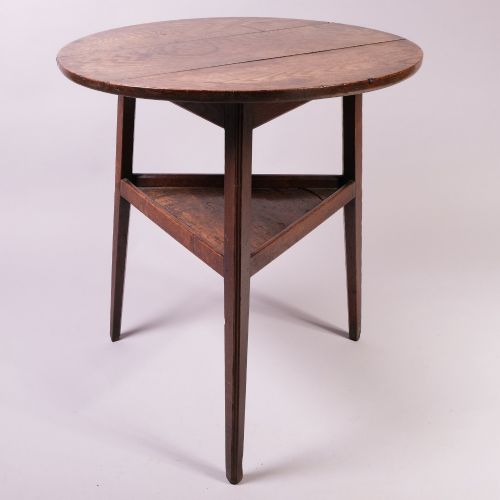
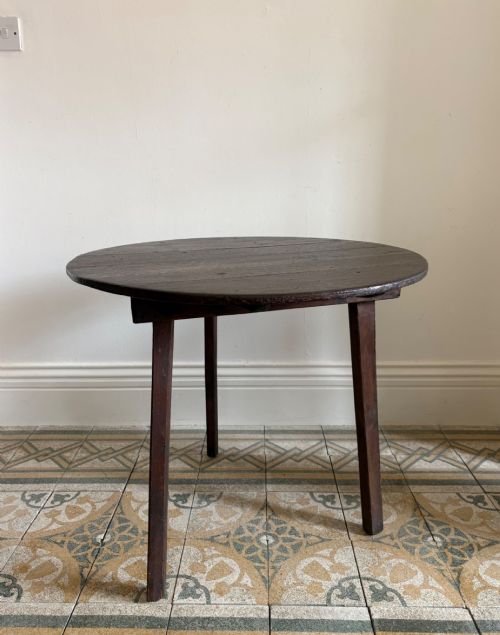


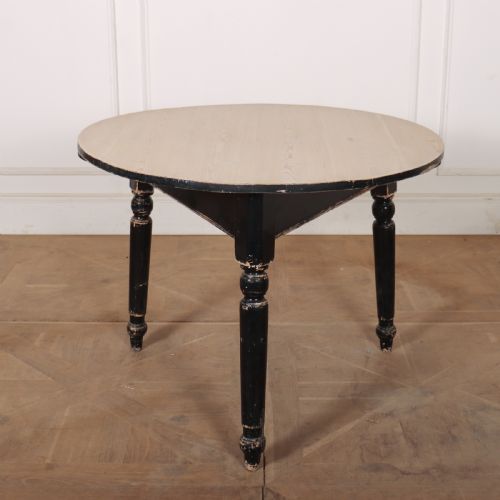
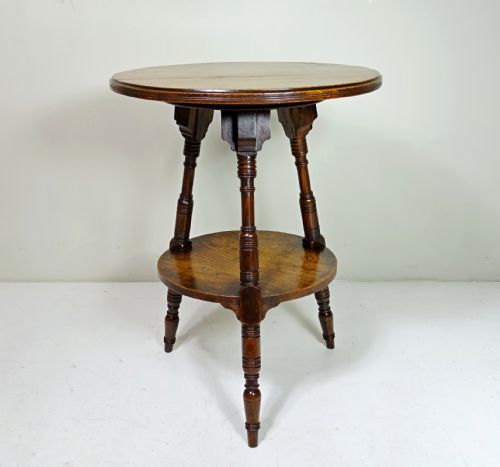
Three Legged Tavern Table
These robust three legged tavern table examples offer practical surfaces built for traditional public houses and country homes.
Three Legged Tavern Table
A three legged tavern table provides a stable circular or planked surface designed to stand firm on uneven flagstone floors without rocking. The three-legged format, often recognised as a cricket table, distributes weight evenly across its supports.
Most pieces seen here originate from the eighteenth and nineteenth centuries, spanning Georgian vernacular through to Victorian country periods. Oak, pine, elm, and ash dominate the timber construction of these utilitarian surfaces.
Makers utilised local woods available to them, resulting in regional variations from English workshops to Welsh domestic settings. Plank tops paired with sturdy turned or tapered legs typify the standard form.
Construction and materials
Solid timber construction defines these surfaces, utilising native hardwoods like oak, elm, and ash alongside softwood pine bases. Plank tops are joined securely and mounted onto three upright legs fixed directly into the underside.
Painted finishes frequently appear on pine variants, providing a protective layer that has aged through decades of use. Cast iron components also emerge in later Victorian pub examples to ensure commercial durability.
Pub patrons centuries ago appreciated tables that refused to wobble on uneven flagstones, a simple engineering triumph still saving spilled drinks today.
Judging quality in domestic tables
The choice of primary timber sets the tier of a piece, with figured pollard oak and dense seventeenth or eighteenth-century heartwood commanding greater presence than standard utility pine. Surface patination reveals how timber ages under daily wear and scrubbing.
Structural integrity depends upon the joinery connecting the three legs to the tabletop framework. Original pegging and minimal timber replacement preserve the authentic character of early vernacular furniture.
The Three Legged Tavern Table Glossary
- Cricket table
- A traditional small round table featuring three legs, historically named for its resemblance to a cricket stool. These pieces provide compact surfaces suited to corners and firesides.
- Vernacular furniture
- Items made by local artisans for everyday domestic or commercial use rather than following strict high-style metropolitan fashions. This category encompasses regional country pieces.
- Pollard oak
- Timber harvested from trees that were pollarded, resulting in highly decorative burr-like grain patterns. It provides an ornate surface on select tables.
- Plank top
- A tabletop constructed from several wide boards joined edge to edge. This method allows the timber to expand and contract naturally with seasonal humidity changes.
Three Legged Tavern Table: Frequently Asked Questions
What is a three legged tavern table?
A three legged tavern table is a traditional small table featuring a circular or planked top supported by three upright legs. These pieces were built for public houses and country dwellings where uneven stone floors required a non-rocking base.
Such tables function well today as bedside stands or corner display surfaces in traditional interiors.
How do I care for antique pine?
Antique pine surfaces require gentle cleaning with a soft, dry cloth to remove dust without stripping the historic finish. Avoid placing timber tables near direct heat sources to prevent the wood from splitting.
Periodic application of a suitable beeswax preserves the moisture and lustre of older wooden boards.
Are these tables sturdy enough for daily use?
These tables derive their original design purpose from heavy commercial and domestic use, making them inherently robust. The three-legged configuration ensures natural stability on flat modern flooring.
Routine placement of everyday items poses no risk to sound eighteenth and nineteenth-century examples.