

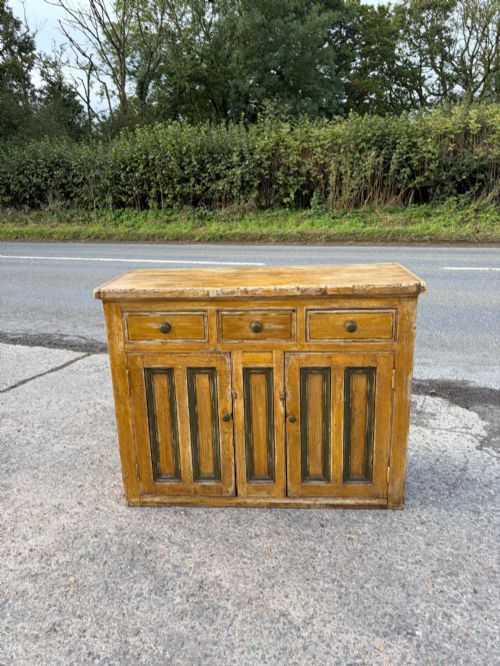
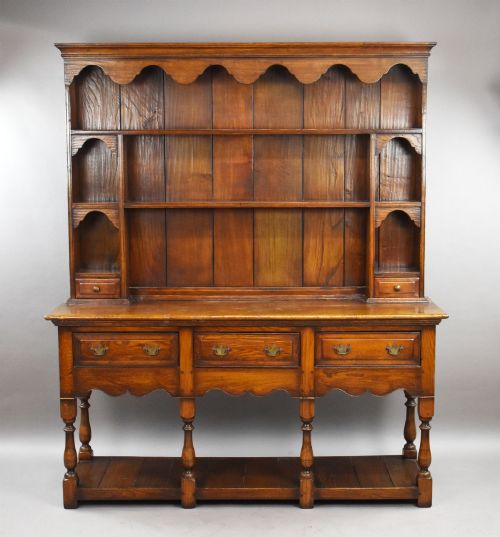
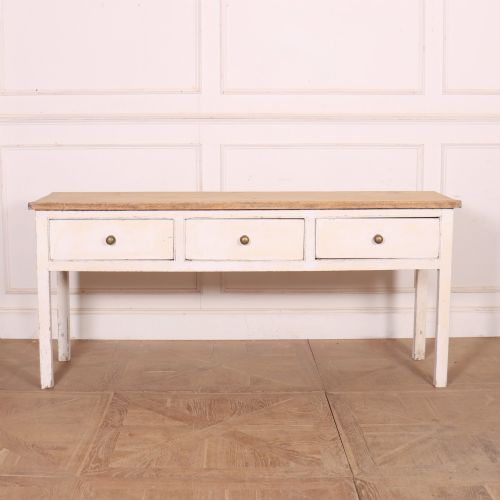
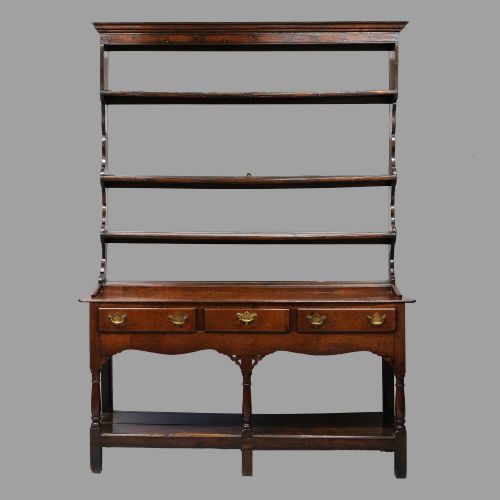



Three Drawer Kitchen Dresser
A three drawer kitchen dresser is a utilitarian storage staple of the farmhouse kitchen, offering deep surface utility and characteristic drawer arrangements.

Three Drawer Kitchen Dresser
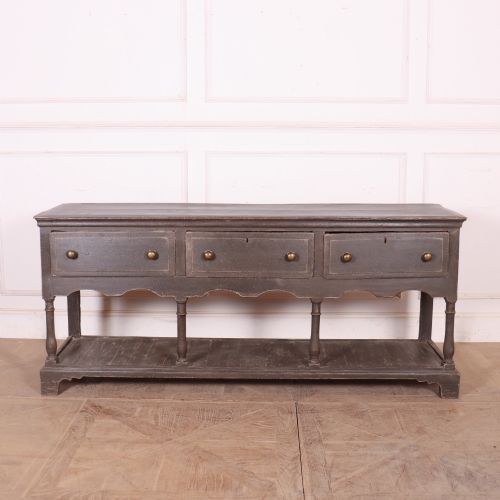
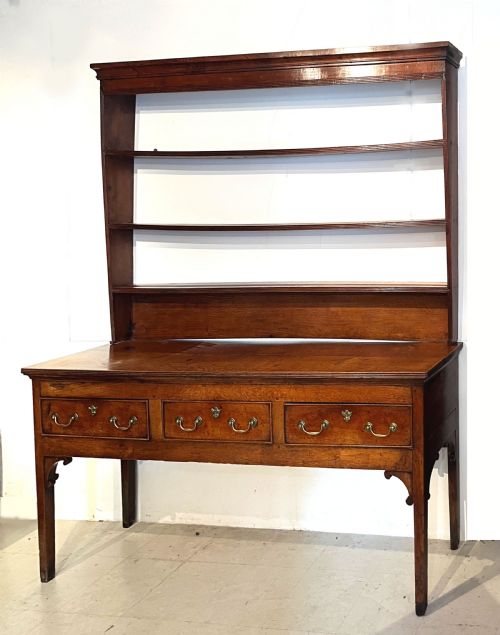
A three drawer kitchen dresser provides robust domestic storage through a combination of surface top, multiple drawers, and frequently an open rack or lower potboard. These sturdy utilitarian items originate across the eighteenth and nineteenth centuries, spanning Georgian, Victorian, and later periods.
The versions most commonly met on this page are timber base units in oak or pine, often hailing from English and Welsh country traditions. They appear as low dresser bases or complete tall dressers featuring open plate racks above the surface.
How they were made
Makers utilised solid native timbers such as oak and pine, supplemented by painted wood surfaces and iron or brass hardware components. Construction relied on traditional joinery methods suited to heavy daily domestic use in rural households.
Many examples incorporate a lower potboard shelf beneath the main body for storing heavy kitchen ceramics and cookware. Surfaces frequently show layers of historic paint or natural timber patination developed over centuries of service.
Three Drawer Kitchen Dresser Retail Price Guide 2026
Typical asking prices for three drawer kitchen dresser among the pieces listed under this phrase on Sellingantiques today, from the lower quarter to the upper quarter. They describe what is for sale here now, not the wider market.
Design styles span English country, Welsh vernacular, George III, and rustic farmhouse traditions.
What varies in quality
Quality separates along the lines of timber selection, regional origin, and the survival of original structural elements like potboards and drawer linings. Pieces originating from specific regional traditions, such as South Wales, demonstrate distinct vernacular proportions.
The integrity of the timber patination and the presence of original hardware or early painted finishes define the standing of individual examples. Refined George III period pieces contrast with simpler rustic farmhouse counterparts in their joinery detail and scale.
The Three Drawer Kitchen Dresser Glossary
- Potboard
- A low open shelf fitted near the floor beneath a dresser base. This platform traditionally held heavy pots, pans, and utilitarian kitchen earthenware.
- Dresser Base
- The lower portion of a kitchen dresser comprising a work surface and drawers without the upper plate rack. These served as primary kitchen preparation tables.
- Rack
- The upper shelving superstructure mounted on a dresser base for displaying plates and ceramic platters. These structures often feature grooved plate rails.
- Vernacular
- Objects built by local craftsmen using regional styles and readily available materials rather than following high London fashions. Welsh country examples typify this tradition.
Three Drawer Kitchen Dresser: Frequently Asked Questions
How do I date a three drawer kitchen dresser?
Dating relies upon examining the timber species, construction joinery, and nail types used in the drawers and backboards. Earlier eighteenth-century examples display hand-cut joinery and dense native oak, whilst nineteenth-century pieces often utilise pine or ash.
Stylistic cues such as bracket feet, apron shapes, and original painted finishes also help narrow the period of manufacture between Georgian and Victorian eras.
What is the difference between a dresser base and a full dresser?
A dresser base consists only of the lower cabinet section with drawers and sometimes a potboard, functioning much like a sideboard. A full dresser includes both this base unit and an upper plate rack attached to the back.
Complete dressers with racks were designed for storing and displaying ceramic tableware in domestic kitchens, whereas bases offered flat working surfaces for food preparation.
Where were these kitchen dressers made?
These utility pieces were constructed across English and Welsh rural workshops to serve domestic needs in country houses and farmhouses. Regional variations, particularly from South Wales, exhibit distinct proportions and local joinery characteristics.
Most makers utilised local hardwoods and softwoods, meaning oak and pine origins often reflect the timber most accessible in the surrounding countryside.
How do I care for an antique painted wood finish?
Historic painted surfaces require minimal intervention, avoiding modern chemical cleaners that can strip or soften aged pigments. Dusting with a dry, soft cloth prevents particle buildup without risking moisture damage to fragile paint layers.
Keeping the piece away from direct heat sources and strong sunlight preserves the stable condition of both the timber substrate and historic decorative coatings.