





George III Style Dresser
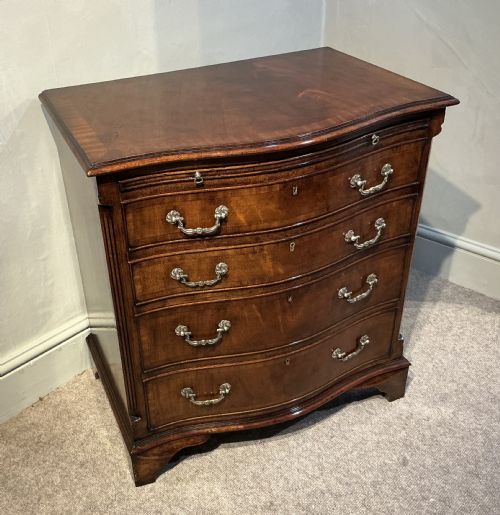
A george iii style dresser brings the bold serpentine lines and rich timber tones of the Georgian era directly into a room.

George III Style Dresser
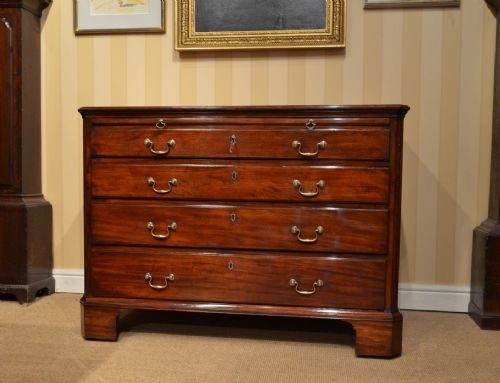
When you search for a george iii style dresser, you are looking at substantial case furniture that includes chests of drawers, dressing-chests, and dresser bases spanning the eighteenth century through later revival periods. These pieces are designed with strong architectural presence and functional storage, originating from Georgian workshops as well as later nineteenth and early twentieth-century interpretations.
The most common version you will meet on this page is the serpentine front chest of drawers, shaped with a characteristic undulating curve across the front. These pieces frequently appear in mahogany, alongside examples rendered in oak, satinwood, and maple, reflecting both original period construction and later revival craftsmanship.
Materials and construction
Makers utilised solid and veneered timbers, primarily selecting rich mahogany for its fine grain and durability in curved serpentine facades. Oak and maple also appear in the construction, providing robust internal carcases and varied native grain patterns.
Decorative techniques include marquetry inlay executed in contrasting light woods like satinwood, adding intricate geometric or floral detailing to the drawer fronts. Brass hardware, such as swing handles and escutcheons, completes the construction of these substantial pieces.
George III Style Dresser Retail Price Guide 2026
Typical asking prices for george iii style dresser among the pieces listed under this phrase on Sellingantiques today, from the lower quarter to the upper quarter. They describe what is for sale here now, not the wider market.
Current listings span the eighteenth, nineteenth, and early twentieth centuries, featuring mahogany, oak, satinwood, maple, and brass.
Assessing quality
The distinction between ordinary and superior pieces rests upon the precision of the serpentine curve and the harmony of the timber selection. Master cabinetmakers achieved fluid, symmetrical sweeps across the front of the drawers, whereas lesser examples display rigid or uneven shaping.
Surface enrichment further separates the grades, particularly the fineness of satinwood and marquetry inlay work against plain timber surfaces. The integration of period brass fittings and the crispness of the carving distinguish high-status pieces from simpler utilitarian production.
William Gomm
The George III Style Dresser Glossary
- Serpentine
- A furniture front curved in a wave shape, convex at the centre and concave at the ends. This sweeping contour requires exceptional woodworking skill to execute cleanly.
- Marquetry
- The art of forming decorative patterns on a wooden carcase by fitting together small pieces of veneered wood. It often employs contrasting timbers like satinwood to create detailed visual motifs.
- Dressing-chest
- A specialised form of case furniture combining storage drawers with a surface or internal compartments for grooming. These pieces often feature fitted top drawers containing partitions.
- Dresser base
- The lower cabinet portion of a traditional dresser, providing enclosed cupboard and drawer storage. In revival pieces, these serve as substantial sideboards.
George III Style Dresser: Frequently Asked Questions
How do I date a piece?
Dating relies on examining the timber species, construction methods, and secondary woods used inside the drawers. Eighteenth-century examples display period-specific joinery and hand-cut elements.
Revival pieces from later periods often utilise standardised machine-sawn components alongside older stylistic references.
Where were they used?
These pieces functioned primarily as high-status bedroom or parlour storage for clothing and personal valuables. Their decorative facades meant they were meant to be displayed prominently.
Today, they adapt easily into modern living spaces as striking hallway consoles or dining room sideboards.
What woods were used?
Mahogany is the predominant timber found in these listings, valued for its deep colour and stability. Other pieces utilise oak, satinwood, and maple.
Inlaid details often incorporate contrasting lighter woods to highlight the architectural lines of the cabinet.