
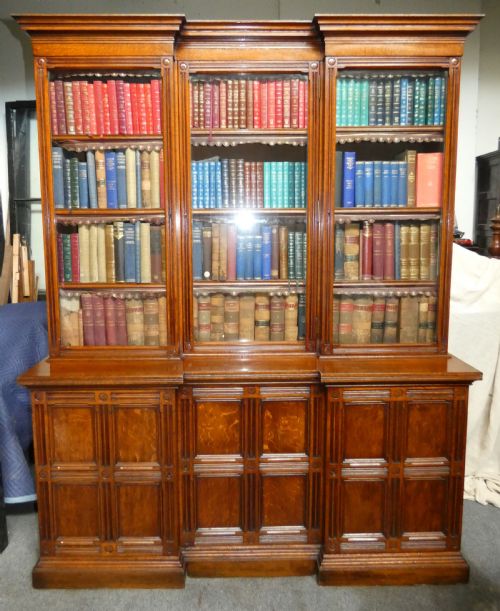
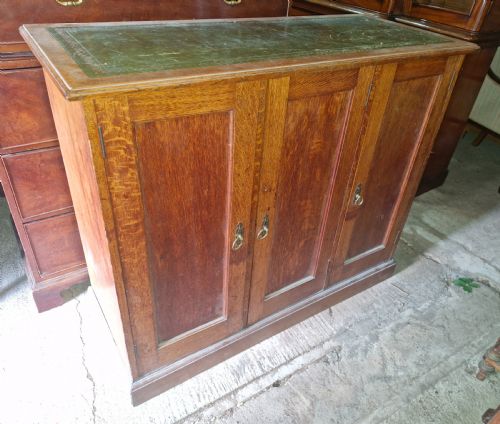


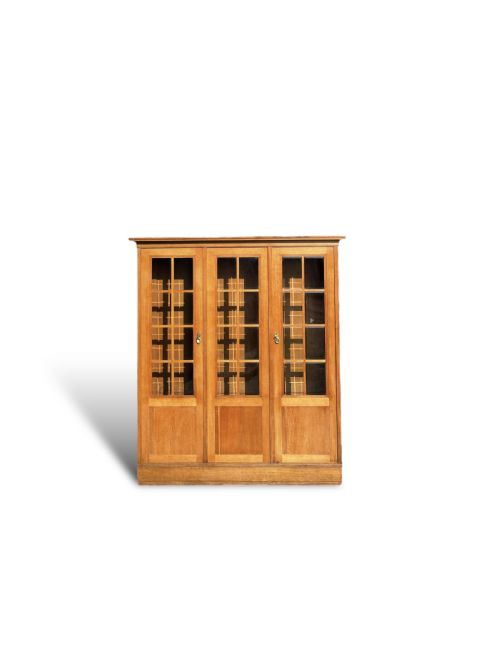

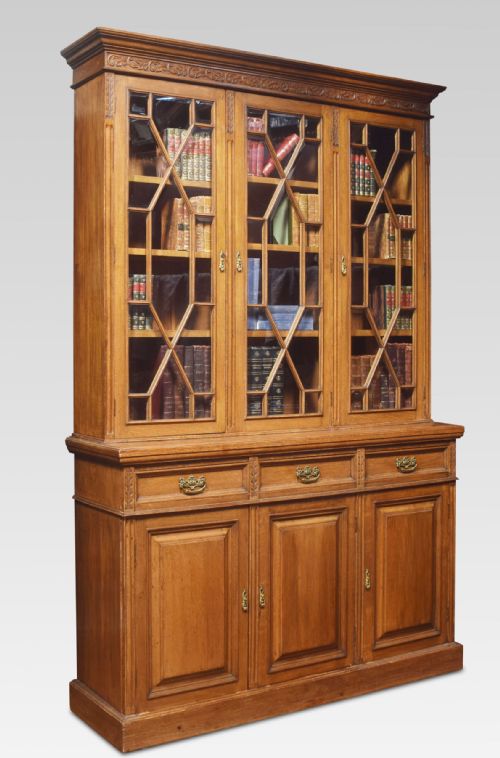
Three Door Oak Cupboard
A three door oak cupboard offers generous proportions and robust storage, appearing across periods from the Georgian era through to the 1930s in diverse regional styles.
Three Door Oak Cupboard
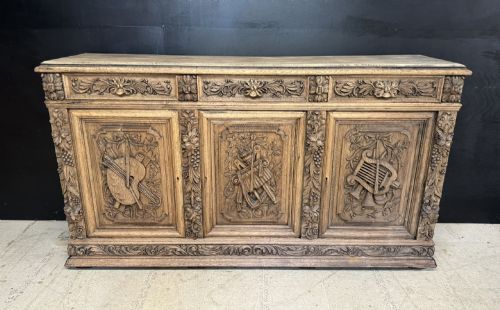
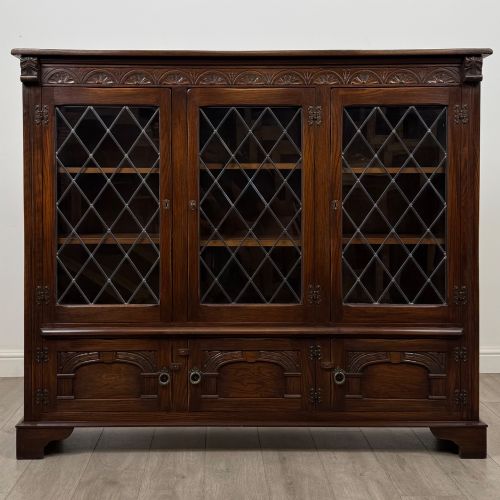
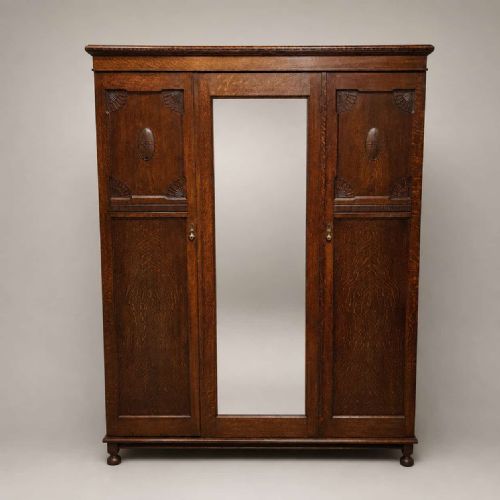
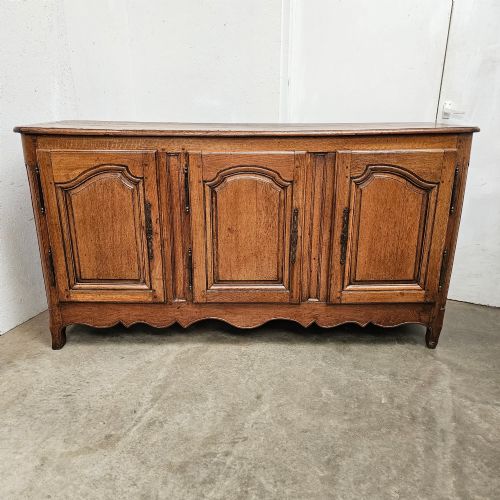
When searching for a three door oak cupboard, buyers encounter a diverse selection of large storage furniture, including sideboards, enfilades, bookcases, and wardrobes. These substantial pieces originate from periods spanning the eighteenth century, the Victorian era, and the early twentieth century.
The pieces on this page reflect varied influences such as Jacobean Revival, French Provincial, and Gothic Revival. Oak serves as the primary timber, occasionally complemented by pollard oak, while forms range from breakfront armoires to library bookcases and vestry cupboards.
How they were made
Maker construction relies heavily on solid oak timber, frequently accented with carved details and panels. Workshops utilised traditional joinery methods to build heavy frameworks suited for domestic and institutional storage.
Hardware elements like brass, iron, wrought iron, and lead provide structural and decorative details on doors and glazing. Interior storage is often organised with timber shelving or hanging space depending on the specific form.
Object forms on this page include bookcases, display cabinets, wardrobes, enfilades, dressers, and sideboards.
What varies in quality
Quality in these pieces depends on the selection of timber and the depth of carving executed by the maker. Solid construction and well-figured oak distinguish finer examples from simpler utilitarian cupboards.
The integration of original hardware, such as brass fittings and leaded glass panels, influences the character of the piece. Proportion and regional stylistic execution also mark the distinction between standard workshop production and more ambitious cabinet work.
The Three Door Oak Cupboard Glossary
- Enfilade
- A long sideboard or cabinet with a series of three or more doors, commonly associated with French dining rooms and formal reception spaces.
- Pollard oak
- Timber taken from trees that have been pollarded, producing dense grain patterns with distinctive decorative markings.
- Breakfront
- A cabinet or sideboard whose central section projects forward from the recessed outer sections.
- Vestry cupboard
- A large storage piece traditionally housed in church vestries for vestments and parish records.
- Jacobean Revival
- A nineteenth-century revival style mimicking seventeenth-century English furniture, characterised by geometric moulding and heavy turned supports.
Three Door Oak Cupboard: Frequently Asked Questions
Where were these cupboards used?
These large storage pieces served multiple functions across domestic and institutional settings. Examples appear in libraries, dining rooms, and church vestries.
They provided secure storage for books, linens, and provisions, adapting to the changing needs of households and public buildings over the centuries.
How do I date an oak cupboard?
Dating relies on observing construction techniques, hardware types, and stylistic ornament. Pieces from the Georgian period show different joinery methods compared to Edwardian or 1930s items.
Secondary woods, nail types, and the presence of revival styles help place a piece within its historical context.
Are these pieces made of solid oak?
Many examples are constructed from solid oak timbers, while some incorporate related materials like pollard oak for decorative veneer effects. Construction methods vary according to the period and regional workshop traditions.
Interior components and backboards may utilise secondary timbers suited to functional requirements.
How do I care for antique oak?
Maintenance involves keeping timber away from direct heat sources and sudden humidity changes. Regular dusting with a dry cloth preserves the polished surface.
Applying traditional wax occasionally helps nourish the oak grain without building up heavy chemical residues.