
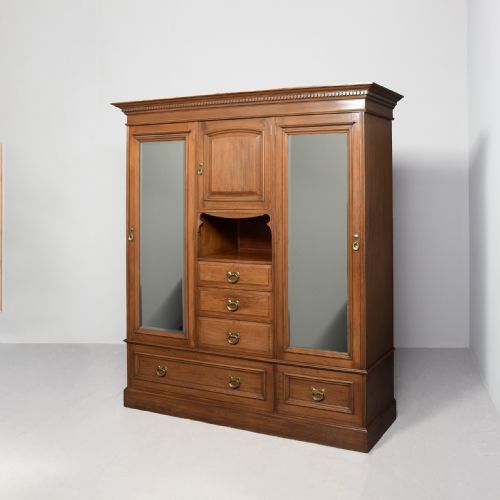
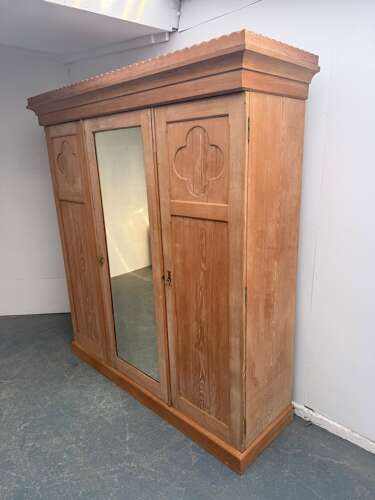
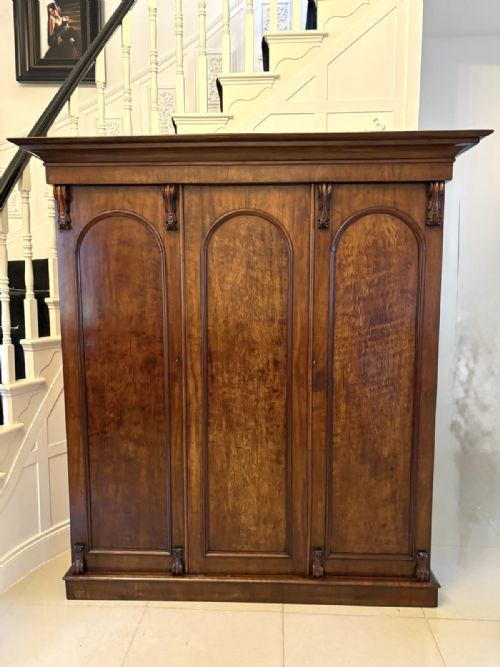
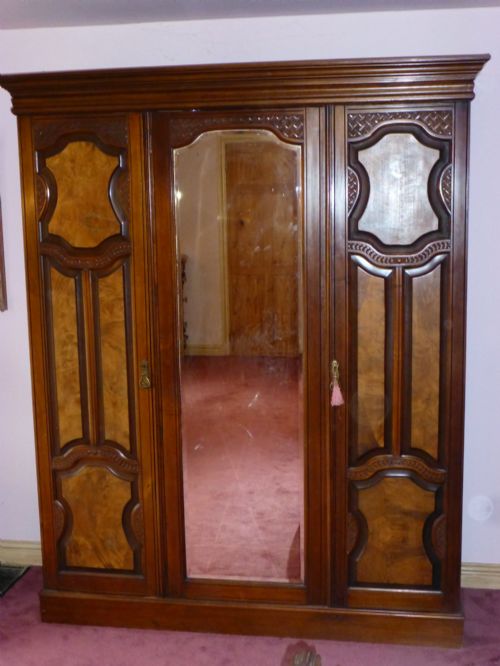

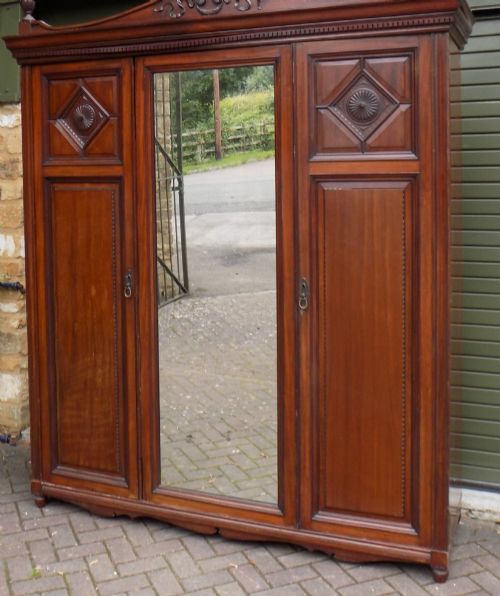
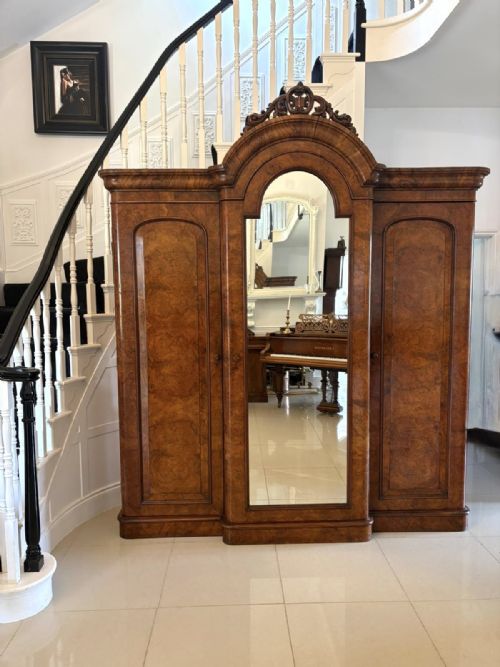
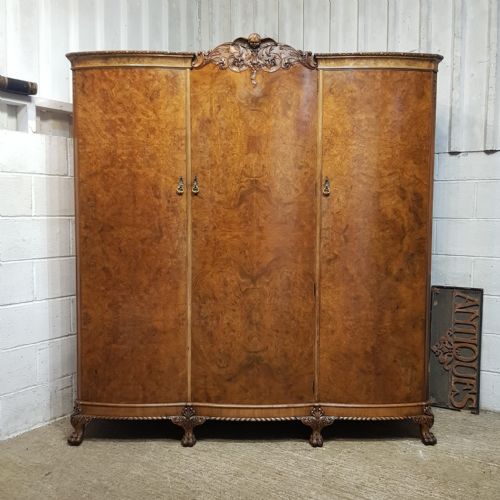
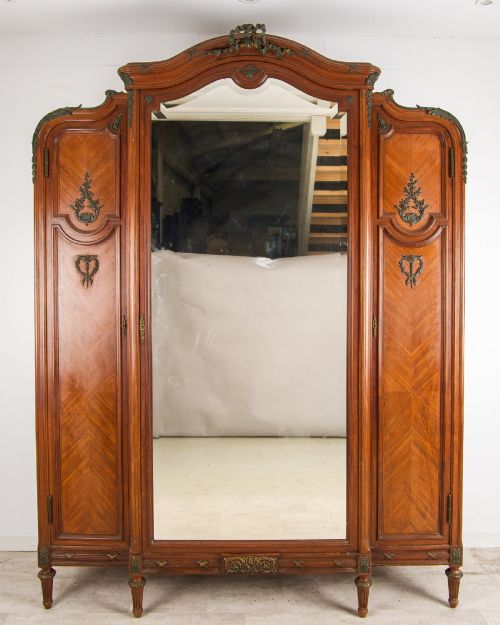


Three Door Armoire
A three door armoire provides substantial bedroom storage through a generous central section flanked by matching compartments.

Three Door Armoire
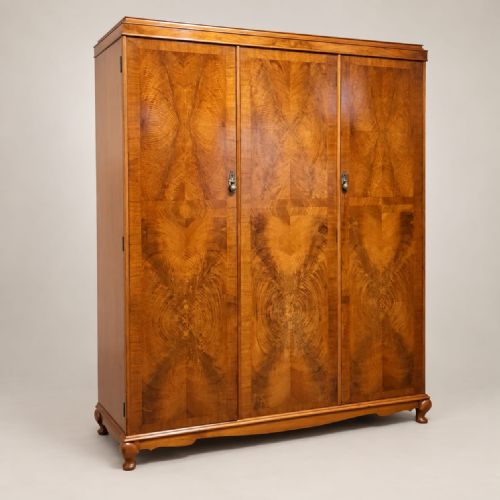
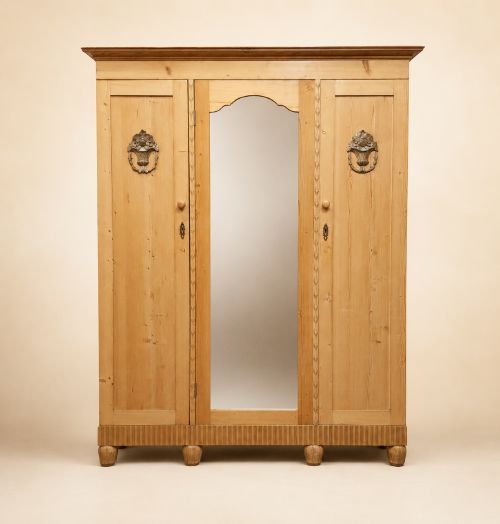
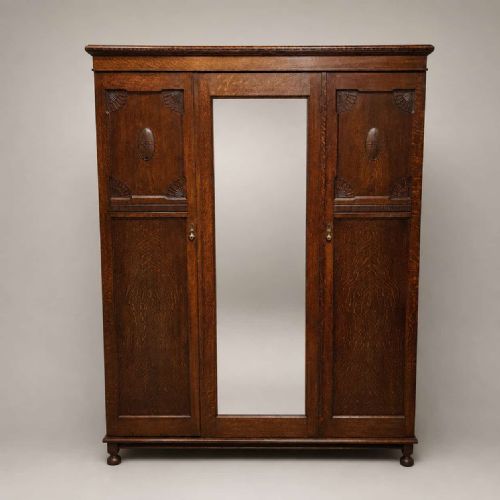
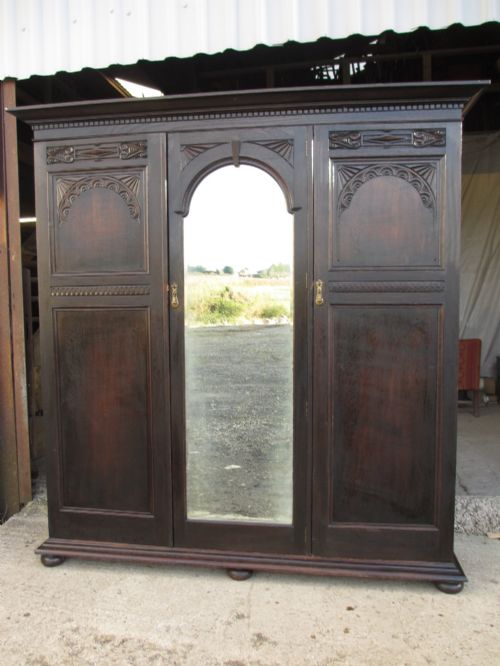
A three door armoire stands as a large storage piece designed primarily for hanging garments, shelving and internal drawers, commonly encountered as a triple wardrobe or compactum from the Victorian, Edwardian and Art Deco periods.
Originating across British and French workshops, these substantial pieces serve bedrooms requiring considerable capacity whilst displaying period details like carved panels, marquetry inlay and brass mounts.
How they were made
Cabinet makers constructed these large carcases using solid timbers for structural frames alongside figured veneers like burr walnut, mahogany and satinwood applied to drawer fronts and panel surfaces.
Joinery techniques relied on pegged mortise and tenon joints for stability, with panelled construction allowing timber to expand and contract naturally without splitting.
Finishing involved hand-applied wax, polish or varnish over carved details, gilt bronze ormolu mounts and brass hardware.
Three Door Armoire Retail Price Guide 2026
Typical asking prices for three door armoire among the pieces listed under this phrase on Sellingantiques today, from the lower quarter to the upper quarter. They describe what is for sale here now, not the wider market.
Many Edwardian gentlemen required dedicated compactum compartments specifically sized for stiff detachable collars and walking canes.
What varies in quality
Quality rests on the selection of timber, visible in the matching of figured burr walnut veneers or the depth of carved oak and mahogany mouldings.
Construction standards appear in the thickness of solid timber backboards, the precision of dovetailed drawer boxes and the smooth operation of large panelled doors.
The integrity of original glass mirrors, internal linen slides, brass hanging rails and period locks distinguishes pieces preserved in unaltered state from heavily modified examples.
Holland and Sons·JEAN FAURE·Harry and Lou Epstein
The Three Door Armoire Glossary
- Compactum
- A wardrobe variant featuring internal drawers, sliding trays and compartments alongside hanging space. This multi-functional layout became particularly popular during the Victorian and Edwardian eras.
- Ormolu
- Gilded bronze mounts applied as decorative ornaments to French armoires. The technique involves coating bronze with a mercury and gold amalgam before firing.
- Serpentine
- A front profile characterised by a convex central section flanked by concave curves. This undulating shape requires advanced woodworking skill to shape accurately.
- Pollard oak
- Timber taken from oak trees that have been pollarded, producing wood with dense, clustered knots and rich figuring. Cabinet makers valued this material for decorative veneering.
- Breakfront
- A cabinet design where the central section projects forward from the flanking wings. This architectural arrangement creates depth and shadow across the facade.
Three Door Armoire: Frequently Asked Questions
How do I dismantle a three door armoire?
Most large wardrobes of this scale were designed to be taken apart for transport by removing the cornice, plinth, doors and dismantling the panelled sides from the main backboards.
Marking each wooden component during disassembly ensures the frame reassembles squarely without binding the doors.
Where does a three door armoire fit best?
Due to their considerable height and width, these large storage pieces require a bedroom or dressing room with high ceilings and adequate wall clearance to open flanking doors fully.
Placing the armoire away from direct heat sources prevents the timber and decorative veneers from drying out or warping over time.
How do I care for antique wood surfaces?
Maintaining the finish involves dusting with a soft cloth and occasionally applying natural beeswax to nourish polished mahogany, walnut and oak surfaces.
Avoid silicone-based polishes, which build up a residue and soften historical wax finishes.
How do I tell Victorian from Edwardian wardrobes?
Victorian examples tend to use dense, dark mahogany or heavily figured burr walnut with deep mouldings and architrave cornices. Edwardian pieces frequently employ lighter mahogany with inlaid satinwood stringing, lighter oak frames or carved revival details.
Examining the internal drawer construction and hardware often confirms the period of manufacture.