

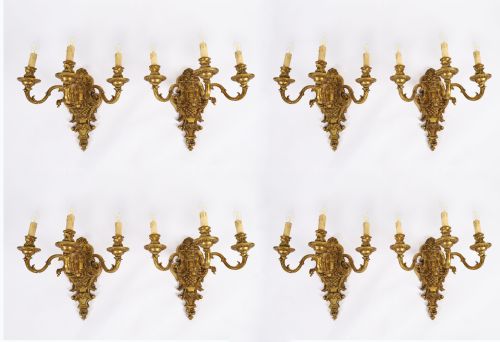


Three Branch Wall Sconces
These three branch wall sconces bring layered illumination and decorative weight to a room, drawing on centuries of European metalwork and carving traditions.
Three Branch Wall Sconces
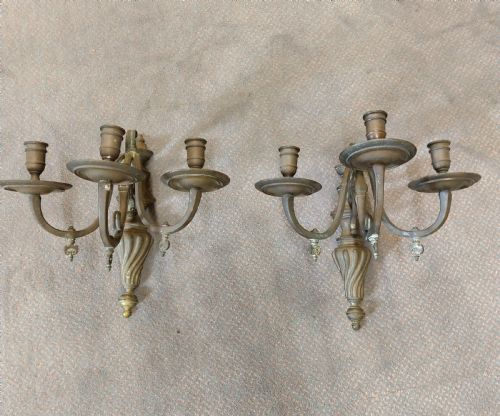
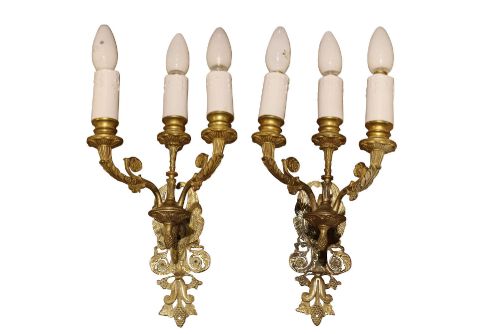
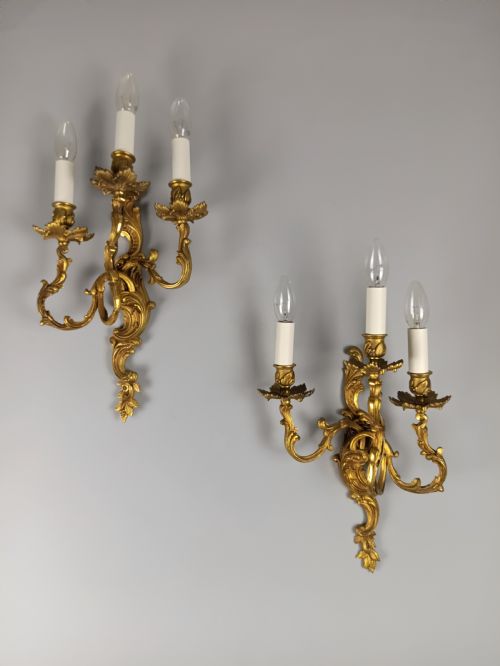
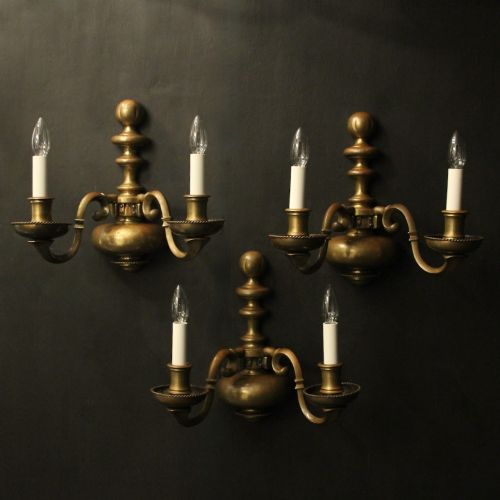
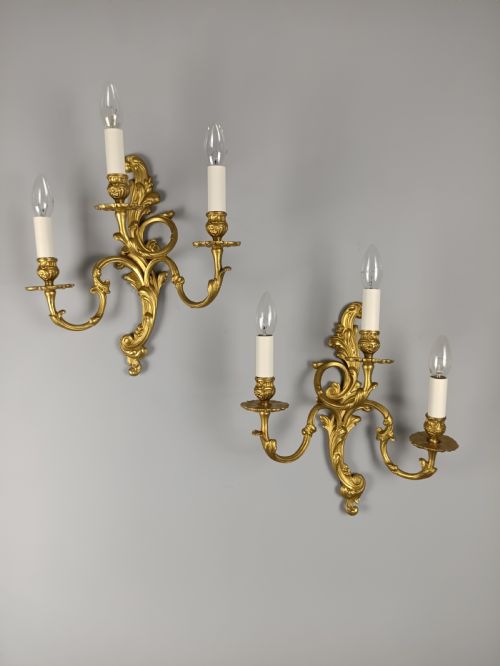
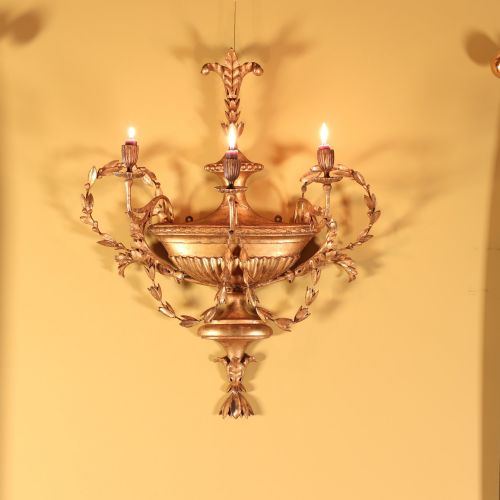
When you search for three branch wall sconces, you encounter lighting fixtures designed to mount directly onto vertical surfaces, projecting multiple candle or electrical arms into a room. The forms on this page span from the eighteenth century through to the twentieth century, with French and English origins dominating the selection.
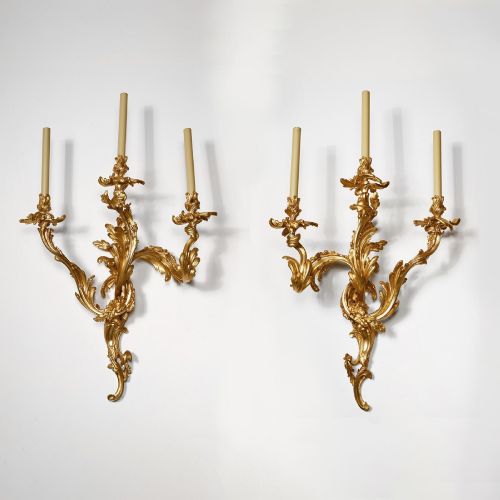
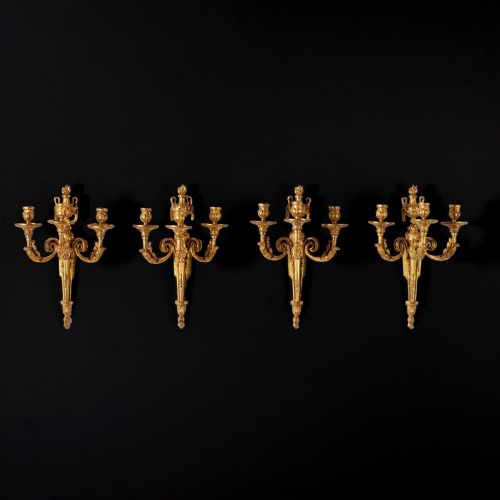
The objects appear as matched pairs, sets of four, or larger groupings styled as wall lights, appliques, girandoles, and occasional mirrored sconces. French Rococo and Louis XVI revivals sit alongside English traditional and George III Neoclassical designs.
You are most likely to meet twentieth-century pieces executed in gilded brass or bronze, as well as nineteenth-century interpretations of earlier French court styles. These fixtures utilise three distinct arms branching from a central backplate to distribute light outward.
Materials and construction
The construction of these pieces relies heavily on cast metals such as ormolu, gilt bronze, brass, and gilded brass, often finished with fire-gilding or applied surface gold. Metalwork is frequently chased or carved to render naturalistic scrollwork, acanthus leaves, and classical motifs.
Three Branch Wall Sconces Retail Price Guide 2026
Typical asking prices for three branch wall sconces among the pieces listed under this phrase on Sellingantiques today, from the lower quarter to the upper quarter. They describe what is for sale here now, not the wider market.
The listings span from the eighteenth century to the twentieth century, encompassing Victorian, Art Nouveau, and Louis XVI revival periods.
Judging quality
Quality rests in the crispness of the casting and the depth of the subsequent chasing, where sharper, more defined foliage and ornament indicate superior handwork. Mass-produced or later revival castings often display softer edges and shallower detail.
The choice and execution of the surface finish also dictate the tier of the piece, with durable fire-gilding retaining a luminous warmth compared to flat, modern coatings. Furthermore, the structural integration of the three arms to the backplate reveals whether the maker prioritised rigidity and balance.
Maison Baques
The Three Branch Wall Sconces Glossary
- Ormolu
- Gilded bronze produced by applying a mercury-gold amalgam to a bronze base and heating it. This technique creates a durable, deep golden lustre characteristic of fine French pieces.
- Girandole
- A decorative wall sconce featuring a reflecting mirror plate behind the candles or lights. The glass amplifies the illumination within the room.
- Applique
- A wall-mounted light fitting or sconce, frequently used in French terminology. It describes fixtures designed to be applied directly to wood-panelled or plastered walls.
- Gesso
- A plaster-like mixture applied to wood bases to create a smooth surface for gilding. It allows for intricate, low-relief carving before the application of gold leaf.
- Chasing
- The manual tooling of metal surfaces with punches and hammers after casting. This process sharpens details and adds texture to ormolu and bronze.
Three Branch Wall Sconces: Frequently Asked Questions
How were these wall sconces originally lit?
These fixtures were originally designed to hold wax or tallow candles, relying on the metal backplates and optional mirror glass to reflect and amplify the flickering flame.
Over time, many surviving examples have been professionally adapted for electricity while retaining their original structural arms and mounting brackets.
Where should I place a wall sconce?
Historically, three branch sconces were positioned along drawing room walls to flank mirrors, paintings, or architectural doorways for balanced illumination.
In modern interiors, they function effectively beside fireplaces, along hallways, or above sideboards to provide warm, ambient lighting at eye level.
How do I distinguish Rococo from Neoclassical styles?
Rococo designs display asymmetrical scrollwork, C-scrolls, and exuberant naturalistic motifs inspired by shells and foliage. They emphasise movement and organic fluidity.
Neoclassical pieces, by contrast, introduce strict symmetry, classical urns, swags, and geometric proportions rooted in ancient Greek and Roman architecture.
Are these sconces sold as single pieces?
The inventory largely consists of matched pairs, sets of four, or occasionally larger groupings designed to maintain symmetry on both sides of a room feature.
Single sconces do appear, but pairs and sets remain the standard configuration for formal interior placement.