


Three Bottle Decanter Frame
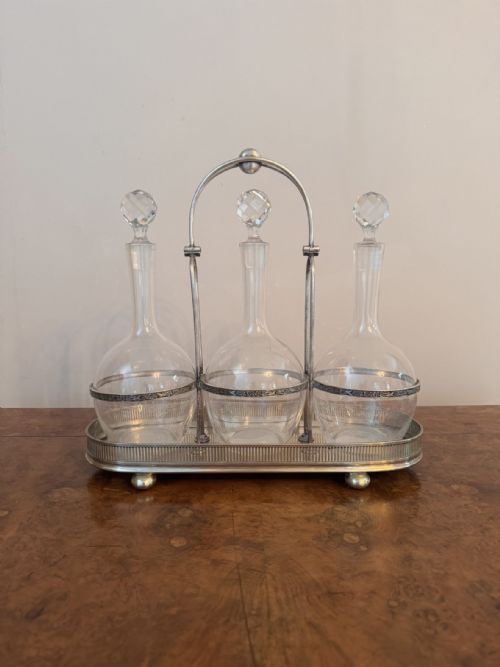
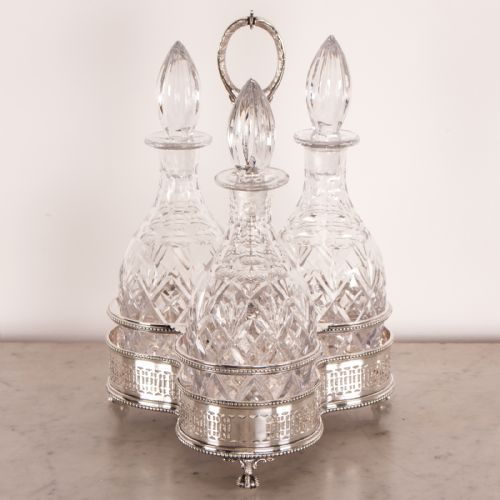
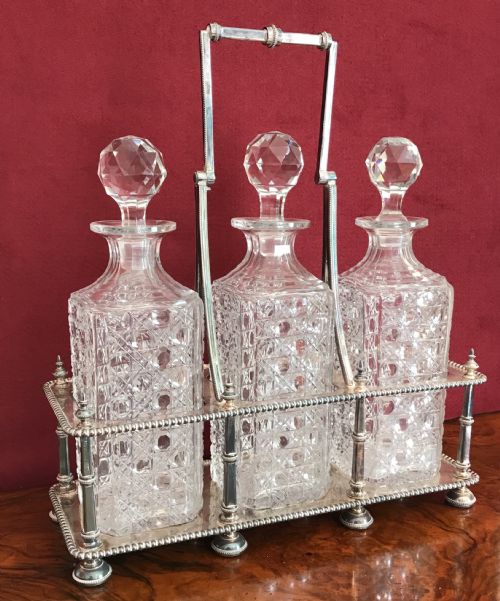
A three bottle decanter frame holds three distinct glass vessels securely in a portable stand, offering an elegant way to serve multiple spirits.

Three Bottle Decanter Frame
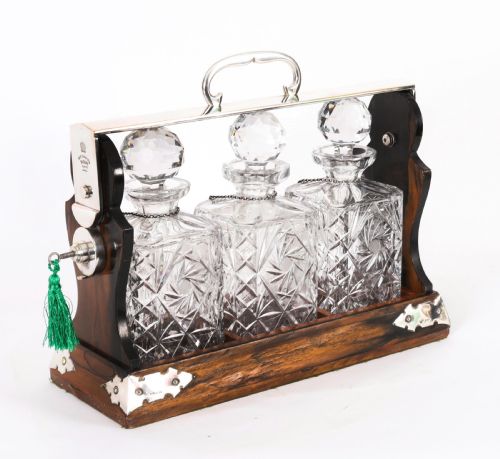
A three bottle decanter frame brings together three matched glass vessels within a structured metal or wooden stand, creating a centrepiece for hospitality. These pieces appear in forms ranging from open metal cruet stands to secure locking tantalus frames.
The selections span the Victorian, Edwardian, and nineteenth-century periods, showing how hosts displayed spirits in entertaining spaces. Oak, coromandel wood, and silver plating form the primary structural housings for these glass sets.
Makers housed three cut crystal or glass decanters in frames designed for sideboard display or portable service. Tantalus variations introduce a locking mechanism across the necks of the three bottles to restrict access.
Materials and construction methods
Silversmiths and metalworkers utilised silver plating and Old Sheffield plate over base metals to construct ornate carrying frames and locking bars. Oak and exotic coromandel wood provided sturdy box bases and carrying handles designed to support the weight of three full glass vessels.
Glassmakers shaped heavy crystal and glass into three matching decanters, frequently applying deep geometric cuts to catch the light. Metal collars and lock mechanisms were fitted precisely to the wooden or plated bases to secure the bottles.
The tantalus gets its name from Greek mythology, keeping the drinks frustratingly in sight yet locked away from thirsty guests.
Distinguishing quality in frames and decanters
Quality depends on the harmony between the three original decanters and their housing frame, particularly when matching cut glass patterns align across all vessels. Heavier gauge silver plating and substantial timber selection indicate superior production.
Makers who incorporated fully functioning locking mechanisms with working keys demonstrate higher craftsmanship in tantalus designs. The crispness of the glass cutting and the weight of the metal mounts distinguish standard production from finer workshop output.
Walker & Hall·Betjemann·Elkington·The Goldsmith Co.·Philip Ashberry
The Three Bottle Decanter Frame Glossary
- Tantalus
- A locking drink cabinet or frame that secures decanters by a bar across their stoppers, preventing access without a key.
- Cruet
- A small frame designed to hold condiment or decanter bottles, usually fitted with a central carrying handle.
- Coromandel
- A dense, richly figured tropical hardwood utilised for luxury Victorian box frames and tantalus bases.
- Sheffield Plate
- An early fused metal technique bonding a thin sheet of silver to a copper base before electroplating became common.
- Cut Crystal
- Glass with high lead content carved with decorative facets to increase brilliance and weight.
Three Bottle Decanter Frame: Frequently Asked Questions
What is a three bottle decanter frame?
A three bottle decanter frame is a fitted stand or box designed to hold three glass spirit bottles together for serving or display.
These pieces range from open metal stands to secure locking tantalus frames created during the Victorian and Edwardian eras.
How do locking tantalus frames work?
A locking tantalus uses a metal bar that fastens down over the glass stoppers, preventing the decanters from being lifted out of the frame.
Working keys allow the owner to release the bar when entertaining guests.
What woods were used for frames?
Cabinetmakers utilised sturdy domestic timbers like oak alongside exotic hardwoods such as coromandel wood for luxury box frames.
These woods provided the structural strength needed to support three heavy glass decanters.
Are the decanters usually matching?
The decanters supplied with these frames are typically matched sets of three designed specifically to fit the individual apertures of the stand.
Cut crystal and pressed glass patterns correspond across all three vessels.