


Thoroughbred Horse Portrait Oil
These thoroughbred horse portrait oil works capture famous racers and stable champions across the nineteenth and early twentieth centuries.
Thoroughbred Horse Portrait Oil
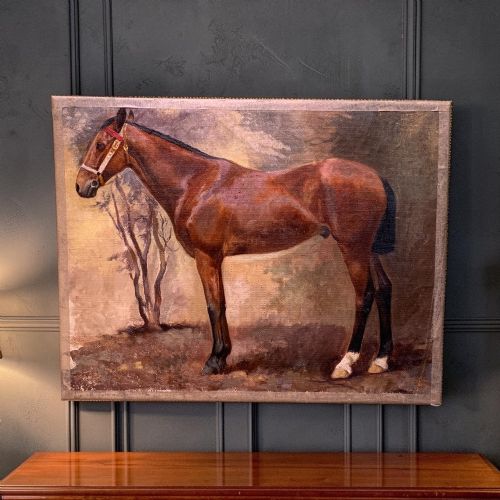
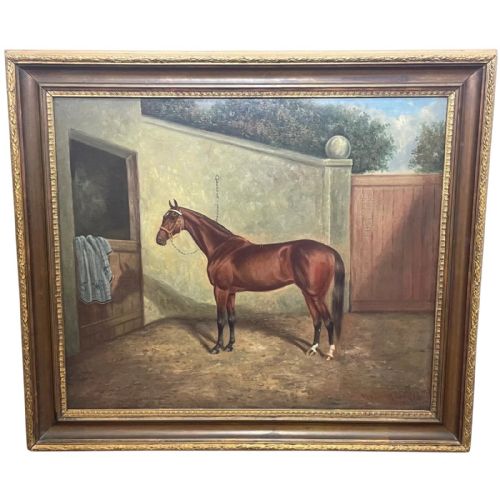
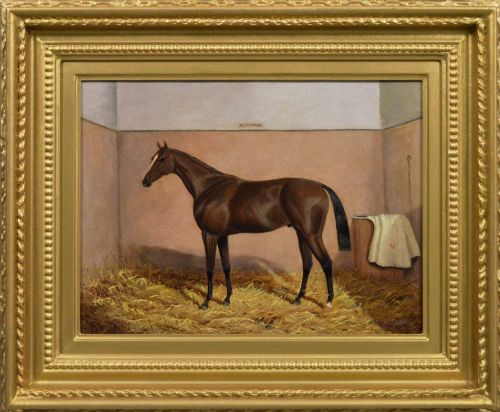
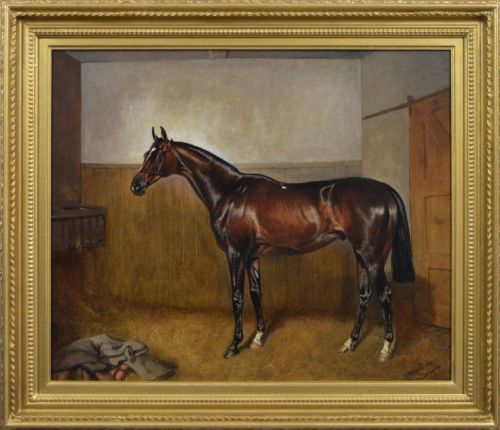
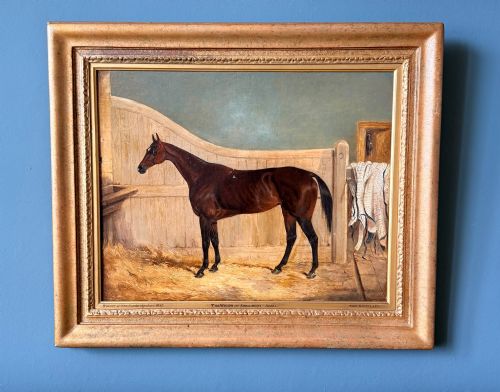
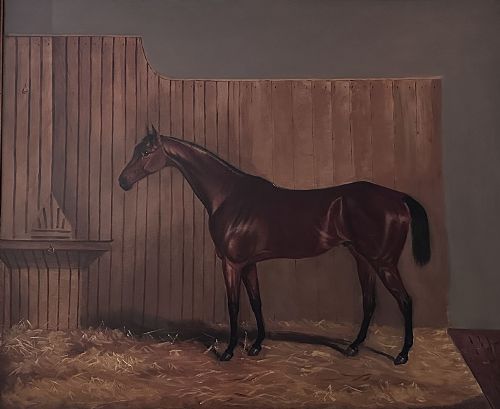
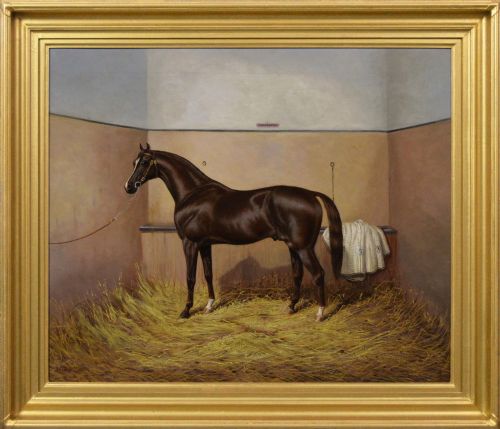
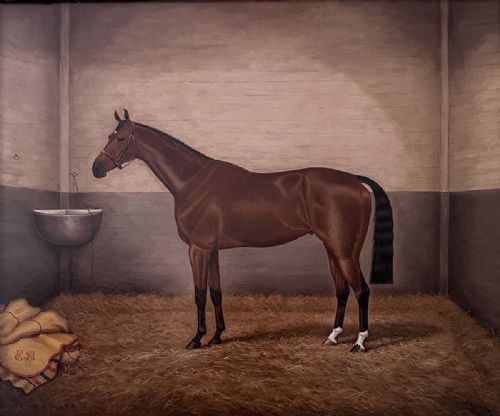
A thoroughbred horse portrait oil depicts named racehorses, winners, and stable champions across the nineteenth and early twentieth centuries. These paintings record historic victors from Epsom Derby and Kempton Park alongside notable mounts associated with prominent owners and royal figures. You will encounter works spanning Victorian Sporting Art, Edwardian equestrian styles, and British Realism on canvas.
The subjects frequently feature specific animals with jockeys up in racing colours, or individual horses standing within stables and landscapes. Many pieces document famous runners like Spion Kop, Flying Fox, and Persimmon, often identified alongside their riders such as Fred Archer or Jack Watts. These compositions function as both fine art and records of British turf history.
How they were made
Artists painted these works using oil paint applied to canvas supported by wood stretchers. The technique relies on layered oil pigments to build the sheen of a bay coat, the musculature of a thoroughbred, and the details of silk racing colours. Many examples retain their original giltwood frames adorned with gold leaf.
The preparation of the canvas and the application of successive oil glazes allowed painters to achieve depth in the background landscapes and stable interiors. Brushwork ranges from the precise realism of mid-nineteenth-century specialists to the looser painterly style of early twentieth-century Edwardian compositions.
Common framing materials recorded across these inventory items include traditional giltwood and gold leaf surrounds.
What varies in quality
Quality in a thoroughbred horse portrait oil rests upon the accuracy of equine anatomy and the specific likeness of the animal rather than a generic horse form. Superior works by recognised sporting artists capture the correct posture, bone structure, and characteristic expression of a champion racer. The rendering of the human figure, particularly the jockey up in correct silks, further separates accomplished commissions from routine studio output.
The handling of light across the coat and the integration of the horse within its landscape or stable setting dictate the visual success of the piece. Preservation of the original oil surface and the presence of contemporary giltwood framing contribute to the historical integrity of the painting.
Frederick Albert Clark·John Alfred Wheeler·Thomas Walker Bretland·Edward Lloyd of Ellesmere·Samuel Spode·Alfred Wheeler·Walter Herbert Wheeler
The Thoroughbred Horse Portrait Oil Glossary
- Canvas
- A heavy woven fabric stretched across a wooden frame to serve as a support for oil paintings. It provides the standard textured ground for nineteenth-century equestrian works.
- Giltwood
- Wood carved and covered with a thin layer of gold leaf or gold paint. This material forms the traditional ornamental frames found on Victorian and Edwardian art.
- Jockey up
- A racing term indicating a rider is mounted upon the horse. In these paintings, the phrase often denotes a specific jockey named in the title alongside the horse.
- Sporting art
- A genre of painting dedicated to horses, racing, hunting, and field sports. This tradition dominated British art production throughout the Victorian period.
Thoroughbred Horse Portrait Oil: Frequently Asked Questions
What is a thoroughbred horse portrait oil?
These paintings are oil on canvas works depicting specific racehorses, winners, and stable subjects from the nineteenth and early twentieth centuries.
They record famous turf victors, often named in the titles alongside their jockeys, trainers, or owners.
Who painted these nineteenth century horse portraits?
The works were produced by specialised sporting artists and members of the British School working during the Victorian and Edwardian eras.
Many pieces are documented by named painters who recorded the prominent racing stables and champions of the period.
How do I identify the period of the painting?
Dating relies on the style of the canvas, the framing materials like giltwood, and the clothing and racing silks worn by any jockeys depicted.
Inscriptions on the reverse or contemporary titles often record the exact year of a notable racing victory.
Where were these equine portraits displayed?
Original owners hung these paintings in country houses, estate reception rooms, and estate offices associated with horse breeding and racing.
They served as prestige pieces celebrating the triumphs of elite thoroughbreds on British racecourses.