

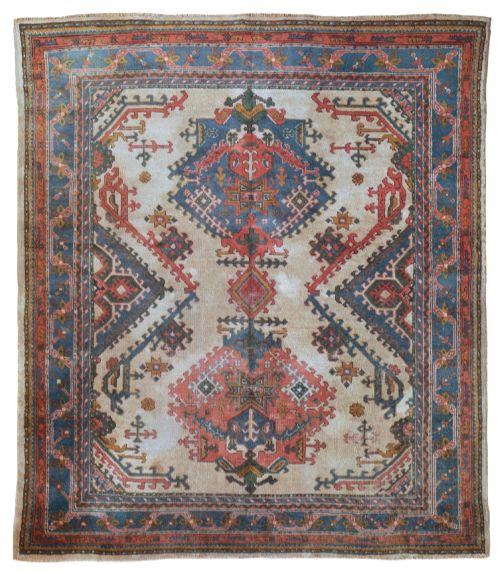



Terracotta Ushak Rug
These terracotta ushak rug examples offer grand Ottoman design, bringing warm Anatolian tones and generous dimensions to traditional interiors.
Terracotta Ushak Rug
A terracotta ushak rug represents classic carpet weaving originating from western Anatolia, frequently described through Ottoman and Turkish design traditions. Buyers encountering this selection will discover room-sized carpets, expansive runners, and occasional armchairs upholstered in the characteristic textile.
The objects span from the late nineteenth century into the early twentieth century, capturing periods such as eighteen eighty and nineteen twenty. Pieces vary from square formats to long runners suited for hallways or grand galleries.
Most entries are traditional Ushak or Oushak carpets featuring large-scale floral motifs and muted fields. Alongside standard wool configurations, specific examples incorporate angora wool for a softer handle.
Assessing quality in the weaving
Quality rests upon the fineness of the knotting and the subtlety of the colour palette across the wool pile. Superior examples display harmonious fading and intricate medallion patterns that remain crisp despite age.
The scale of the carpet dictates its presence, with oversized and enormous formats requiring exceptional structural integrity in the cotton foundation. The handling of the angora wool variants also marks a distinction in the texture and suppleness of the surface.
Terracotta Ushak Rug Retail Price Guide 2026
Typical asking prices for terracotta ushak rug among the pieces listed under this phrase on Sellingantiques today, from the lower quarter to the upper quarter. They describe what is for sale here now, not the wider market.
Some carpets are so vast they demand their own zip code, while others hide quietly beneath an antique club armchair.
Howard And Sons·Maples
The Terracotta Ushak Rug Glossary
- Ushak
- A traditional style of Turkish carpet originating from the town of Ushak in western Anatolia. These rugs are known for their luminous wool and large-scale geometric or floral patterns.
- Angora wool
- A soft fibre derived from angora goats or rabbits, sometimes utilised in these carpets for an elevated tactile finish. It yields a lustrous surface that catches the light differently than standard sheep wool.
- Runner
- A long, narrow carpet format designed specifically for hallways, staircases, or corridors. The listings include paired examples from the early twentieth century.
- Ottoman
- Pertaining to the historic Ottoman Empire, describing the cultural and artistic context of these Anatolian carpets. The style influences the large floral sprays and characteristic medallion layouts.
Terracotta Ushak Rug: Frequently Asked Questions
How do I clean an old carpet?
Vacuum gently using a suction-only attachment without a rotating brush to protect the delicate wool fibres and cotton foundation. Professional specialist cleaning remains essential for removing deep dirt without damaging the antique dyes.
Avoid chemical spot treatments or excessive moisture, which can cause the terracotta and secondary dyes to bleed. Address spills immediately by blotting gently with a clean, dry white cloth.
Are these carpets suitable for heavy traffic?
These nineteenth and early twentieth century floor coverings were built for durability using sturdy wool and cotton materials. Placing a quality underlay beneath the carpet cushions the pile and prevents slipping in busy areas.
Even with robust construction, rotating the rug periodically ensures even wear across high-traffic zones. Proper placement preserves the structural integrity of the foundation threads over time.
How do I date a Turkish carpet?
Dating relies upon examining the wool quality, the natural dye palette, and structural characteristics such as selvedges and fringe finishes. Nineteenth-century examples often display specific undertones and knot densities distinct from later twentieth-century production.
Comparing the field design against documented Ottoman and Anatolian motifs helps narrow the timeframe. Structural wear patterns also offer reliable clues to the age of the textile.
What underlay should I use?
Select a breathable, non-slip rug pad designed specifically for antique textiles and historic flooring. A proper underlay prevents the carpet from sliding while allowing air circulation beneath the cotton and wool structure.
Avoid rubber or plastic backings that can trap moisture and damage the natural fibres. The right pad cushions the footfall and reduces friction against the floorboards.