


Terracotta Upholstered Dining Chairs
These terracotta upholstered dining chairs bring warmth and tactile depth to a room, offering period character through rich textiles and robust frames.
Terracotta Upholstered Dining Chairs
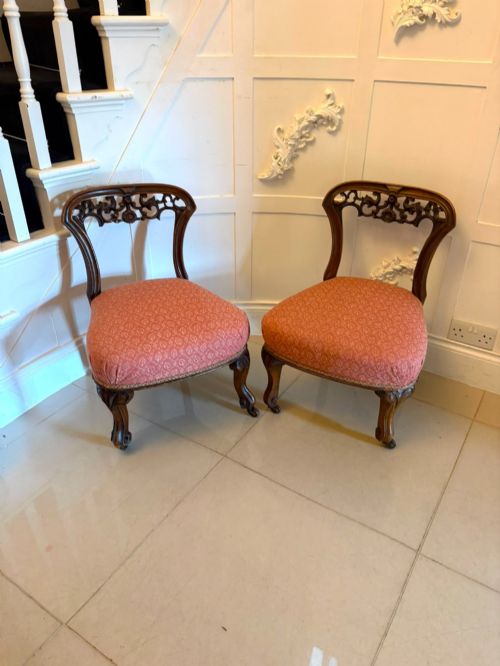
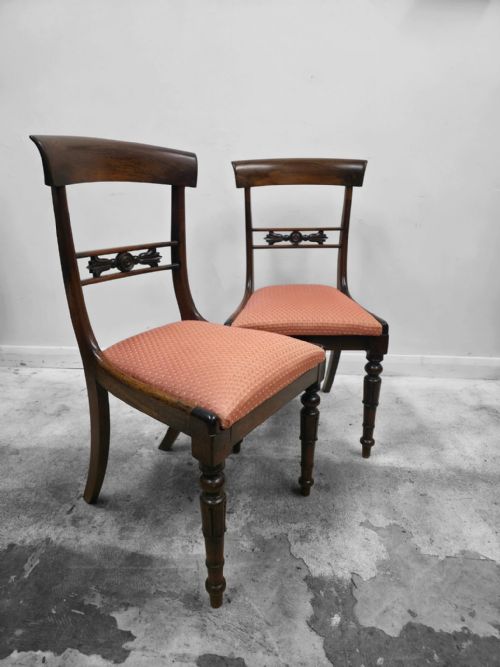
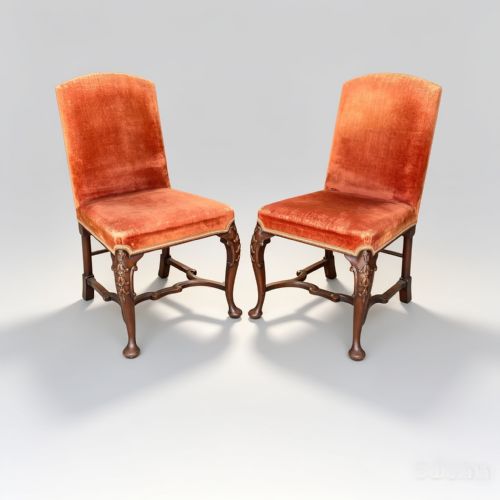
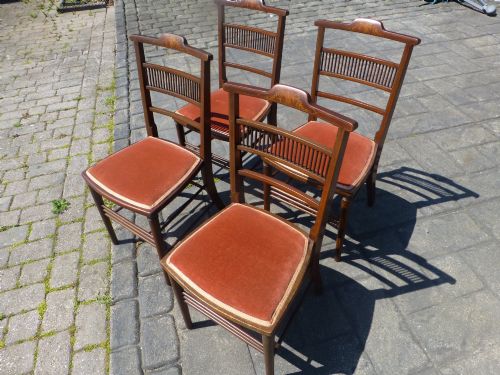
When you search for terracotta upholstered dining chairs, you encounter seating solutions spanning the eighteenth century through to the Edwardian era. These pieces combine period woodwork with distinctive terracotta upholstery.
Stylistic influences range from George II and Louis XV revivals to classic Regency and Victorian designs. Makers such as Morison and Co of Edinburgh and Munro also contribute to the broader range of available forms.
Materials and construction methods
Frames rely on solid hardwoods like mahogany and walnut, selected for their structural stability and rich grain. Carpenters shaped these timbers using traditional carving techniques, occasionally incorporating boxwood inlay for decorative contrast.
Upholstery techniques involve securing textiles, velvet, and fabric over padded foundations. Brass details appear on select pieces to accent the woodwork and secure the upholstery margins.
Several chairs feature tulip legs, proving that nineteenth-century woodworkers occasionally liked their furniture to bloom.
Assessing quality and craftsmanship
Quality reveals itself in the crispness of the wood carving and the integrity of the frame joints. Superior examples exhibit fluid lines on pierced splat backs and balloon backs, executed without looseness in the construction.
The standard of the timber selection and the precision of decorative inlays distinguish finer pieces from simpler utilitarian seating. Upholstery finish and textile selection further differentiate the execution of each set.
Morison and Co of Edinburgh·Munro
The Terracotta Upholstered Dining Chairs Glossary
- Balloon back
- A rounded, oval-shaped chair back popular during the Victorian period. This profile offers ergonomic support while providing a graceful silhouette.
- Pierced splat
- The central vertical strip of wood in a chair back that has been cut through to create an openwork pattern. This technique lightens the visual weight of the chair.
- Boxwood inlay
- Contrasting light wood inserted into recesses of a darker timber ground to form geometric or floral patterns. It serves as a subtle decorative border.
- Side chair
- A chair without arms, designed primarily for dining tables or occasional seating. These form the majority of historical seating sets.
Terracotta Upholstered Dining Chairs: Frequently Asked Questions
How do I care for antique upholstered chairs?
Keep these chairs away from direct sunlight to protect the terracotta fabric and the underlying wood finish from fading. Regular gentle dusting preserves the mahogany and walnut frames.
Avoid harsh chemical cleaners on the upholstery and the wood surfaces. Professional cleaning is recommended for the fabric elements to maintain their texture.
Can I mix these with modern tables?
Period dining chairs pair effectively with contemporary tables, creating a balanced contrast between old and new materials. The terracotta tones bridge warm wooden dining surfaces and modern interiors.
Ensure the seat heights match the clearance of your table before combining styles. Side chairs work best as they slide neatly beneath most modern tabletops.
How do I identify a Victorian chair?
Victorian chairs often feature darker timbers like walnut and mahogany, frequently utilising balloon backs or tulip legs. Construction methods from this era typically show machine assistance alongside traditional hand finishing.
Look for stylistic revival cues, such as George II or Louis XV influences reinterpreted by nineteenth-century cabinet makers. Label remnants or maker stamps can occasionally confirm the origin.
Are these chairs sturdy enough for daily dining?
Most antique dining chairs are built from dense hardwoods like walnut and mahogany, making them structurally robust for regular use. Traditional joinery provides lasting stability when maintained properly.
Periodic checks of the frame joints ensure the chairs remain secure during daily meals. Avoid rocking or tilting backward to protect the antique wooden legs.