

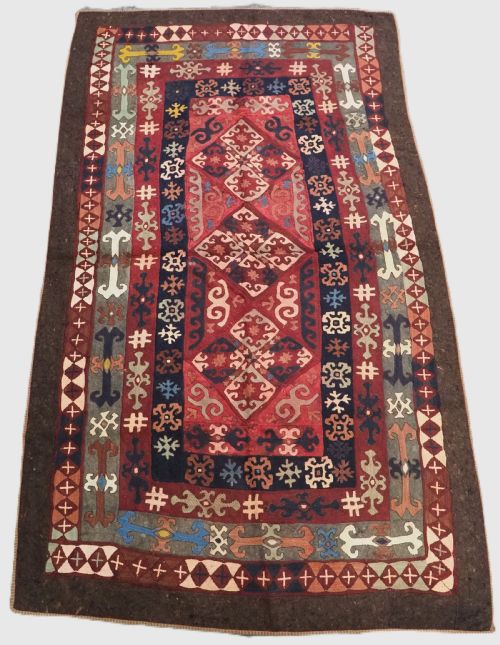
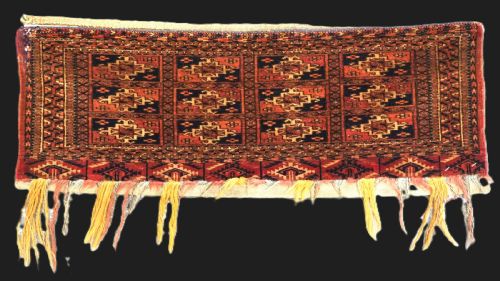


Terracotta Tribal Wall Hanging
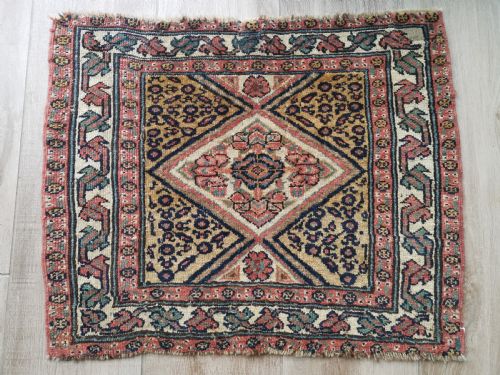
When you search for a terracotta tribal wall hanging, you encounter woven textiles and panels created by nomadic makers across Central Asia and Persia.
Terracotta Tribal Wall Hanging
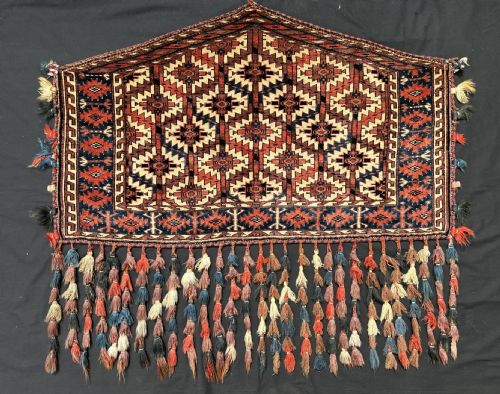
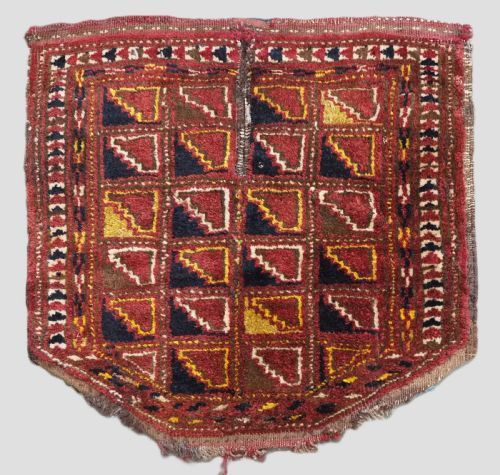
The terracotta tribal wall hanging designation covers a variety of nomadic weavings, including bag faces, torbas, asmalyks, and kilim panels originating from regions such as Turkmenistan, Azerbaijan, and Persia.
Makers produced these works during the nineteenth and early twentieth centuries, utilising wool and natural dyes to create functional items that now serve as decorative wall hangings.
Buyers will most frequently find torba faces, saddlebags, and flatweave panels dating from the 1850s to the 1900s on this page.
How they were made
Nomadic weavers relied on hand-spun wool and natural dyes to produce durable textiles that endured the rigours of daily camp life.
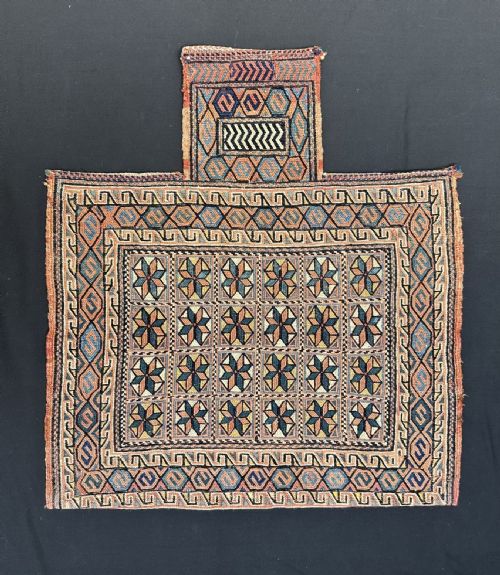
Craftspeople employed techniques such as pile weaving, flatweaving, embroidery, and soumac work, occasionally incorporating materials like felt, glass beads, and cotton into the construction.
Listings feature pieces utilising wool, cotton, felt, glass beads, and natural dyes across the nineteenth and early twentieth centuries.
What varies in quality
The fineness of the weave and the clarity of the design separate standard examples from superior pieces, with tighter knotting and precise geometric patterns indicating greater skill.
The vibrancy and depth of the natural dyes, along with the retention of original backs, tassels, and complete borders, elevate the stature of a weaving.
The Terracotta Tribal Wall Hanging Glossary
- Torba
- A small storage bag produced by Turkmen tribes, traditionally used inside a tent for household possessions.
- Asmalyk
- A large, often pentagonal trapping created for Turkmen wedding processions and mounted on the flanks of a camel.
- Soumac
- A wrapping technique producing a durable structure resembling a braid on the face and smooth strands on the reverse.
- Chuval
- A large Turkmen storage bag designed for blankets and heavy goods within the yurt.
- Gul
- A repeated primary medallion motif characteristic of Turkmen and Central Asian tribal weaving.
Terracotta Tribal Wall Hanging: Frequently Asked Questions
What is a tribal wall hanging?
These items originated as functional nomadic trappings, storage bags, and tent decorations created by tribal groups in Central Asia and Persia. Makers fashioned them for daily camp use rather than display.
Over time, collectors repurposed these durable woven panels and bag faces as decorative wall hangings to showcase their traditional designs and natural colour palettes.
How were these textiles used originally?
Nomadic communities utilised these woven pieces inside tents and yurts for storing household goods, grain, and bedding. Specific items served as camel trappings during weddings or as doorway portieres.
Each form fulfilled a practical role within a migratory lifestyle, constructed from locally sourced wool and dyed with materials derived from plants and minerals.
How do I care for a textile?
Protect antique wool textiles from direct sunlight to prevent the natural dyes from fading over time. Gentle vacuuming with a mesh screen safeguards the old fibres from damage.
Mount the hanging carefully across a supportive backing board or rod to distribute the weight evenly rather than suspending it by a single point.
How do I identify different tribal groups?
Specific tribes utilised distinct structural formats, wool qualities, and signature motifs such as specific guls or bandings. Yomut, Tekke, Ersari, and Shahsavan weavers each developed recognizable visual vocabularies.
Examining the weave structure, fringe finishes, and palette helps attribute a piece to a specific region like the Trans-Caspian steppes or South Persia.