



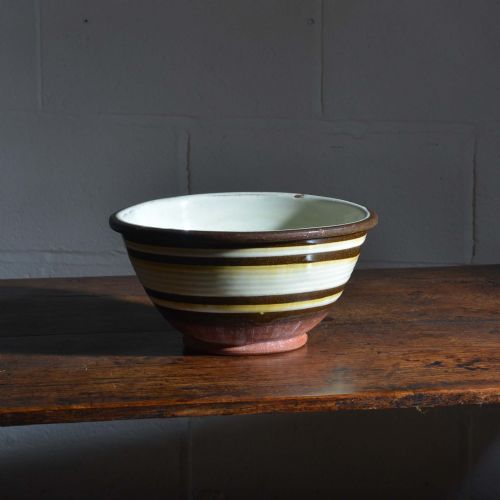


Terracotta Slipware Pottery
Terracotta slipware pottery combines rich earthy bodies with liquid clay decoration, offering collectors tactile history spanning centuries of regional folk traditions.
Terracotta Slipware Pottery
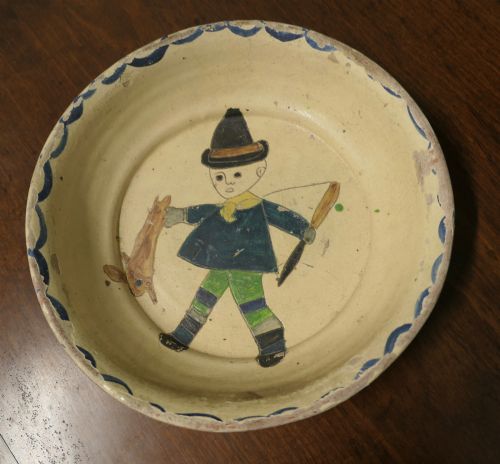
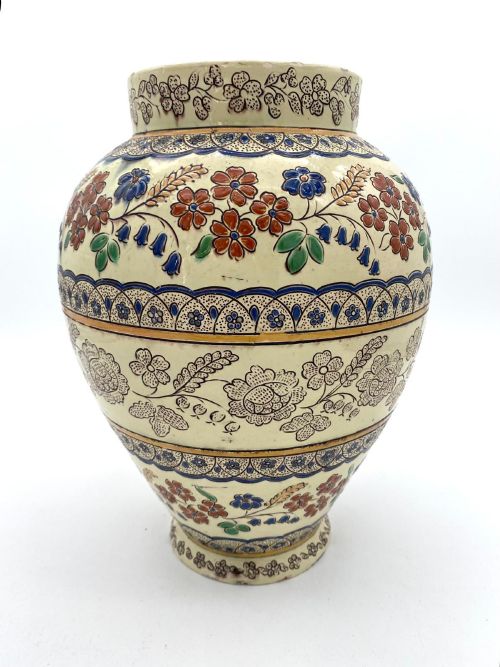
When you search for terracotta slipware pottery, you encounter a diverse group of earthenware objects decorated with liquid clay, ranging from early Islamic bowls to seventeenth-century tavern jugs and nineteenth-century dairy vessels.
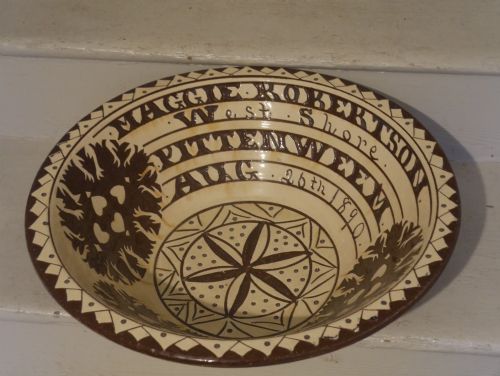
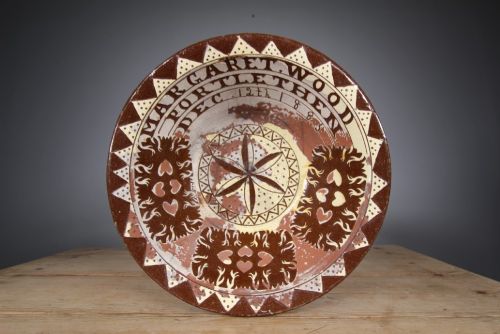
The pieces appearing on this page most commonly include nineteenth-century Scottish dairy bowls, Devon amphorae, and Dutch jugs, alongside earlier earthenware forms.
These items reflect various regional traditions, encompassing English country ware, Swiss and Victorian folk art, and Arts and Crafts examples.
Materials and construction
Makers shaped these pieces from earthenware clay, applying fluid slip as a decorative medium before finishing the surfaces with transparent lead glaze.
Potters utilised techniques such as slip-painting and trailed slip decoration to create distinctive surface patterns on the raw terracotta bodies.
Terracotta Slipware Pottery Retail Price Guide 2026
Typical asking prices for terracotta slipware pottery among the pieces listed under this phrase on Sellingantiques today, from the lower quarter to the upper quarter. They describe what is for sale here now, not the wider market.
Some seventeenth-century jugs arrived with built-in thirst traps, having spent centuries serving ale in noisy Dutch taverns.
Assessing quality
Quality in these ceramics depends upon the confidence of the slip application and the harmony between the terracotta body and the glaze.
Pieces showing distinct regional characteristics and well-preserved surface decoration stand apart from simpler utilitarian wares.
Seaton Pottery
The Terracotta Slipware Pottery Glossary
- Slip
- A suspension of clay in water used for decorating pottery surfaces before firing. It can be applied by trailing, painting, or dipping.
- Earthenware
- Porous pottery fired at relatively low temperatures. It requires a glaze to become impermeable to liquids.
- Lead glaze
- A traditional shiny coating fired onto earthenware to seal the porous clay body. It often deepens the warm tones of the underlying terracotta.
- Buffware
- Pottery made from clay that fires to a pale buff or neutral colour. It forms the foundation for many early slip-painted vessels.
Terracotta Slipware Pottery: Frequently Asked Questions
What is terracotta slipware pottery?
Terracotta slipware pottery consists of earthenware vessels decorated with liquid clay slip. These objects range from early Islamic bowls to seventeenth-century Dutch jugs and nineteenth-century dairy wares.
Makers across different regions shaped these pieces for both domestic use and decorative display, utilising lead glazes to seal the porous clay bodies.
How were these pieces used historically?
Many examples served practical daily functions such as dairy work, food service, or holding liquids in taverns and homes. Other forms, particularly early bowls and amphorae, served decorative or ritual purposes.
Over time, utilitarian vessels transitioned into cherished collection pieces due to their distinct regional folk art characteristics.
How do I care for antique slipware?
Keep these earthenware pieces in stable environmental conditions away from direct sunlight and excessive moisture fluctuations. Dust them gently with a dry cloth.
Avoid using water or cleaning agents on porous historical surfaces to protect the original glaze and slip decoration from damage.
How do I date these ceramics?
Dating relies on stylistic markers, form characteristics, and regional manufacturing techniques recorded across various periods. Seventeenth-century jugs display different handle formations and glaze properties compared to nineteenth-century dairy bowls.
Examining the clay body and the specific application method of the slip helps place an object within its historical context.