
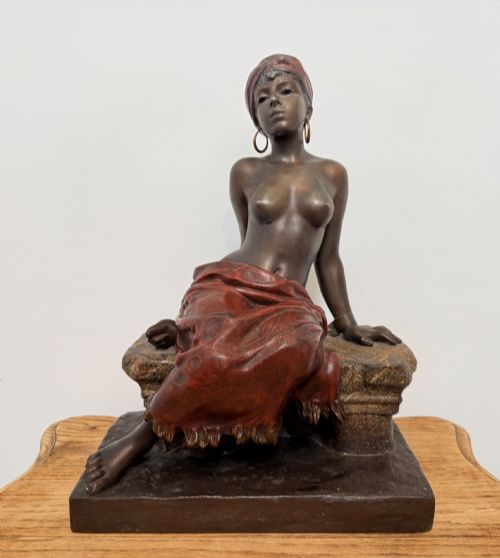


Terracotta Seated Figure
These terracotta seated figure sculptures span centuries and regions, offering tactile warmth and classical gravity for any room.
Terracotta Seated Figure
A terracotta seated figure represents a diverse tradition of sculpted clay forms sitting or resting, spanning ancient Pre-Columbian artefacts to European nineteenth-century sculpture.
Buyers browsing this selection encounter various interpretations, from Austrian animal studies and Orientalist subjects to ancient Ecuadorian figures and South East Asian antiquities.
The assortment includes domestic Victorian ornaments, Grand Tour souvenirs of classical deities, and expressive portraits modelled by European factories and independent studios.
Materials and construction methods
These works rely primarily on fired earth, utilising terracotta and earthenware clays that acquire warm reddish-brown tones during the kiln firing process.
Many European nineteenth-century examples incorporate applied paint, slip, or patinated bronze and gilt finishes to enhance the textural detail of drapery and fur.
Ancient and regional pieces depend on hand-modelling or slip-painting techniques, uniting raw clay with mineral pigments to define form and expression.
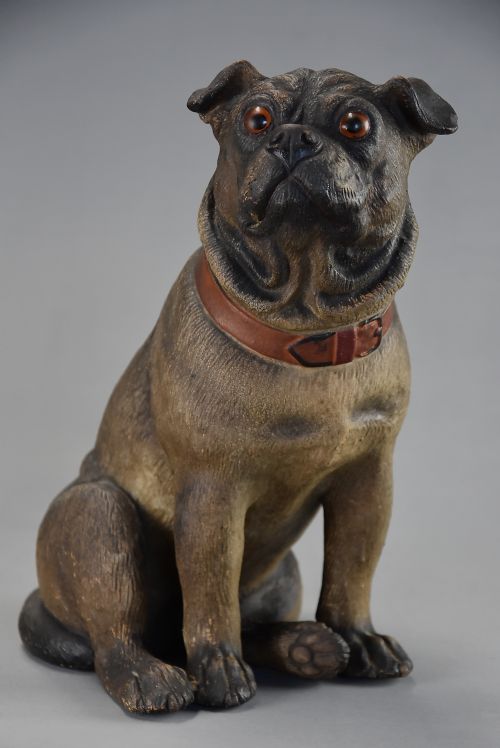
An attentive Pug dog sits patiently among the nineteenth-century sculptures, proving that canine portraiture transcends the centuries.
Distinguishing quality in sculpted clay
The finesse of the surface finish dictates distinction, separating factory-produced items with simple glazes from finely painted or patinated works by recorded makers.
E Villanis·Foucher·Goldscheider
The Terracotta Seated Figure Glossary
- Terracotta
- Fired unglazed clay of a brownish-red colour, widely used for sculptural figures and architectural ornaments from antiquity onwards. It hardens permanently in the kiln.
- Earthenware
- Porous pottery fired at lower temperatures than stoneware or porcelain, requiring a glaze or paint layer to ensure impermeability to liquids. It forms the body of many historical figures.
- Slip
- A liquid suspension of clay and water applied to pottery or sculpture before firing for decorative effect or surface smoothing. Nishapur pottery uses slip-painting techniques.
- Grand Tour
- A cultural journey of Europe undertaken by wealthy young men in the eighteenth and nineteenth centuries, bringing home small-scale sculptures and antiquities like bronze and terracotta figures.
Terracotta Seated Figure: Frequently Asked Questions
What is a terracotta seated figure?
A terracotta seated figure is a sculptural work modelled in clay depicting a person, animal, or mythological subject in a resting posture. These pieces range from ancient archaeological artefacts to nineteenth-century European salon bronzes and ceramics.
They serve primarily as decorative works of art, reflecting the sculptural tastes and manufacturing techniques of their respective periods and origins.
How do I care for antique terracotta?
Antique terracotta requires gentle handling because the fired clay can remain porous and vulnerable to impact or moisture. Dusting with a soft, dry brush preserves the surface finish without introducing humidity.
Keep these sculptures away from damp environments and direct heat sources to protect any original painted, slipped, or gilded layers from flaking.
Are these figures solid clay?
Construction methods vary significantly depending on the date and origin of the sculpture. Larger nineteenth-century figures and animal studies are often hollow-cast or modelled in sections to reduce weight and prevent cracking during firing.
Smaller figures or ancient pieces may be hand-formed or pressed into moulds, sometimes retaining hollow interiors characteristic of traditional ceramic sculpture techniques.
How are different periods identified?
Period identification relies on stylistic conventions, surface treatments, and the specific clay body used by the maker. Nineteenth-century European pieces often exhibit realistic detailing and factory stamps, whereas ancient examples display distinct regional forms and mineral patination.
Comparing the modelling style, garment types, and known production eras of specific workshops helps establish the approximate age of each piece.