

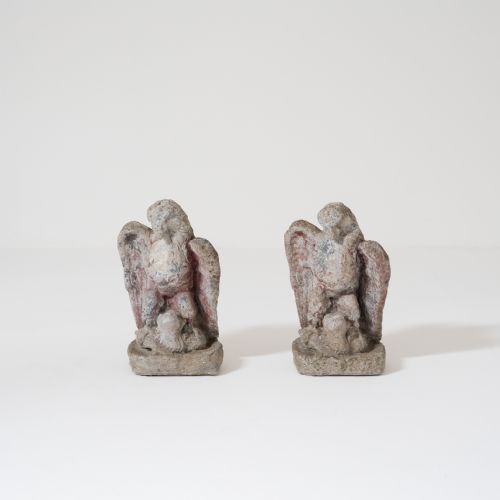


Grey Terracotta Statue
A grey terracotta statue brings ancient presence and garden character to any room, spanning Chinese dynasties, Southeast Asian figures, and European Neoclassical works.
Grey Terracotta Statue
A grey terracotta statue encompasses figural sculptures and busts shaped from fired clay and related earthen mediums, often displaying natural weathered patinas. When searching for a grey terracotta statue, collectors encounter pieces ranging from ancient tomb figures to Victorian garden ornaments and Southeast Asian deities.
The selections span diverse origins, including Chinese Han and Sui dynasty tomb attendants, Cambodian priest figures, and Italian Neoclassical busts after the antique. Functional garden statuary, such as eagles and pugs, also appears alongside architectural elements like stone plinths.
These works bridge indoor decorative sculpture and substantial garden art, utilising materials that weather distinctively over time. Buyers find both classical European interpretations and distant historical artefacts sharing a muted, stone-like palette.
Materials and construction
Makers shaped these sculptures from clay, terracotta, and grey earthenware, frequently firing the material to achieve dense, durable ceramic bodies. Some garden models utilise robust stoneware or composition stone designed to withstand exterior exposure.
Surface treatments vary from natural unglazed clay and salt glazing to cold painted pigments and delicate applications of gold leaf. Hand carving appears on stone variants, while figural ceramics rely on skilled moulding and manual finishing before firing.
Life-sized decorated pugs stand ready to guard the garden just as fiercely as ancient temple lions.
Assessing quality and character
The integrity of the material finish, such as remaining cold paint or gold leaf, distinguishes finer decorative works from standard production pieces. Age-related weathering on garden stoneware and terracotta adds desirable visual weight when the underlying form remains strong.
Hurlford Kilmarnock
The Grey Terracotta Statue Glossary
- Terracotta
- Fired clay used for sculptural and architectural objects. It hardens during the kiln process and accepts various glazes or paints.
- Earthenware
- Porous pottery fired at lower temperatures than stoneware. Grey earthenware provides a neutral base often seen in ancient figures.
- Stoneware
- A sturdy, vitrified ceramic fired at higher temperatures. This material resists frost, making it suitable for garden statuary.
- Mingqi
- Burial goods placed in Chinese tombs to accompany the deceased. These figures include tomb attendants and dancers.
- Cold painted
- Pigment applied to a sculpture after firing rather than being fused in a kiln. This technique allows for detailed polychrome decoration.
Grey Terracotta Statue: Frequently Asked Questions
Where should I place a grey terracotta statue?
Sturdier stoneware and terracotta garden pieces suit courtyards, terraces, and sheltered outdoor spots where they can weather naturally.
More delicate ancient figures and European busts belong indoors in stable environments away from excessive moisture.
How do I clean ancient terracotta?
Dust ancient or painted terracotta gently with a dry, soft brush to preserve fragile surfaces and any remaining pigment.
Avoid using water or liquid cleaners on unglazed or cold painted pieces unless advised by a conservator.
Are garden statues frost resistant?
Stoneware and denser composition stone items generally tolerate cold weather better than porous earthenware.
Moving vulnerable garden pieces indoors during freezing winter months prevents cracking.
How can I tell the age of a figure?
Stylistic markers, such as specific dynastic forms or Neoclassical proportions, offer the clearest guide to a piece's period of origin.
Examining the wear patterns on the clay helps distinguish ancient handling marks from modern reproduction work.