





Terracotta Persian Tribal Textile
These terracotta persian tribal textile pieces are woven expressions of nomadic life, prized for their rich earthy hues and geometric vitality.
Terracotta Persian Tribal Textile
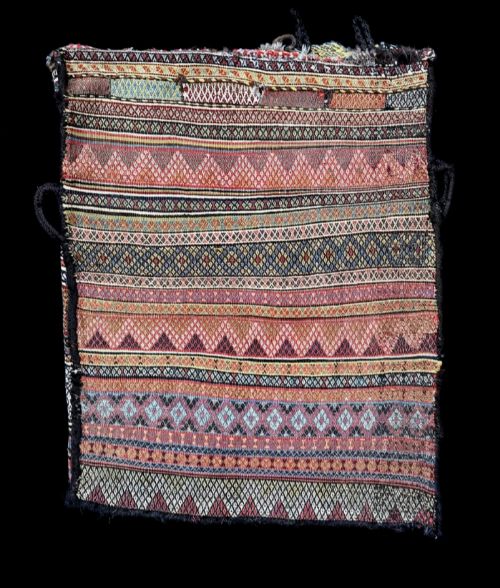
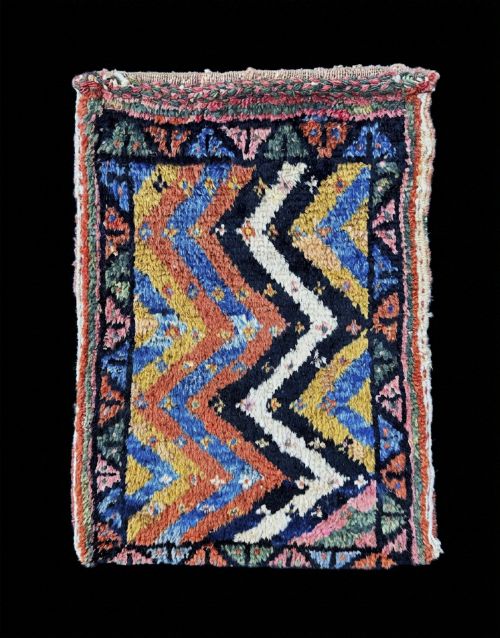
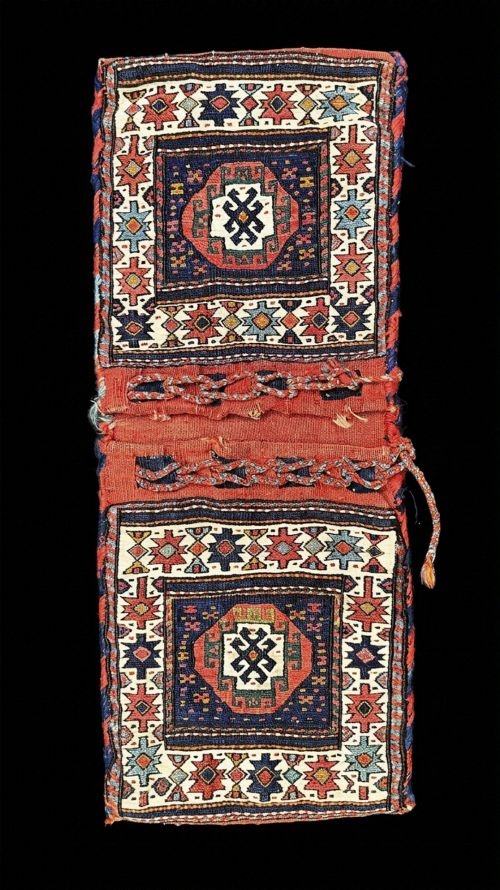
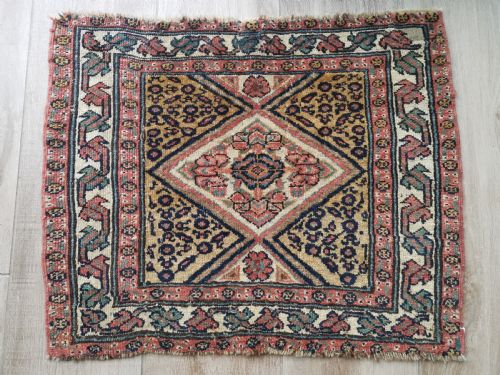
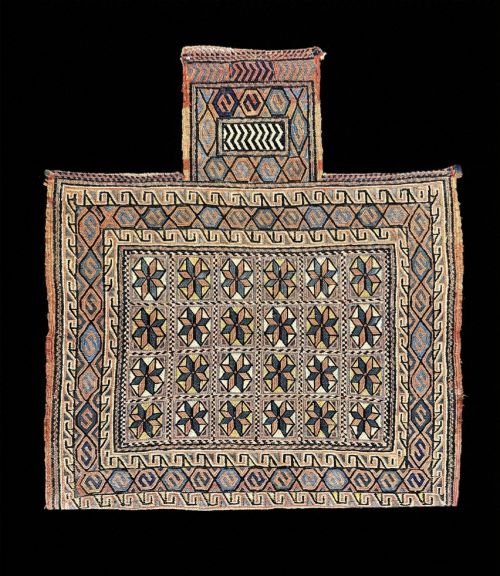
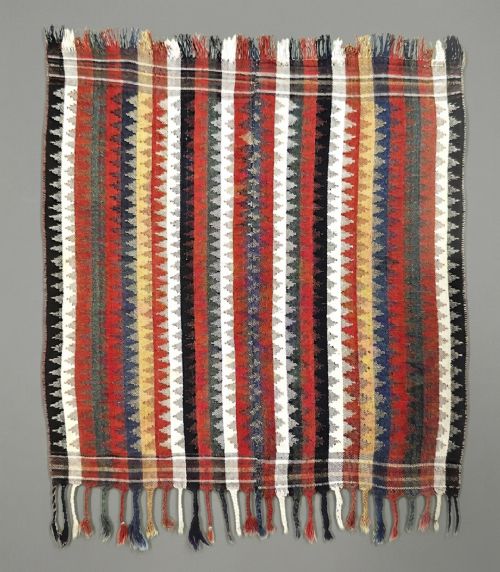
A terracotta persian tribal textile captures the utilitarian artistry of nomadic groups across Persia, ranging from saddlebags and salt-bags to storage faces and cushions. These woven objects emerge primarily from nineteenth-century contexts, spanning decades from the eighteen-seventies into the nineteen-thirties.
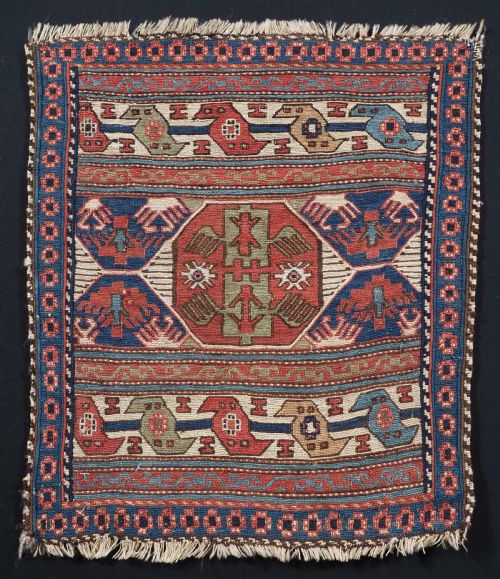
The prevalent form on this page is the bag face, often adapted into cushions or preserved as fragmentary rug panels. Pieces originate from specific tribal groups including the Shahsavan, Qashqa'i, Afshar, Kurdish, Baluch, and Khamseh communities.
Makers utilised their immediate surroundings for design inspiration, producing regional variations that reflect specific tribal traditions in South Persia, Azerbaijan, and Western Afghanistan. These works serve as portable history, carrying the visual language of nomadic weavers down to the present day.
Materials and construction methods
Weavers relied on hand-spun wool and cotton foundations, incorporating goat hair for durability along selvages and structural edges. Natural dyes provided the characteristic terracotta palette, anchoring the colour schemes of these nomadic pieces.
Techniques varied between pile knotting and flat-woven soumak work, allowing artisans to create intricate geometric patterns and banded weft designs. This construction ensured that storage bags and saddlepieces could withstand daily practical use while maintaining decorative integrity.
Terracotta Persian Tribal Textile Retail Price Guide 2026
Typical asking prices for terracotta persian tribal textile among the pieces listed under this phrase on Sellingantiques today, from the lower quarter to the upper quarter. They describe what is for sale here now, not the wider market.
Camels and horses once carried these very bags across dusty southern Persian plains, unknowingly hauling future collector items.
Evaluating quality and execution
Quality rests in the crispness of the tribal motifs, the saturation of the natural dyes, and the fineness of the knotting or soumak weave. Superior examples display dense structures and well-balanced compositions that articulate traditional symbols clearly.
The survival of original backs, closures, and structural integrity elevates a textile's standing, separating complete functional items from worn fragments. Precision in the handling of geometric layouts distinguishes accomplished village or nomadic weaving from more hurried production.
The Terracotta Persian Tribal Textile Glossary
- Bag face
- The decorative front panel of a nomadic storage bag, usually preserved after the plain back has worn away. These pieces function independently as small wall hangings or cushion covers.
- Soumak
- A flat-weave technique where pattern yarns wrap over and under vertical warps in a continuous motion, producing a textured surface resembling braid on the front. This method creates durable structures without pile.
- Khorjin
- The traditional Persian term for a double saddlebag used by nomadic tribes for transport and domestic storage. Surviving examples are often divided or separated into individual bag faces.
- Chanteh
- A small personal bag or container woven by tribal groups for carrying small possessions. These items frequently display concentrated geometric designs and fine woolwork.
- Natural dyes
- Colourants derived from plants, insects, and minerals before the introduction of synthetic aniline dyes. They yield the harmonious, varied terracotta and earthy tones seen in nineteenth-century nomadic weaving.
Terracotta Persian Tribal Textile: Frequently Asked Questions
What is a tribal bag face?
A tribal bag face is the ornamented front of a utilitarian container used by nomadic groups for storing household goods or carrying belongings on animals.
Over time, as the plain backing wore out, these decorative fronts were preserved for their artistry and collected as independent textile panels.
How do I care for antique textiles?
Protect antique woven pieces from direct sunlight to prevent natural dye fading, and keep them away from damp environments.
Vacuum gently using low suction without a rotating brush, and consult a specialist textile conservator for professional cleaning when necessary.
Where were these textiles made?
These pieces originate from nomadic and semi-nomadic groups operating across Persia and neighbouring regions, including Azerbaijan and Western Afghanistan.
Specific tribes such as the Shahsavan, Qashqa'i, and Afshar produced these works within distinct geographic territories and environmental conditions.
How can I tell different tribes apart?
Tribal attribution relies on structural characteristics, colour palettes, and distinct geometric vocabulary specific to groups like the Khamseh or Baluch.
Regional weaving habits, such as particular soumak techniques or structural banding, provide clues to the community of origin.