
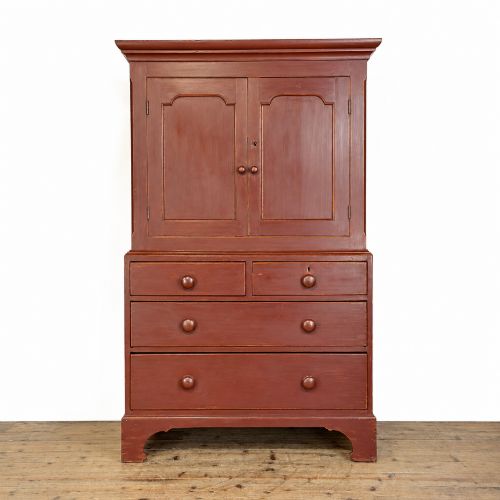
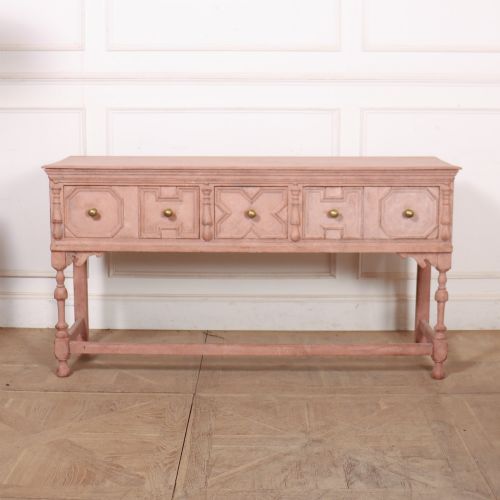
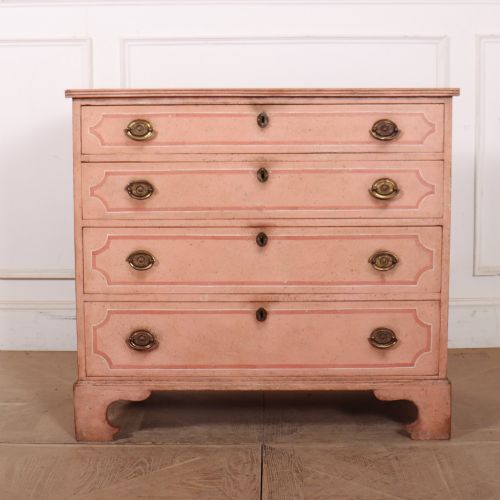


Terracotta Painted Dresser
A terracotta painted dresser offers bold domestic storage, bringing rustic warmth and historic character straight into a modern interior.
Terracotta Painted Dresser
A terracotta painted dresser represents a sturdy form of historic storage, combining large timber cabinetry with painted surface finishes. Buyers searching for a terracotta painted dresser encounter nineteenth-century pine pieces originating from English, Scandinavian, and Central European traditions.
The inventory on this page includes related storage forms such as housekeeper cupboards, commodes, and chests of drawers alongside dresser bases. These items share robust wooden construction and decorative painted surfaces rather than relying on polished mahogany or walnut grains.
Originating primarily in the nineteenth century, these pieces range from English country workshops to Swedish and Austro-Hungarian households. Each region applied distinct palette choices and decorative motifs to utilitarian furniture.
Materials and construction
Makers constructed these storage pieces predominantly from solid pine and other regional woods, assembling carcases with traditional joinery methods. Iron and brass hardware such as drawer pulls and hinges secured the functional doors and drawers.
Surface decoration involved hand-applied paint finishes over wood, sometimes sealed with simple glazes to protect the pigment. Paint layers were built up directly on the timber, resulting in surfaces that show natural wear over generations of domestic use.
Listings span the nineteenth century and the nineteen-thirties, featuring pine, ceramic, iron, and brass across English, Scandinavian, and Central European origins.
Assessing quality and character
Quality in these painted pieces rests upon the integrity of the original timber structure and the survival of early or first-generation paint surfaces. Untouched original pigment carries far more visual presence than later re-paintings applied during subsequent decades.
Proportion and regional decorative detail separate simpler utilitarian storage from finer folk art examples produced by skilled rural craftsmen. Well-balanced proportions and characteristic regional motifs elevate a piece beyond standard domestic utility.
The Terracotta Painted Dresser Glossary
- Dresser base
- The lower section of a traditional kitchen or dining room dresser, usually featuring drawers and cupboards without upper shelving. This form provided essential workspace and enclosed storage in historic homes.
- Commode
- A low chest of drawers or cabinet designed for bedroom storage, often standing on short legs or a plinth base. Continental examples frequently display distinctive painted panels.
- Pine
- A soft timber widely utilised across European vernacular furniture due to its availability and ease of working. It forms the structural base for the vast majority of nineteenth-century painted country pieces.
- Original paint
- The initial decorative or protective coating applied to a piece of furniture during its period of manufacture. Surviving early paint layers are highly valued by collectors for their authentic patina.
Terracotta Painted Dresser: Frequently Asked Questions
What is a terracotta painted dresser?
A terracotta painted dresser is a functional wooden storage unit finished in earthy reddish-orange paint tones. These items derive from nineteenth-century country traditions across Britain and Europe.
Such furniture was built for daily utility in kitchens, halls, or bedrooms. The painted finish provided both decoration and protection for the underlying timber.
How do I date these painted pieces?
Dating relies on examining construction methods, timber types, and the composition of the paint layers. Nineteenth-century pieces typically feature hand-cut joints and native softwoods.
Wear patterns and the presence of early or original paint help distinguish genuine period items from later reproductions. Regional styles also offer clear clues to a piece's age and origin.
Where were these cupboards made?
Surviving painted cupboards and chests originate from workshops across England, Scandinavia, and Central Europe. Each region developed distinct structural forms and decorative painting traditions.
English country pieces often display utilitarian restraint, whereas Swedish and Austro-Hungarian examples frequently incorporate folk art motifs and bolder colour palettes.
How do I care for painted wood?
Maintain painted furniture by keeping it away from direct sunlight and sudden temperature shifts that can cause timber to move. Dust gently with a dry, soft cloth rather than using harsh chemical cleaners.
Preserving the historic surface requires avoiding moisture and abrasive polishes that might lift or dull fragile nineteenth-century paint layers.