


Terracotta Landscape Oil
Terracotta landscape oil works capture rural and coastal scenes rendered in pigment on canvas, board, or terracotta plate, bringing earthy Mediterranean tones into your interior.
Terracotta Landscape Oil
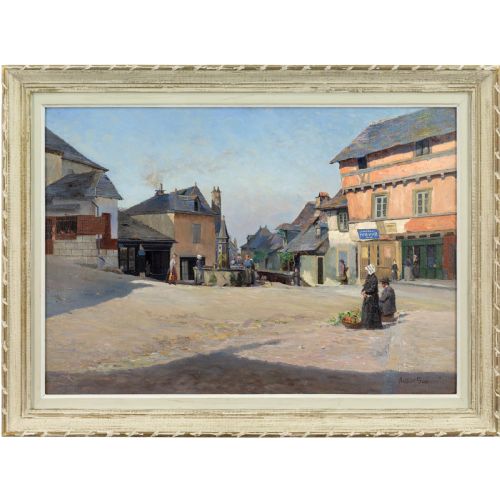
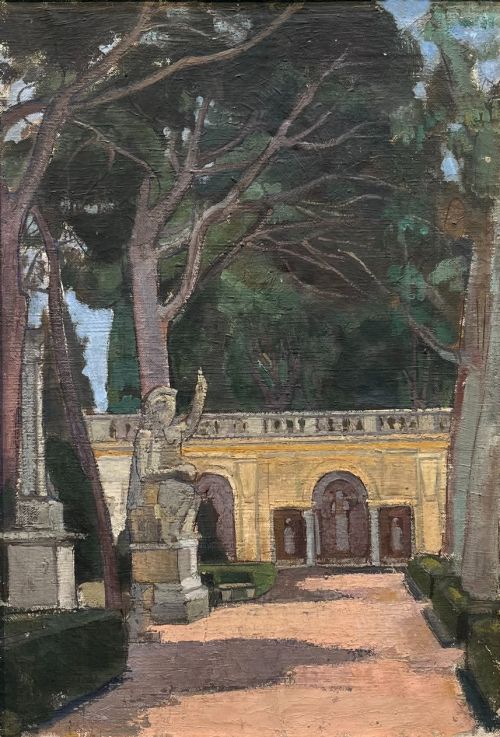
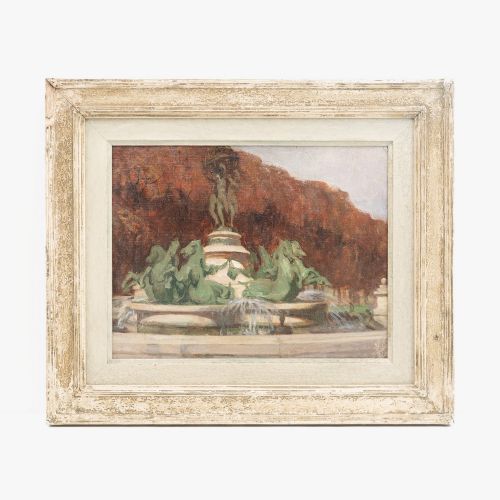
A terracotta landscape oil search brings up works spanning from the nineteenth century through the mid-twentieth century, encompassing both British and continental European traditions. You will encounter pastoral views, coastal inlets, and architectural settings rendered with varied brushwork.
The pieces on this page range from nineteenth-century realism and British impressionism to French post-impressionism and mid-century modern interpretations. Most examples utilise oil paint on canvas or board, while rarer variations involve painting directly onto terracotta supports.
Subjects often focus on southern light, olive trees, farmhouses, and European cityscapes from locations including Rome, Venice, and Provence. The palette frequently relies on warm earthen pigments that give these landscapes their distinct terracotta association.
Materials and Techniques
Artists built these compositions using oil paint applied to prepared canvas, wooden board, or rigid supports, sometimes incorporating impasto texture to build physical depth in the foliage or stonework. The medium allows for gradual blending and rich saturation of colour.
Supports varied according to period and location, shifting from traditional woven canvas stretched over wooden frames to compact board panels and occasionally fired terracotta plaques that accept oil pigment directly.
Listings feature works spanning from the nineteenth century through the mid-twentieth century, executed in oil on canvas, board, and terracotta.
Assessing Quality and Execution
Quality rests upon the artist's handling of light, shadow, and spatial depth within the landscape, distinguishing confident plein-air observation from rigid or formulaic studio copies. The vitality of the brushwork and the harmony of the palette determine the visual strength of each composition.
Preservation of the paint layer matters significantly, with superior pieces retaining their original surface tension, stable pigment adhesion, and minimal intervention from later restoration.
Arthur Gué·Alexander Jamieson·Herbert Royle·Owen Bowen·Claude Jousset·Armand Guillaumin·Abraham Hulk Junior·William Hatherell·John Sanderson Wells·Eugene Battaille·Auguste Renoir·William Greaves·Paul Paul·Maurice Sijs·Charles Clement Calderon·John Frederick Tennant·Alfred Egerton Cooper·Christiaan Pieter Snyders·Fred Elwell
The Terracotta Landscape Oil Glossary
- Impasto
- Paint applied thickly to a canvas or board, leaving visible brush or palette knife marks that stand out from the surface. This technique adds tactile dimension to elements like stucco walls or sunlit paths.
- Plein-air
- Painting executed outdoors directly in front of the subject to capture natural light and atmospheric conditions accurately. Artists working in this manner often completed works in a single session.
- Post-Impressionism
- An artistic movement extending impressionist ideas while rejecting its limitations, focusing instead on symbolic motifs and heavier structural brushwork. Practitioners often emphasised vivid colour and distinct forms.
- Canvas
- A closely woven heavy fabric stretched across a wooden frame to serve as a durable support for oil painting. It remains the most common substrate found in this category.
Terracotta Landscape Oil: Frequently Asked Questions
What is a terracotta landscape oil?
These works are oil paintings depicting rural, coastal, or architectural scenes, linked by warm earthen palettes or executed on terracotta supports.
They record regional light and topography across various European schools from the nineteenth and twentieth centuries.
How do I care for an oil painting?
Keep paintings away from direct sunlight, high humidity, and rapid temperature fluctuations to protect the canvas and paint layers.
Dust the surface gently with a soft, dry brush and avoid using liquid cleaners or chemical solvents.
How can I tell the period of a painting?
Examine the stretcher frames, canvas type, framing materials, and the artist's signature or recorded working dates.
Stylistic markers such as impressionist brushwork or mid-century abstraction also provide reliable chronological clues.
Where were these paintings created?
The pieces originate from various locations across Britain, France, Italy, and Spain, reflecting the travels of plein-air painters.
Artists frequently recorded Mediterranean vistas, Roman gardens, and northern European farmsteads.