





Terracotta Kurdish Carpet
A terracotta Kurdish carpet brings deep earthy tones and robust village craftsmanship into a room.
Terracotta Kurdish Carpet
A terracotta Kurdish carpet is a woven textile originating from tribal and village communities in regions such as West Persia and Eastern Anatolia. These pieces encompass various formats, from compact area rugs to long hallway runners and large kelleh carpets. When searching for this specific textile, a buyer encounters examples dating from the nineteenth century into the early decades of the twentieth century.
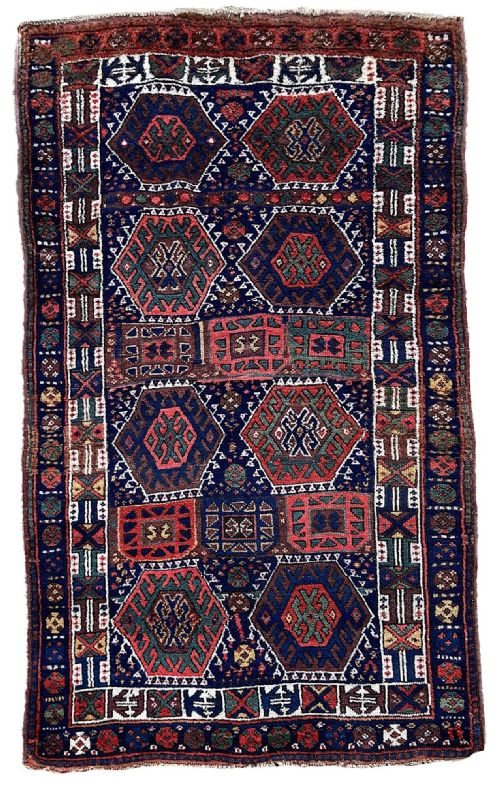
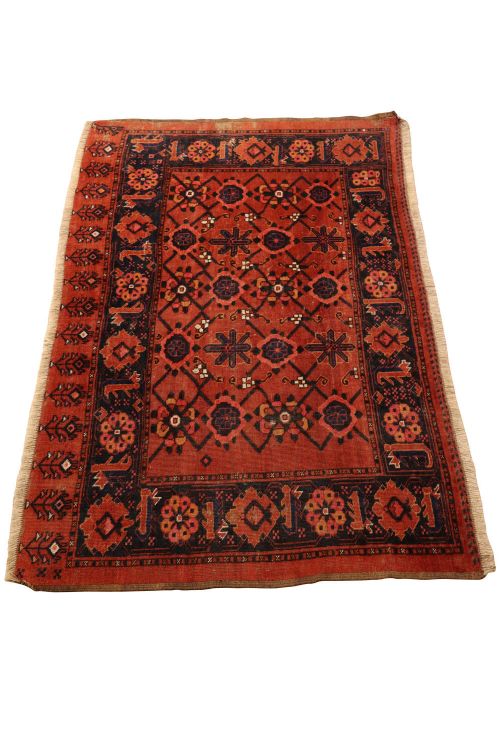
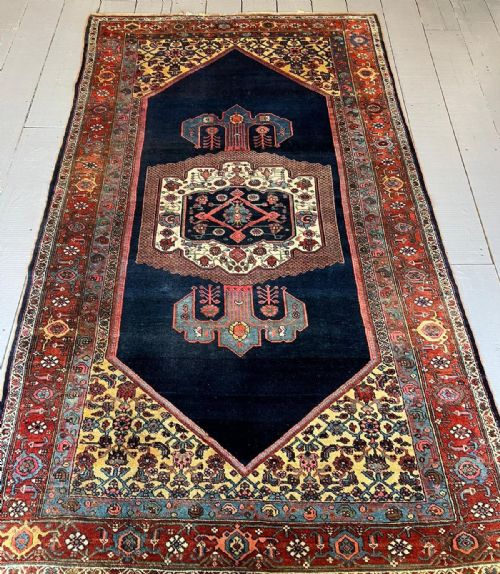
The aesthetic is rooted in tribal and nomadic traditions, often displaying geometric motifs, guls, or village depictions like birds perched on trees. The terracotta palette provides a warm foundation, appearing alongside other natural hues characteristic of Kurdish weavers from the Hamadan, Bidjar, and Malatya districts. Village production ensures each carpet holds distinct character rather than adhering to rigid urban workshop designs.
Materials and construction methods
The construction relies fundamentally on wool and cotton, with weavers utilising hand-spun wool for the pile to achieve durability and texture. Cotton frequently serves as the foundation for the warp and weft threads, providing structural stability across larger formats like runners and kelleh carpets. The knotting is hand-tied, securing the wool tightly to the cotton or wool foundation.
Colour is introduced through natural dyes, which yield the characteristic terracotta tones and secondary shades seen across the pieces. These dyes interact with hand-spun wool to create subtle variations in tone across the surface of the carpet. Such traditional dyeing methods ensure the colours age gracefully over decades of use.
Several narrow runners feature birds perched attentively upon trees, proving that nomadic weavers enjoyed pausing to watch the wildlife.
Factors that distinguish the work
Quality in these textiles rests upon the fineness of the hand-knotting and the handling of the wool. Tighter knots allow for sharper definition within geometric motifs and intricate tribal patterns. The grade of hand-spun wool also dictates the handle and resilience of the pile.
The complexity and clarity of the design composition separate standard village pieces from exceptional examples. Strong chromatic balance within the natural dye palette enhances the visual depth of the carpet. Preservation of the original edges and ends further elevates the standing of a textile.
The Terracotta Kurdish Carpet Glossary
- Kelleh
- A large format carpet, typically longer than a standard room rug but narrower than a full palace carpet. These pieces suit extended spaces like galleries or large halls.
- Gul
- A medallion or repeating octagonal motif used extensively in tribal weaving. Such symbols carry cultural significance and anchor the geometric composition.
- Warp
- The longitudinal threads stretched tightly on the loom before knotting begins. Cotton or wool warp threads form the structural skeleton of the textile.
- Weft
- The horizontal threads passed across the warp after each row of knots is secured. They bind the structure together and dictate the rigidity of the rug.
- Runner
- A long, narrow format designed specifically for corridors, staircases, and hallways. These pieces balance length with restricted width.
Terracotta Kurdish Carpet: Frequently Asked Questions
Where were these carpets made?
These carpets originate from tribal and village communities located in regions such as West Persia, including Hamadan and Bidjar, as well as Eastern Anatolia.
Weavers working in these areas produced textiles influenced by local nomadic traditions and regional aesthetics.
How do I care for an old rug?
Regular gentle vacuuming without a rotating power brush helps remove grit from the wool pile. Professional cleaning suited to antique textiles preserves the integrity of the natural dyes.
Keeping the piece out of direct, harsh sunlight prevents premature fading of the terracotta tones.
Can I use a runner in a hallway?
Narrow runners are well-suited for hallways, landings, and corridors where traditional broad carpets do not fit. Their sturdy construction handles regular foot traffic effectively.
Using a suitable underlay prevents slipping and cushions the textile against hard flooring.
What motifs appear on these rugs?
Designs often incorporate geometric patterns, repeating guls, and stylized depictions of flora or fauna such as birds perched on trees. These elements reflect the cultural heritage of Kurdish tribal weavers.
Each composition varies according to the specific village or district where the piece was knotted.