






Tasselled Tribal Rug
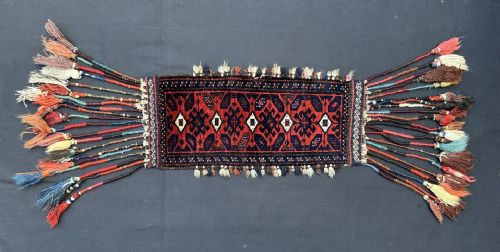
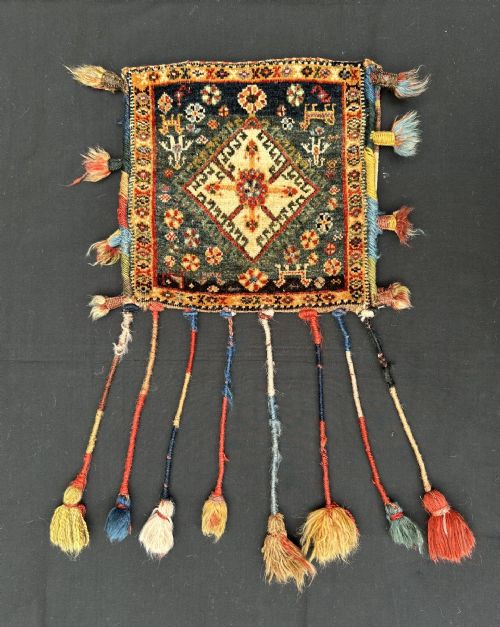
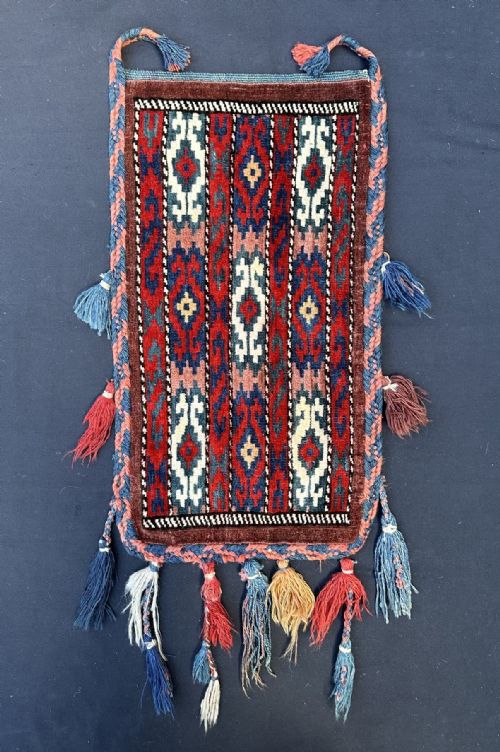
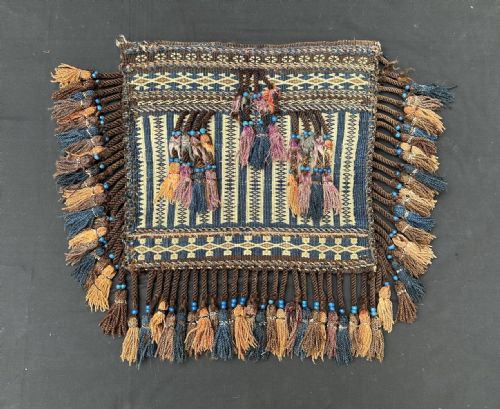
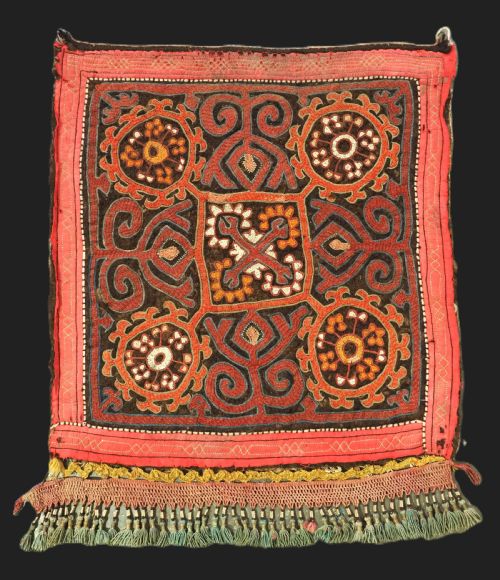
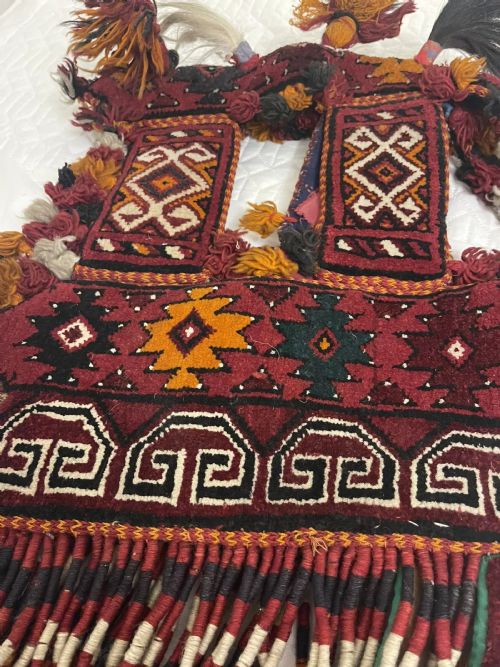
These pieces known as a tasselled tribal rug comprise woven bags, saddle covers, and tent trappings carrying wool, cotton, and natural dyes.
Tasselled Tribal Rug
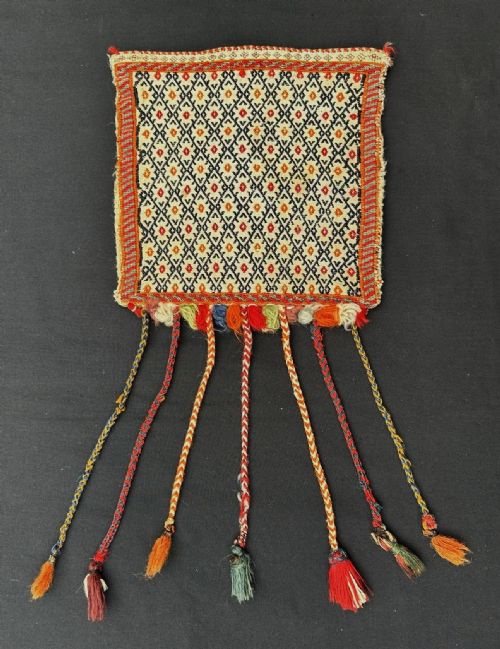
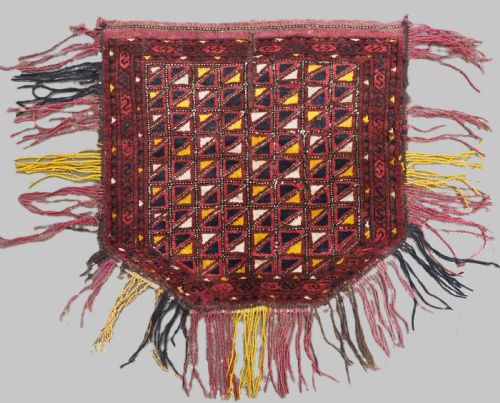
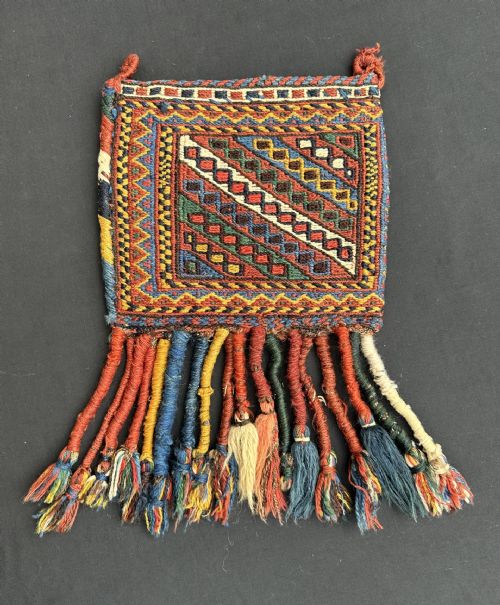
When you search for a tasselled tribal rug, you encounter hand-woven nomadic and tribal textiles originating from Central Asia, Persia, and Afghanistan. These items encompass functional objects such as storage pouches, vanity bags, horse blankets, and wall hangings created by various tribes including the Yomut, Qashqai, Baluch, and Lakai Uzbeks.
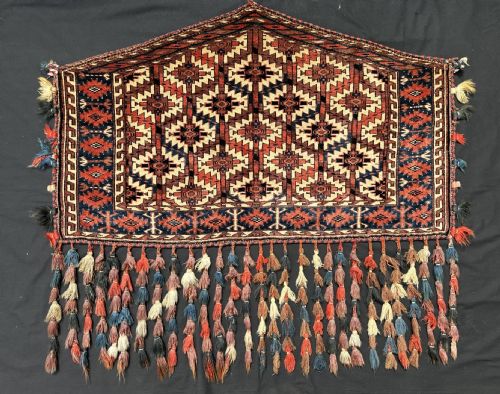
The versions most frequently met on this page date from the late nineteenth century through to the early twentieth century, spanning the period from 1870 to 1930. They reflect the utilitarian domestic and nomadic traditions of their makers, employing traditional forms like the torba, asmalyk, and ok bash.
These textile artefacts demonstrate specific regional designs and weaving traditions tied to distinct tribal groups across Fars, Kerman, and the Trans-Caspian steppes. Each piece preserves the hand-woven characteristics and decorative motifs particular to its geographic origin.
How They Were Made
These textiles rely principally upon wool and cotton foundations, often utilising natural dyes to colour the yarns. Artisans also incorporated silk, glass beads, leather, wood, and felt depending on the specific object type and tribal tradition.
Construction techniques involve hand-weaving, flat-weaving, and embroidery, sometimes paired with applied fringes, horse hair, or original tassels. These methods produced durable domestic pouches and decorative trappings designed for rigorous daily use in nomadic environments.
Tasselled Tribal Rug Retail Price Guide 2026
Typical asking prices for tasselled tribal rug among the pieces listed under this phrase on Sellingantiques today, from the lower quarter to the upper quarter. They describe what is for sale here now, not the wider market.
Several items retain their original horse hair tassels and camel headdresses from the steppes.
What Varies in Quality
The standard of these textiles depends upon the integrity of the weave, the preservation of original components such as tassels and backs, and the richness of the natural dyes. Finely executed pile work and precise geometric or embroidered detailing distinguish superior examples.
The Tasselled Tribal Rug Glossary
- Torba
- A small Turkmen wall hanging or storage bag traditionally used inside a yurt. These rectangular pouches often feature intricate geometric patterns and lower fringes.
- Asmalyk
- A large pentagonal or polygonal trapping associated with Turkmen weddings, traditionally hung on the flank of a camel. They frequently display elaborate design fields.
- Namakdan
- A traditional salt bag woven by nomadic groups for domestic utility. These pieces often exhibit narrow necks and expanding lower bodies.
- Kapunuk
- A decorative portiere or door surround hung around the entrance of a nomadic tent. These large textiles frame the threshold with distinctive tribal motifs.
Tasselled Tribal Rug: Frequently Asked Questions
How were these bags used?
Nomadic tribes utilised these woven pouches for storing household goods, salt, spindles, and personal items within tents and during migration.
They also served decorative and ceremonial functions, marking important milestones such as weddings or horse ornamentation.
Where do these textiles originate?
The pieces originate from Central Asia, Afghanistan, and Persia, produced by specific regional groups including the Yomut, Qashqai, Baluch, and Uzbeks.
Each tribal confederation maintained distinct weaving techniques, colour palettes, and geometric patterns tied to their specific geographic territories.
How do I care for these textiles?
These antique wool and felt items require gentle handling, protection from direct sunlight, and regular light vacuuming through a mesh screen.
Professional textile conservationists should handle any cleaning or structural repair to preserve the delicate natural dyes and fibres.
How do I identify different tribes?
Attribution relies upon recognising specific structural forms, knotting styles, and the particular palette of natural dyes characteristic of each region.
Motifs found on pieces from the Trans-Caspian steppes differ markedly from those produced by nomadic groups in South-West Persia.