



Tasselled Shade Lamp
A tasselled shade lamp brings soft, diffused light and period character to a room through decorative fringing and traditional craftsmanship.
Tasselled Shade Lamp
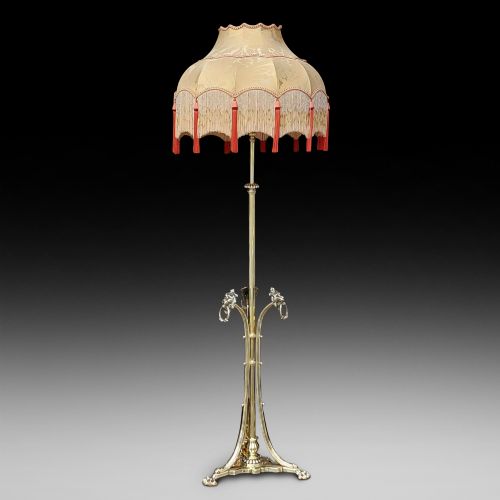
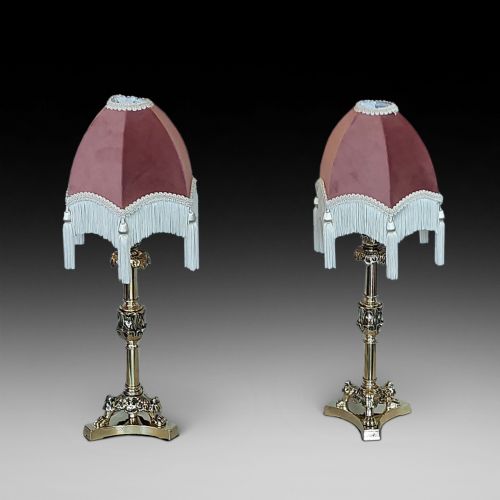
A tasselled shade lamp combines functional illumination with textile decoration, frequently appearing as standard lamps, floor lamps, and table lamps. These pieces originate from periods including the Victorian era, Edwardian period, and the early twentieth century, spanning styles such as Art Nouveau, Neoclassical Revival, and Classical Revival. The selection available includes both converted oil or candle lighting and purpose-built electrical fittings.
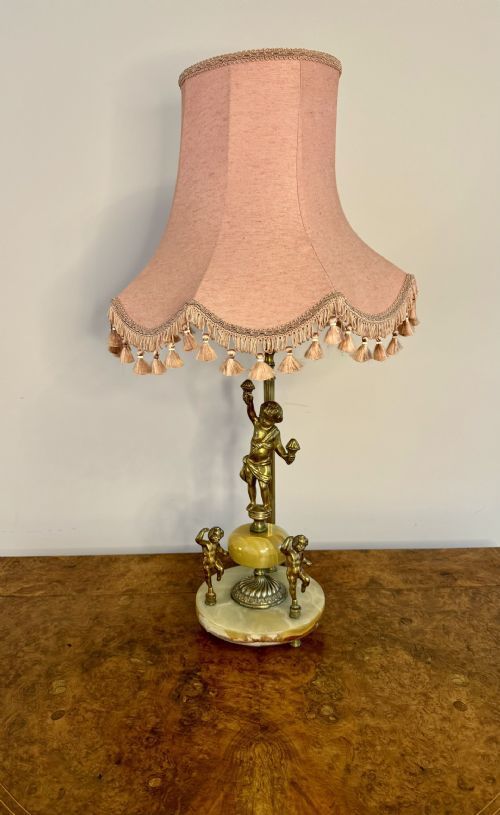
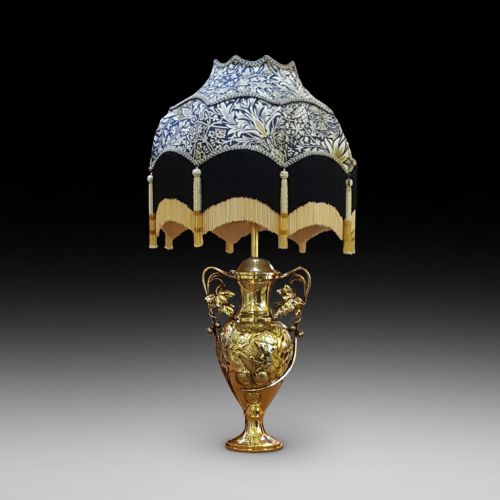
Table lamps and floor lamps in this category often feature bases constructed from brass, gilded brass, onyx, and alabaster. The forms range from simple brass standards to ornate Continental vase lamps and small boudoir floor lamps. Buyers encounter pieces that reflect specific design movements, notably the flowing lines of Art Nouveau and the formal symmetry of Neoclassical styles.
How they were made
Makers utilised cast and pressed brass alongside carved natural stones like onyx and alabaster to create stable and decorative lamp bases. Metalwork involved casting figures and classical motifs, sometimes applying a gilt finish to enhance the appearance of the brass. Many standard and table lamps began life as oil lamps or candlesticks before conversion to electricity.
Shades incorporated fabrics such as silk, velvet, and standard textiles finished with applied fringe and tassels. The construction relied on wire frames covered in gathered or stretched fabric, suspending heavy silk or woollen tassels from the lower borders to weight the material and create a decorative perimeter.
Some floor lamps started life holding candles before someone with a screwdriver and an ambitious wire decided they belonged in the electrical age.
What varies in quality
The standard of a tasselled shade lamp depends on the weight and integrity of its base materials, from solid cast brass to carved alabaster and onyx. Superior examples display crisp chasing on metal components and high-grade natural stone without excessive mineral flaws. Conversion work on older candlesticks and oil lamps requires neat wiring and secure mounting to preserve the original structure.
Textile elements vary according to the density of the fabric, the complexity of the silk or velvet stitching, and the hand-knotting of the fringe. Higher quality shades maintain structural rigidity in the internal frame and utilise durable trimmings that retain their colour and drape over decades of use.
The Tasselled Shade Lamp Glossary
- Standard lamp
- A tall floor-standing lamp designed to illuminate a room from a corner or beside seating. These often feature heavy weighted bases to support their height.
- Alabaster
- A fine-grained, translucent stone used for carving decorative lamp bases. It allows light to diffuse subtly through the material.
- Fringe
- A ornamental textile border consisting of hanging threads or tassels attached to the edge of a lampshade. It softens the downward spread of light.
- Gilded brass
- Brass treated with a thin layer of gold leaf or metallic paint to simulate solid gold. This technique highlights decorative relief work on lamp columns.
- Neoclassical revival
- A design style drawing inspiration from classical Greek and Roman architecture and art. It employs symmetrical forms, urn motifs, and fluted columns.
Tasselled Shade Lamp: Frequently Asked Questions
What is a tasselled shade lamp?
A tasselled shade lamp is a lighting fixture featuring a decorative fabric shade adorned with hanging fringe and tassels, mounted on a base of brass, onyx, alabaster, or ceramic. These lamps serve as both functional room lighting and decorative focal points.
They appear in various formats including tall standard lamps for floors and smaller versions designed for tables and boudoirs, spanning several historical design periods.
How do I identify an Edwardian lamp?
Edwardian lamps generally date from the early twentieth century and often incorporate refined brass work, neoclassical revival motifs, or alabaster components. They reflect a transition towards lighter, more elegant interiors compared to heavier Victorian styles.
Examining the construction methods, switch types, and base materials helps determine whether a piece belongs to the Edwardian era or later decades.
Were these lamps originally electric?
Many early lighting fixtures were originally constructed as oil lamps, gas burners, or candlesticks before being converted to electricity at a later date. This conversion process is common among pieces dating from the nineteenth and early twentieth centuries.
Evidence of conversion includes adapted burners, threaded wiring holes, and modified internal fittings designed to accommodate modern electrical components safely.
How do I clean a fabric shade?
Cleaning fabric shades with tassels requires gentle dusting using a soft brush or a low-suction vacuum attachment to prevent damage to the delicate trimmings. Avoid submerging antique textiles in water, as adhesives and inner frames may weaken.
Professional textile cleaning is recommended for heavily soiled silk or velvet shades to preserve the integrity of the fabric and the attached fringe.
What materials are used in the bases?
Lamp bases in this category primarily utilise brass, gilded brass, onyx, and alabaster, sometimes combined within a single piece. Pressed and cast brass provide structural durability and intricate surface detail.
Natural stones like alabaster and onyx offer weight and translucency, contributing to the decorative appeal of table and standard lamps from the Victorian and Edwardian periods.