

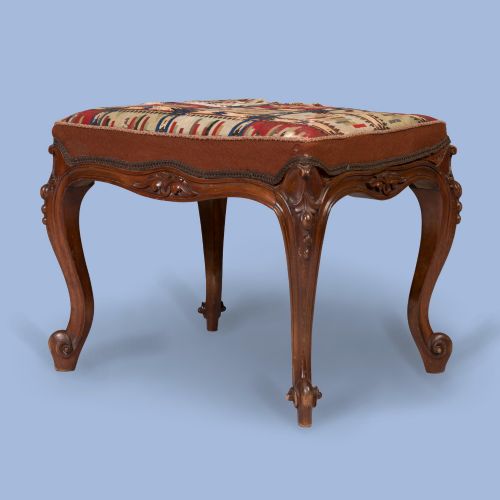


Tapestry Vanity Stool
A tapestry vanity stool combines practical seating with decorative textile work, offering a decorative seat for the bedroom or dressing room.
Tapestry Vanity Stool
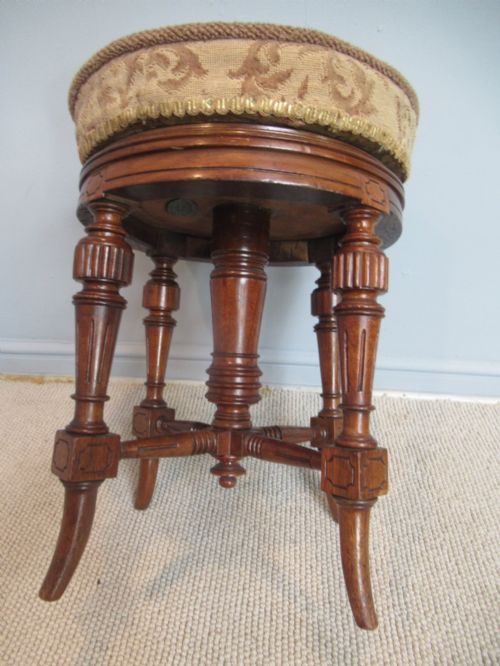
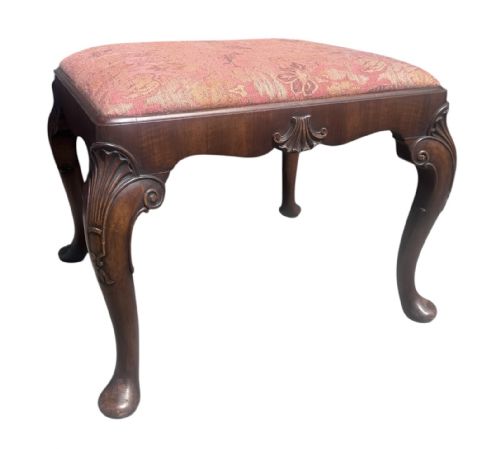
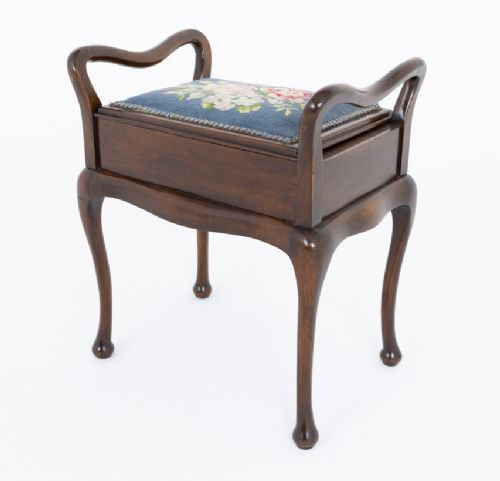
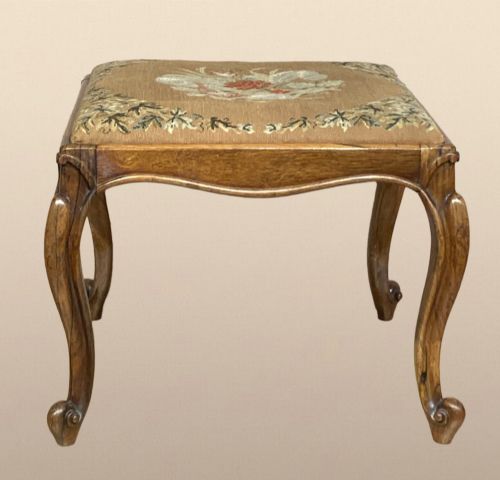
A tapestry vanity stool is a low seat designed for use at a dressing table or vanity, frequently upholstered with needlepoint, beadwork, or textile panels. When searching for this phrase, a buyer encounters pieces originating from the nineteenth century through the early twentieth century, spanning Victorian, Edwardian, and revival styles.
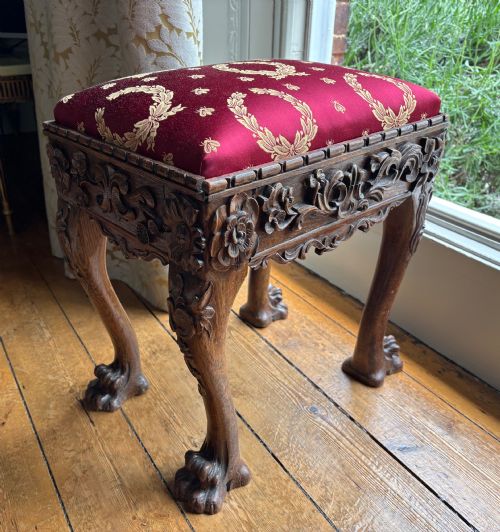
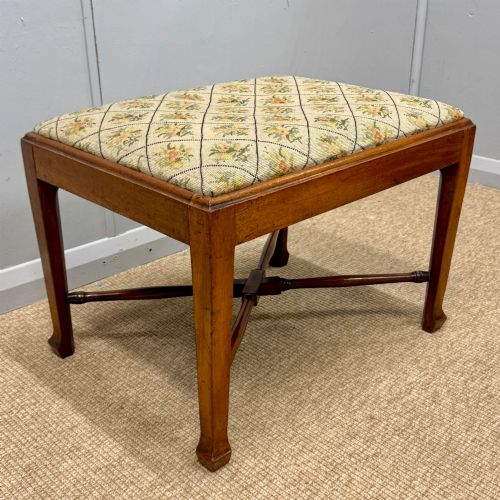
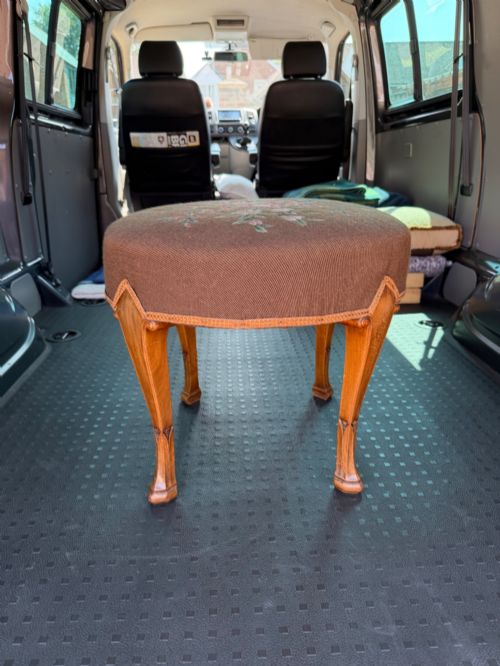
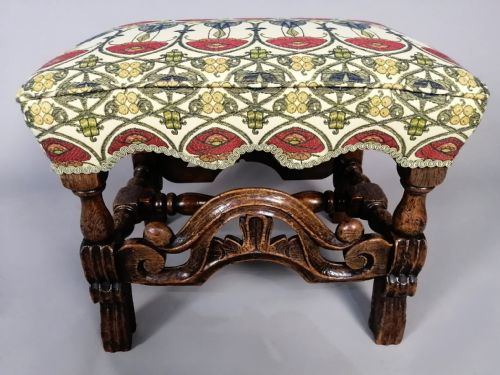
The physical forms on this page include revolving piano stools, X-frame designs, cross stretcher variants, and cabriole leg dressing stools. Frames appear in walnut, mahogany, rosewood, oak, ebony, and painted finishes, often reflecting Chippendale, Queen Anne, or Carolean design influences.
Originating largely from British and European workshops, these seats function as dressing table stools, footstools, and piano stools. The surviving examples rely heavily on original fabric seats, needlepoint, and wool tapestries to define their visual character.
Materials and Construction
Frames are constructed from dense hardwoods such as mahogany, walnut, rosewood, and oak, shaped with carved details or turned supports. Joinery techniques from the Victorian and Edwardian periods ensure structural rigidity in frequently moved seating.
Listings for tapestry vanity stool span the Victorian, Edwardian, and 1930s periods, incorporating walnut, mahogany, oak, and brass.
Judging Quality
Quality rests in the crispness of the timber carving and the integrity of the structural frame, particularly at stress points like legs and stretchers. Finer examples show careful selection of figured walnut or mahogany, matched with precise joinery rather than hasty assembly.
The condition and execution of the tapestry or needlepoint seat distinguish finer pieces, especially when retaining original woolwork or beadwork. The harmony between the carved wooden frame and the textile seat determines the overall aesthetic success of the piece.
Jas Shoolbred
The Tapestry Vanity Stool Glossary
- Cabriole leg
- A furniture leg that curves outward and then tapers inward, finishing in a pad, claw, or scroll foot. This form derives from Chinese furniture and became a staple of eighteenth-century and revival design.
- Cross stretcher
- Wooden bars connecting the lower legs of a stool to provide structural stability. They frequently feature central turnings or carved finials.
- Needlepoint
- A type of canvas work embroidery executed with wool yarn, commonly found on Victorian and Edwardian stool seats. It provides a durable and colourful decorative surface.
- X-frame
- A furniture base formed by intersecting diagonal structural members resembling the letter X. This configuration offers robust support for small stools and revolving seats.
- Carolean revival
- A nineteenth-century design movement mimicking the decorative motifs of the reign of Charles II, characterised by carved scrolls and crown-and-thistle patterns.
Tapestry Vanity Stool: Frequently Asked Questions
What is a tapestry vanity stool used for?
These low seats function primarily in bedrooms and dressing rooms as comfortable seating before a dressing table or vanity mirror. Many examples also serve double duty as piano stools or decorative footstools.
Their compact dimensions allow them to tuck neatly beneath dressing tables when not in use, adding a touch of period textile work to the room.
How do I date a Victorian vanity stool?
Dating relies on examining the timber species, joinery methods, and upholstery style. Victorian examples frequently employ solid walnut or rosewood with heavy carving or X-frame constructions.
Secondary indicators include the type of turned legs, the presence of revolving height-adjustment mechanisms, and whether the needlepoint or tapestry seat appears to be original to the frame.
Are the tapestry seats original?
Many surviving stools retain their original wool needlepoint, beadwork, or fabric seats, while others have received later re-upholstery to match modern interiors. Close inspection of the tack holes and textile wear helps determine the age of the upholstery.
Original tapestries often show authentic fading and wear patterns consistent with the age of the wooden frame beneath.
How do I care for antique wood and tapestry?
Protect the wooden frame by keeping it away from direct sunlight and extreme humidity changes, applying a light coat of appropriate wax periodically. Vacuum textile and tapestry seats gently with a soft brush attachment to remove dust without damaging the wool fibres.
Avoid placing heavy objects on the needlepoint to prevent crushing the pile of the antique woolwork.