
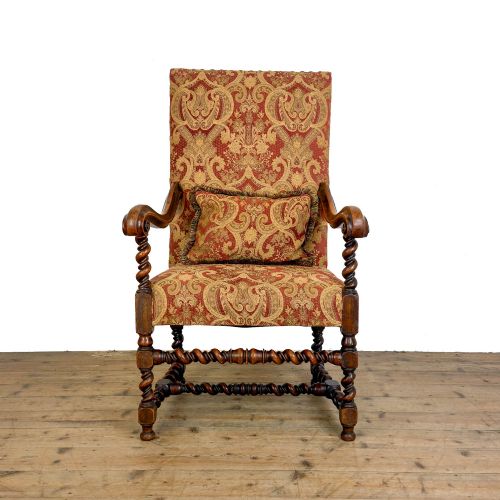
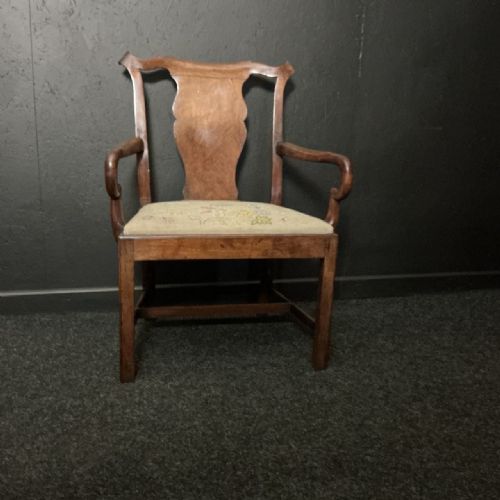
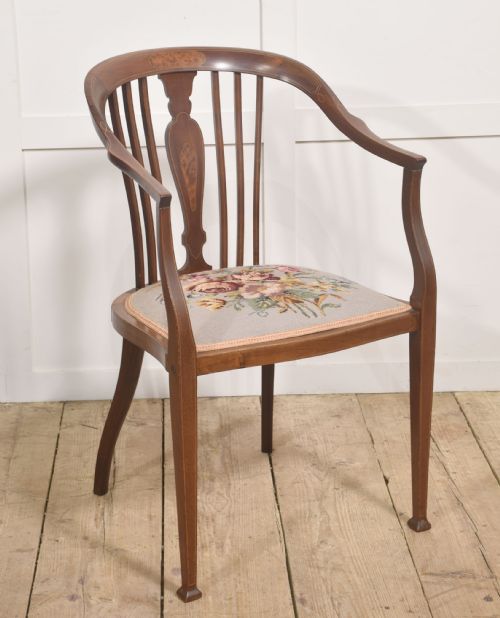
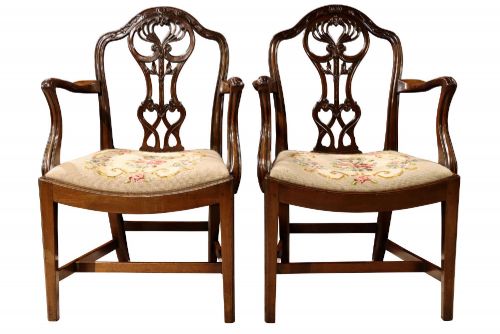


Tapestry Elbow Chair
A tapestry elbow chair brings upholstered textile warmth and supportive arms to a room, offering both seating comfort and historical character.
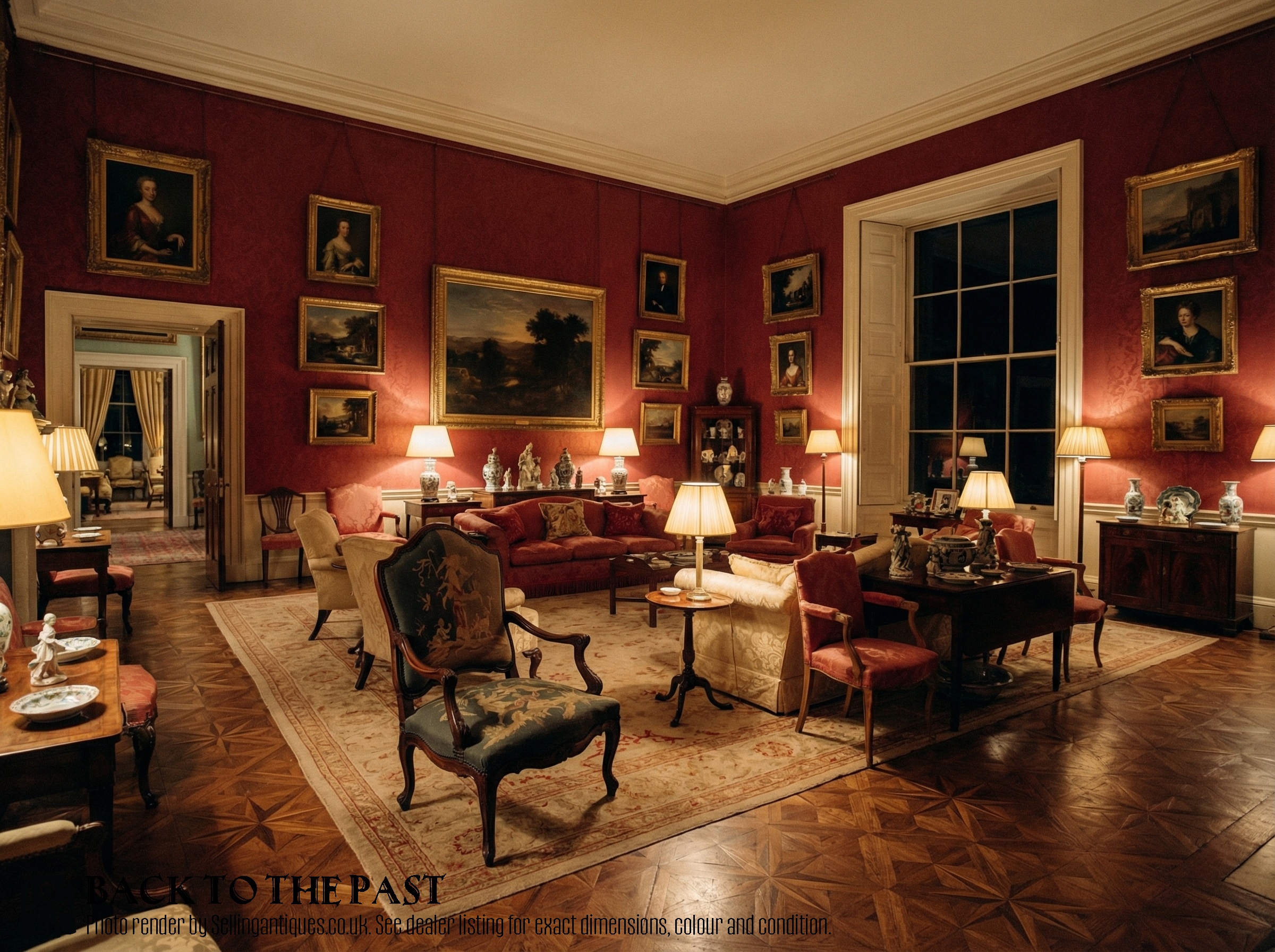
Tapestry Elbow Chair
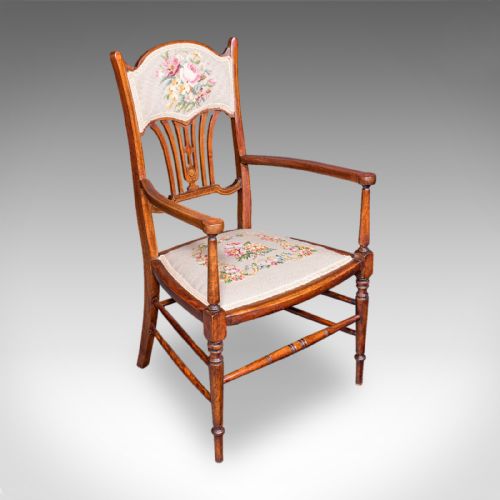
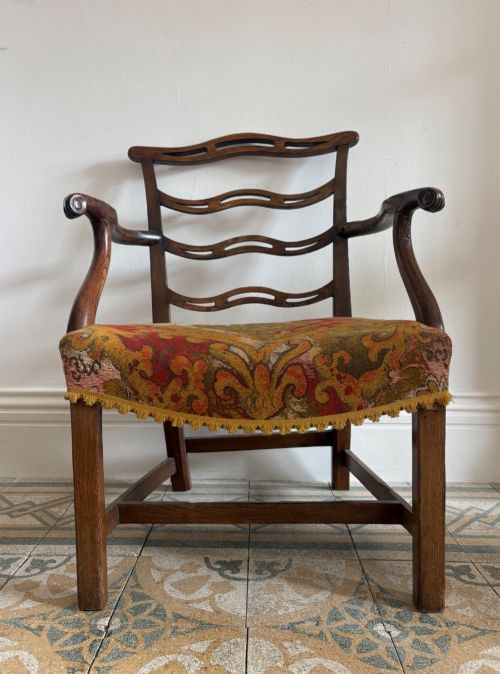
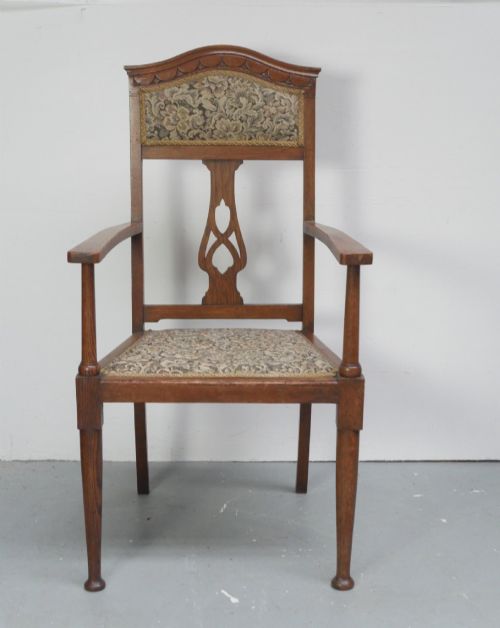
When you search for a tapestry elbow chair, you encounter open armchairs and carvers featuring needlepoint or woven textile seats and back panels. These seating forms span several centuries, with particular representation from the Georgian, Regency, and Victorian periods alongside later Edwardian revivals.
The pieces listed here typically present wooden frames in mahogany, walnut, oak, or elm paired with decorative wool upholstery. Forms range from country ladderback designs and corner chairs to formal Chippendale revival models and late nineteenth century library seats.
Buyers meet both original period examples and later revival interpretations, reflecting the enduring appeal of upholstered armchairs in English domestic interiors.
Materials and construction methods
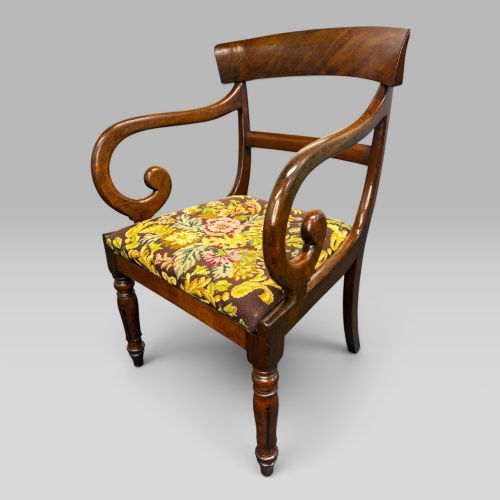
Frames rely on dense hardwoods such as mahogany, walnut, and oak, chosen for their structural strength and capacity to hold carved details like scroll arms and sabre legs. Cabinetmakers utilised mortise and tenon joinery to ensure stability in weight-bearing armchairs.
Upholstery combines heavy-duty linen or canvas foundations with wool and silk needlepoint tapestry work, often secured with brass tacks or drop-in seat frames. Artisans integrated hand-stitched needlepoint panels depicting floral and geometric motifs directly into the wooden framework.
Listings feature mahogany, walnut, oak, elm, rosewood, and beech frames combined with wool tapestry and needlepoint upholstery.
What separates examples
The distinction between standard and superior pieces rests upon the crispness of the timber carving and the density of the hand-stitched needlepoint work. Tighter weave counts in the tapestry and more fluid lines in the mahogany or walnut framing indicate higher craftsmanship.
Proportion and structural integrity define the upper tier of these armchairs, where original joinery remains undisturbed and timber patination shows natural depth from decades of use.
Jas Shoolbred
The Tapestry Elbow Chair Glossary
- Elbow chair
- An armchair designed with supportive rests for the arms, often utilised as a desk or occasional seat. These pieces provide greater lateral support than standard dining chairs.
- Carver chair
- A term historically applied to sturdy armchairs, frequently positioned at the head of a dining table or used as principal seating in a parlour. They typically feature open arms and substantial wooden frames.
- Needlepoint
- A form of counted thread embroidery stitched over canvas mesh, frequently employed for durable upholstery on antique seat panels. This technique allows for intricate polychrome floral and pictorial designs.
- Drop-in seat
- A removable upholstered frame that fits neatly into the wooden rails of a chair base. This construction method facilitated easier reupholstery over successive generations.
- Sabre leg
- A gently curved, concave leg tapering towards the foot, popular during the Regency period. This profile draws inspiration from classical antiquity.
Tapestry Elbow Chair: Frequently Asked Questions
Where should I place a tapestry elbow chair?
These armchairs suit studies, reading corners, and drawing rooms where their upholstered seats and supportive arms provide practical comfort.
They also function effectively as occasional desk chairs or as accent seating paired with low tables.
How do I identify the period of an elbow chair?
Dating relies on observing timber choices, leg profiles, and structural carving styles, such as Regency sabre legs or Georgian Chippendale motifs.
Secondary indicators include the construction methods visible beneath the drop-in seat frame and the ageing characteristics of the timber.
What is the difference between an armchair and an elbow chair?
The terms are largely interchangeable in antique inventory, both describing seats fitted with side rests for the arms.
Elbow chair often highlights the compact scale of the arm rests relative to deep library or lounge armchairs.
How is needlepoint tapestry maintained?
Regular gentle vacuuming through a mesh attachment removes surface dust from the wool fibres without stressing the stitched canvas foundation.
Avoiding direct sunlight preserves the saturated colours of the wool and prevents the textile from becoming brittle.