

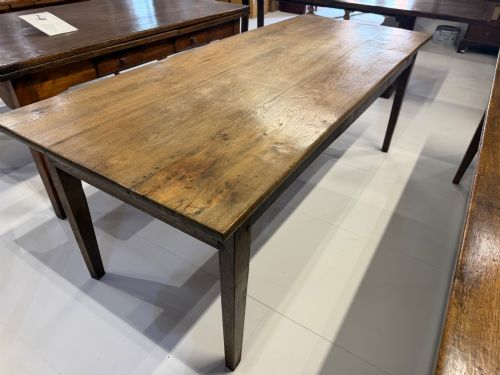
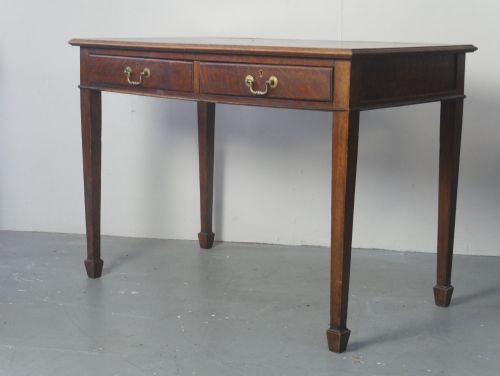
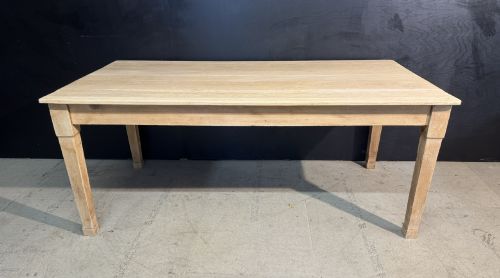
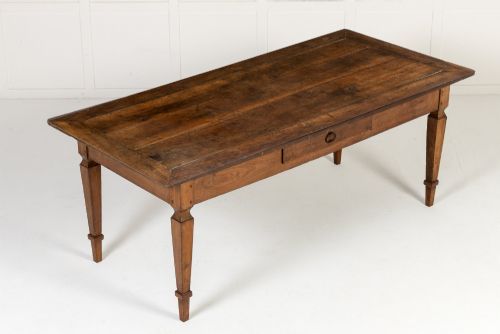
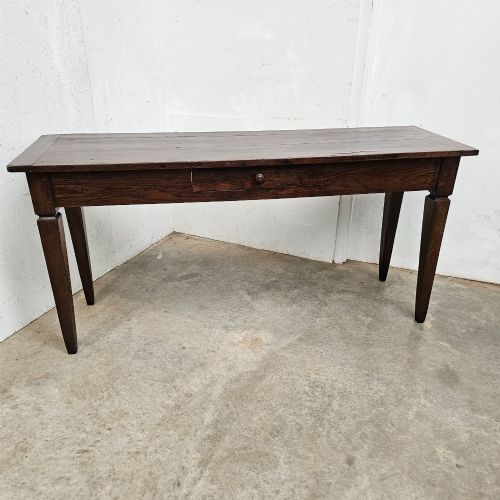
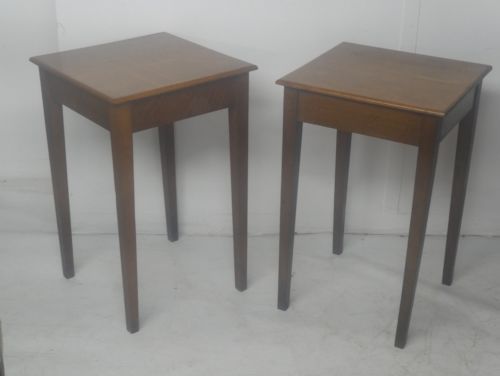
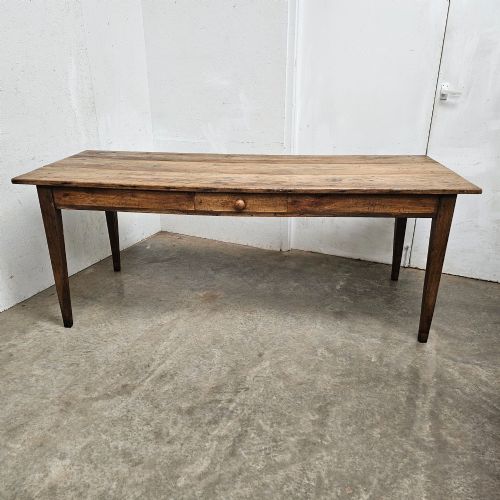
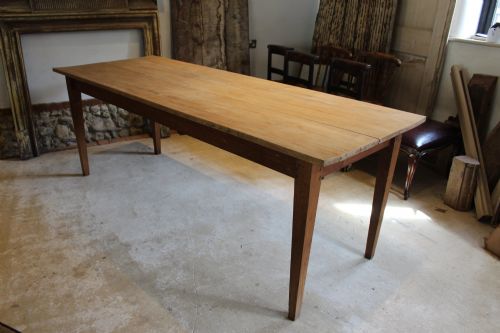
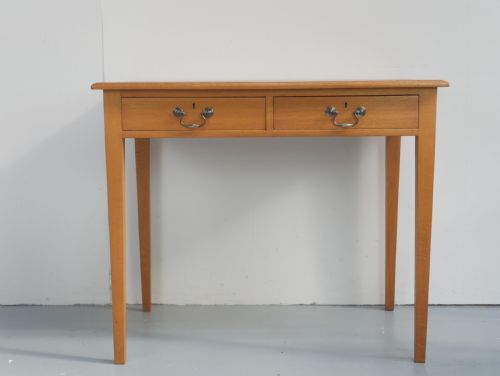


Tapered Leg Oak Table
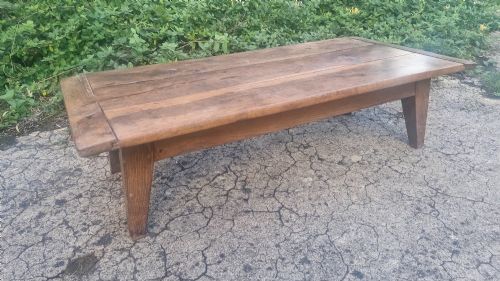
These tapered leg oak tables bring honest timber and steady utility to a room, offering the robust build buyers want.
Tapered Leg Oak Table
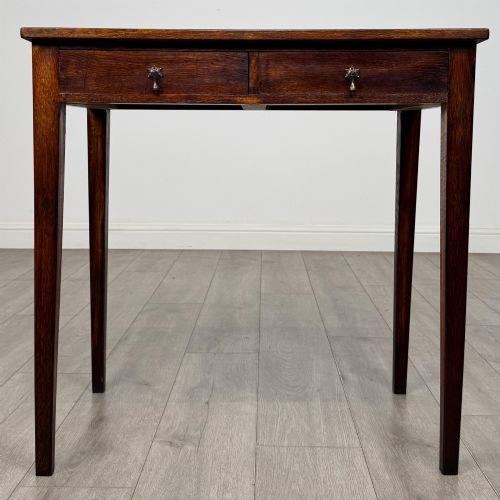
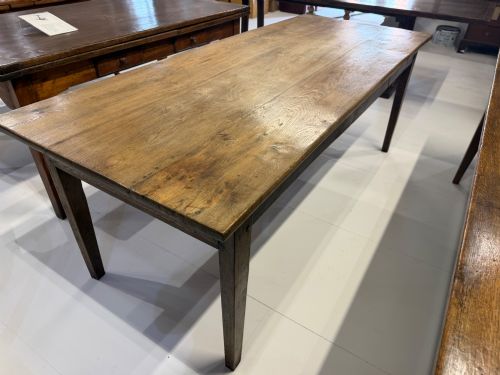
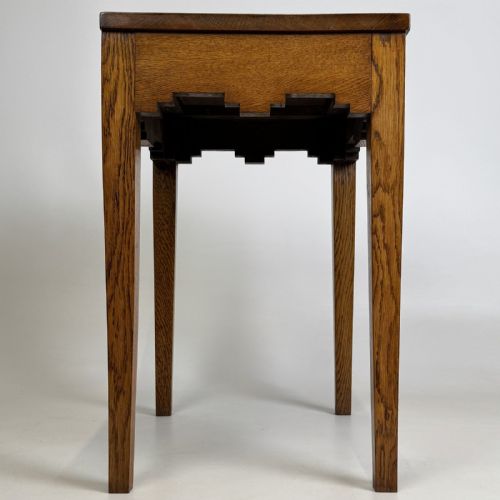
A tapered leg oak table serves many domestic roles, appearing in dining rooms, kitchens, and studies across periods from the eighteenth century to the Edwardian era. The selection includes large farmhouse dining tables alongside smaller side tables, writing desks, and console tables.
Most pieces show regional country characteristics, spanning French provincial designs, rustic farmhouse forms, and Scottish country pieces. Oak remains the primary timber, often paired with pine or cherrywood in regional vernacular builds.
How they were made
Construction relies heavily on solid oak timbers, sometimes combined with brass hardware, iron fittings, or pine secondary woods. Cabinetmakers shaped these materials using traditional joinery methods suited to heavy daily use.
Surfaces developed naturally through domestic service, retaining the grain patterns and structural integrity of the timber. Drawer linings often utilise secondary woods like oak, while structural frames depend on sturdy pegged or joined construction.
Tapered Leg Oak Table Retail Price Guide 2026
Typical asking prices for tapered leg oak table among the pieces listed under this phrase on Sellingantiques today, from the lower quarter to the upper quarter. They describe what is for sale here now, not the wider market.
Jenners department store in Edinburgh once retailed a Scottish oak writing table found here.
What varies in quality
Quality rests on the selection of timber and the proportion of the tapered legs relative to the top. Stronger examples maintain original brasses, sound drawer operation, and balanced proportions across the entire piece.
Minor variations appear in surface wear, timber figuring, and the degree of regional restoration. Superior specimens retain their original structural form without excessive timber replacement in the top or base.
The Tapered Leg Oak Table Glossary
- Lowboy
- A small side table or dressing table fitted with one or more drawers, standing on relatively tall legs. These pieces typically date from the eighteenth and early twentieth centuries.
- Refectory table
- A long narrow dining table traditionally used for communal meals in large halls. Examples in these listings span nineteenth-century farmhouse and kitchen forms.
- Demi-lune
- A half-moon shape used for console and side tables designed to stand flush against a wall. This form often appears in continental European pieces.
- Oak lined
- A drawer construction detail where the internal sides and bottom utilise oak rather than a softer secondary wood. This indicates durable cabinetmaking.
Tapered Leg Oak Table: Frequently Asked Questions
How do I clean an antique oak table?
Wipe surfaces gently with a soft, dry cloth to remove dust without disturbing the polished finish or dry timber.
Avoid chemical sprays and excessive moisture, which can damage the grain and weaken older joints over time.
Are these tables suitable for daily dining?
Most pieces were built for functional domestic use, making them durable enough for regular kitchen or dining room service.
Their solid oak construction handles daily wear well, provided hot dishes and liquids are kept on protective mats.
What periods do these tables come from?
The selection spans the eighteenth century, the nineteenth century, and the early twentieth century, including Edwardian pieces.
Different eras bring distinct regional characteristics, from French provincial farmhouse forms to formal George III designs.
How do I identify a regional style?
Regional pieces often display specific timber combinations, such as French pine and oak, or distinct turning and tapering on the legs.
Local cabinetmaking traditions dictate whether a table leans toward rustic farmhouse utility or refined country house design.