

Country Oak Low Table
Country oak low table pieces bring sturdy historic timber and low-slung utility into modern rooms.
Country Oak Low Table
When you search for a country oak low table, you encounter a selection spanning the eighteenth, nineteenth, and early twentieth centuries. Many listings originate from English, Welsh, French, and Hungarian traditions, reflecting various rural workshop practices.
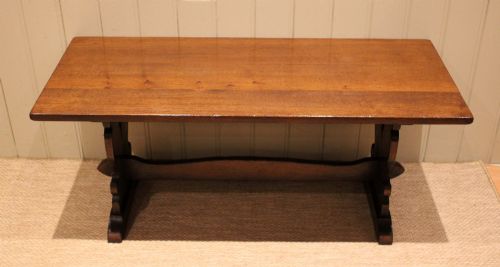
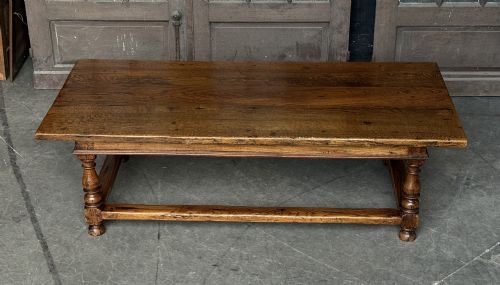
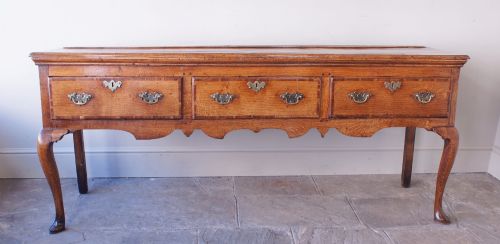
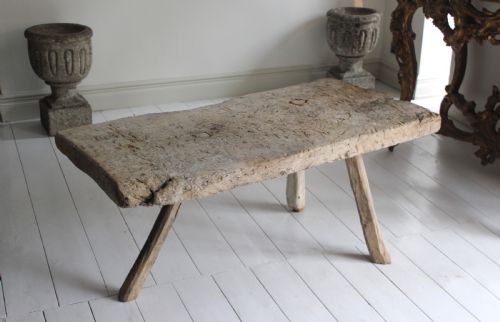
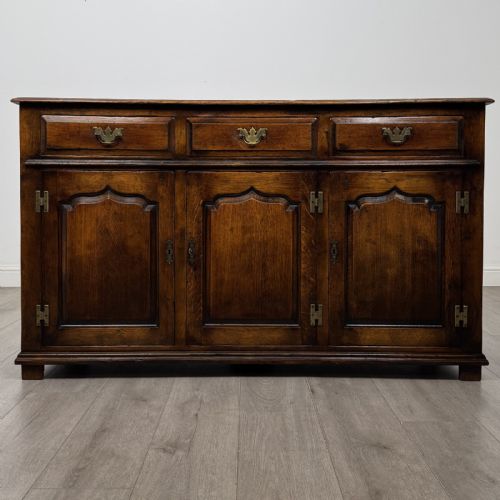
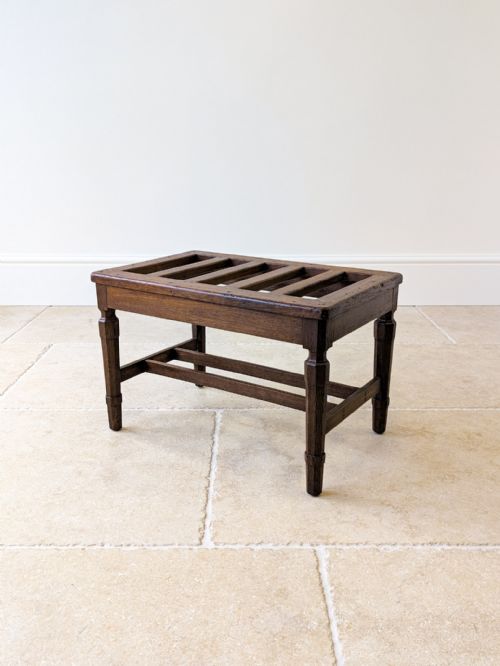
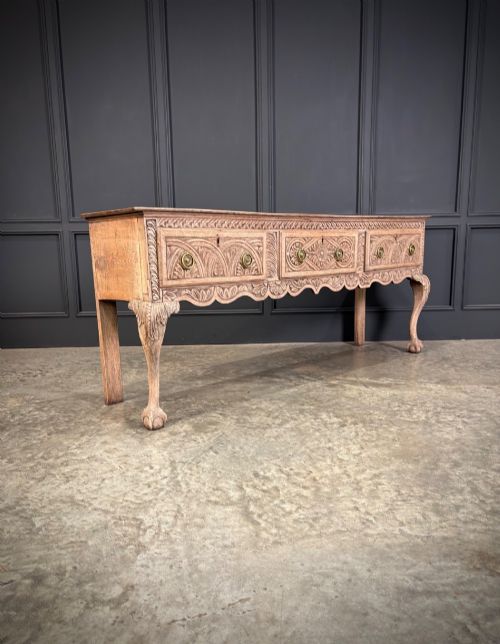
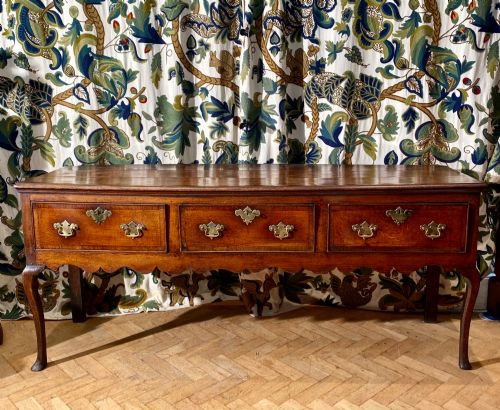
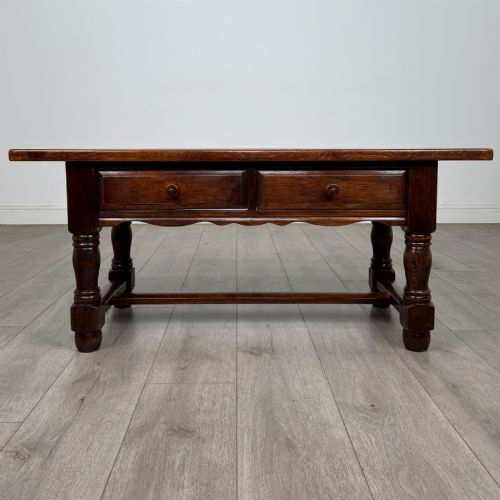
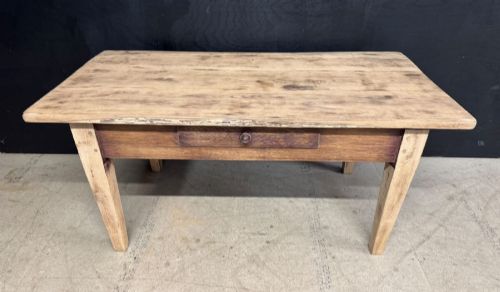
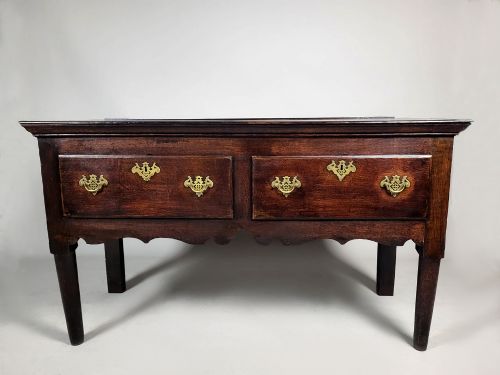
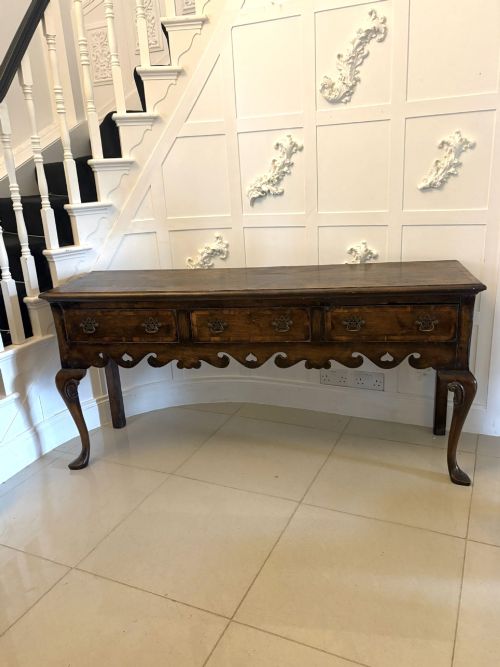
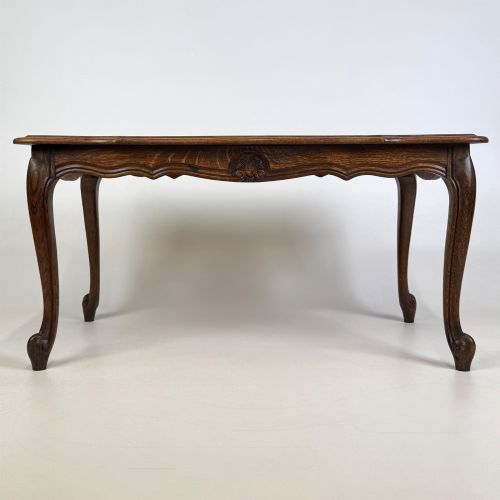
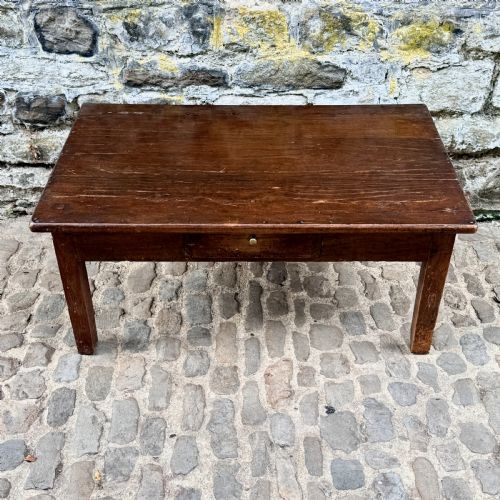
The forms on this page include repurposed lowboy tables, converted pig benches, cheese press tables, and low coffee tables adapted from earlier side tables and dresser bases. These items often showcase utilitarian forms originally built for country houses and farmhouses.
Georgian and Victorian periods supply much of the stock, alongside provincial French examples and twentieth-century interpretations in the rustic style. Buyers find solid timber constructions built for daily service rather than formal parlour display.
How they were made
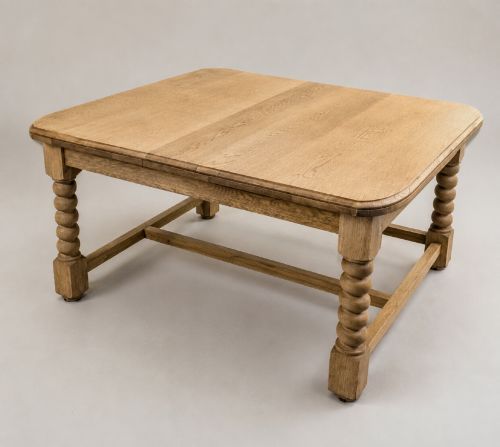
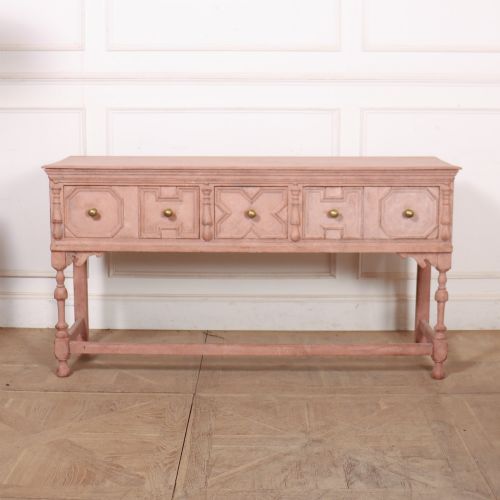
Makers utilised solid oak alongside supporting timbers such as elm, pine, chestnut, and walnut, often joining thick planks with traditional peg and joint methods. Surfaces occasionally retain historical layers of paint or bleached finishes resulting from decades of domestic use.
Hardware elements like brass handles and iron fittings appear on select dresser bases and lowboys, while turned legs or trestle bases support the heavy wooden tops. Construction relies on straightforward carpentry designed to withstand heavy daily burdens in rural settings.
Country Oak Low Table Retail Price Guide 2026
Typical asking prices for country oak low table among the pieces listed under this phrase on Sellingantiques today, from the lower quarter to the upper quarter. They describe what is for sale here now, not the wider market.
Materials span solid oak and elm alongside painted pine, chestnut, brass hardware, and iron fittings.
What varies in quality
The integrity of the timber and the honesty of the conversion work define the standing of each piece. Tables retaining their original boards, unblemished structural framing, and honest surface patination hold greater appeal than items subject to heavy modern alterations.
Proportion and regional character also set examples apart, with well-balanced proportions on lowboys and benches indicating careful provincial craftsmanship. The presence of period brasses or untouched surface wear adds distinct historical depth to the item.
The Country Oak Low Table Glossary
- Lowboy
- A small oak side table featuring drawers beneath the top, frequently standing on cabriole or straight legs. These items served various domestic storage and writing purposes in country houses.
- Potboard
- A lower open shelf built between the legs of a dresser base or table, originally designed for storing pots and pans. This structural addition provides extra stability and surface area.
- Pig bench
- A low wooden bench utilised in agricultural settings, now repurposed as a low coffee table due to its narrow proportions and sturdy plank top.
- Joint stool
- An early form of seating constructed with mortise and tenon joints, often used around farmhouse tables. Their sturdy frames translate well into low coffee table roles in contemporary rooms.
- Cheese press table
- A heavy utilitarian table derived from dairy production equipment, characterised by thick oak planks and robust framing. These pieces offer substantial length and rustic presence.
Country Oak Low Table: Frequently Asked Questions
How do I style a country oak low table?
These low tables anchor a sitting room when paired with upholstered sofas and armchairs. Their neutral timber tones complement both rustic and contemporary interiors.
Keep surface styling simple to let the historic grain and patination remain the focal point. A single ceramic bowl or stack of books works well without cluttering the surface.
Are these tables suitable for daily use?
Constructed from robust hardwoods like oak and elm, these pieces were originally built for heavy domestic labour. They easily withstand the demands of a busy modern living room.
Routine care involves simple dusting and occasional waxing to protect the historic surface. Avoid placing them near direct heat sources to prevent timber movement.
What is the difference between a lowboy and a pig bench?
A lowboy functions as a small side table featuring one or more drawers beneath the top surface. They typically display more refined cabriole or turned legs suited for formal rooms.
A pig bench is a narrower, simpler utilitarian form without drawers, originally made for agricultural tasks. Their austere lines and thick plank tops deliver a distinct rustic aesthetic.
How can I tell the period of an oak table?
Dating relies on examining construction methods, tool marks, and timber shrinkage. Eighteenth-century pieces often display hand-sawn board marks and pegged joinery.
Later Victorian and Edwardian examples show more uniform machining and standardised fixings. Comparing the hardware and leg style helps confirm the era of manufacture.