
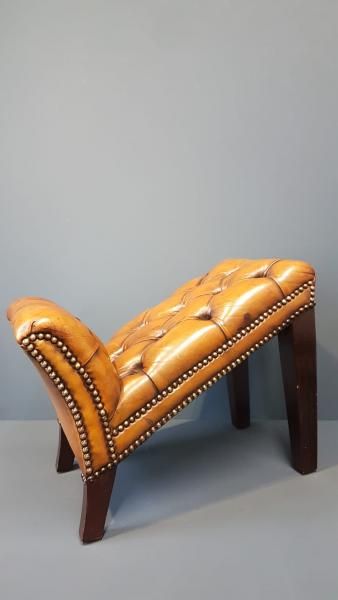
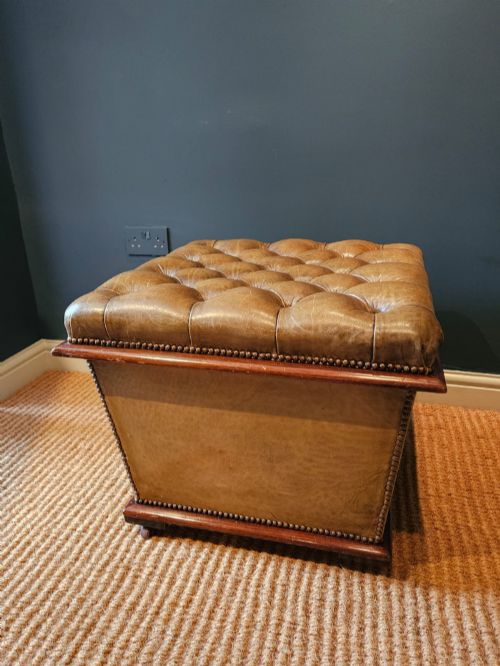


Tan Leather Ottoman Stool
These tan leather ottoman stool pieces offer a solid resting place for feet and occasional seating, built from traditional woods and finished in warm leather hides.
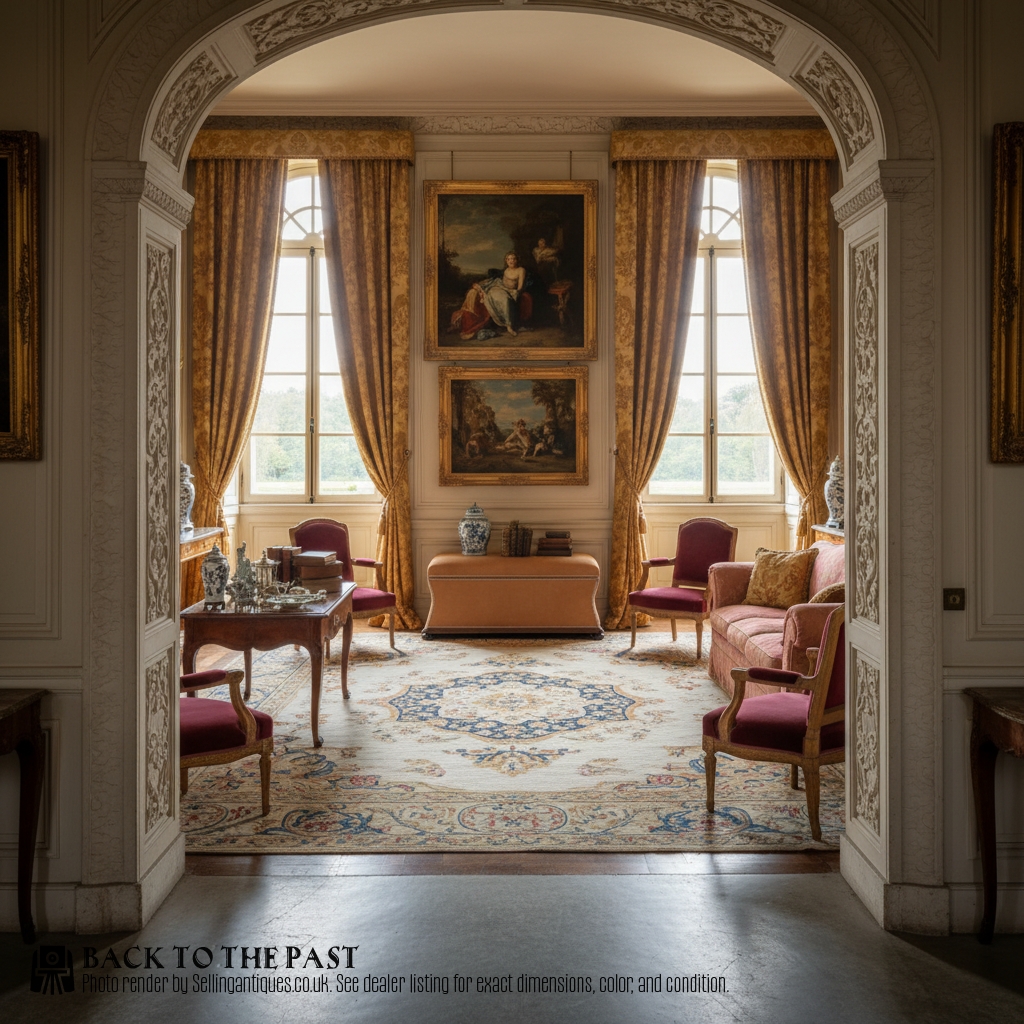
Tan Leather Ottoman Stool
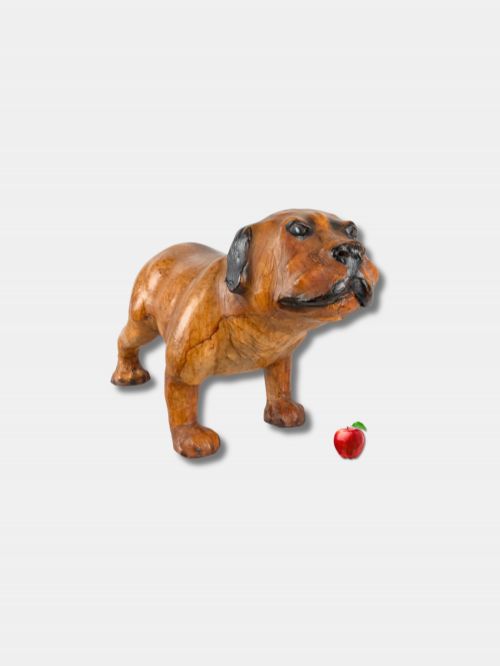
When you search for a tan leather ottoman stool, you encounter low seating and footrests spanning several distinct historical periods from the nineteenth and early twentieth centuries. The selection ranges from robust Victorian box forms to refined Regency rosewood designs and early twentieth century novelty shapes.
You are most likely to meet traditional English footstools and ottomans featuring buttoned leather upholstery, supported by frames fashioned from mahogany, rosewood, walnut, and hardwood. Forms vary from simple shaped X-frame stools to lidded storage boxes designed to hold household items.
The aesthetic draws heavily on classical revivals, notably Chippendale style elements and traditional English joinery. Makers utilised durable materials to ensure these pieces endured daily domestic use while maintaining an air of formal elegance.
Materials and construction methods
The foundational frames rely on dense timbers such as mahogany, rosewood, walnut, and assorted hardwoods, shaped into traditional silhouettes including X-frame bases and box compartments. Joinery techniques from the nineteenth and early twentieth centuries ensure structural rigidity across these footstools and ottomans.
Upholstery centres on tan leather and tan brown leather hides, frequently secured with brass detailing or buttoned finishes. Some variations incorporate secondary materials like fabric alongside the primary leather surfaces.
Wood surfaces receive hand-polished finishes that highlight the natural grain of the rosewood or mahogany, while the leather upholstery develops a distinct patina through age and handling.
Listings incorporate nineteenth and early twentieth century periods, utilising materials such as mahogany, rosewood, brass, and tan leather across various stool formats.
Markers of construction and material quality
Quality rests upon the selection of cabinet timbers, where dense rosewood or figured mahogany signifies superior production compared to standard hardwood alternatives. The precision of the joinery and the integrity of the wooden frame dictate the structural longevity of each ottoman.
The grade and treatment of the tan leather upholstery separate standard pieces from finer examples, particularly where hand-stitched seams and buttoning remain intact. Superior pieces exhibit balanced proportions, whether in a simple footstool or a complex box ottoman.
Omersa For Liberty
The Tan Leather Ottoman Stool Glossary
- Ottoman
- A low upholstered seat or footstool without a back or arms, often featuring a hinged lid for interior storage. These pieces function as both footrests and occasional seating.
- X-frame
- A furniture base constructed from two intersecting members shaped like the letter X. This structural form provides stability while offering a distinct classical silhouette.
- Rosewood
- A dense, heavily figured timber prized for fine cabinet making during the nineteenth century. Its rich grain patterns enhance the visual weight of Regency and Victorian stools.
- Chippendale Revival
- A late nineteenth and early twentieth century design movement that reinterprets eighteenth century English furniture forms. Pieces in this style often feature carved details and substantial proportions.
- Buttoned leather
- An upholstery technique where leather is pulled deep into the padding and secured with matching buttons to create a tufted pattern. This method adds both texture and structural tension to the surface.
Tan Leather Ottoman Stool: Frequently Asked Questions
What is a box ottoman?
A box ottoman is a low upholstered seat featuring a hollow interior accessed via a hinged or removable lid. These items were designed to combine practical foot support with concealed storage for household textiles.
In period interiors, they provided a dual purpose without occupying extra floor space. The sturdy wooden carcass ensures the top can sustain regular weight while protecting stored contents.
How do I identify a Regency stool?
Regency pieces typically display classical revival motifs, utilising dense timbers like rosewood and mahogany. Look for clean architectural lines and refined structural elements that reflect early nineteenth century tastes.
Proportions tend to be balanced and formal, often incorporating brass accents or distinct frame shapes such as the X-frame base.
Are these stools suitable for daily use?
These pieces were originally constructed for robust domestic environments using solid hardwoods and durable leather hides. Their traditional joinery allows them to withstand regular sitting and footresting.
Placing them in modern rooms requires standard care for antique timber and leather surfaces. Regular conditioning helps maintain the suppleness of the original hide.
What distinguishes Victorian styles?
Victorian examples often feature heavier proportions and rich buttoned leather upholstery designed for comfort and durability. The woodwork frequently employs walnut or mahogany with substantial padding.
These pieces reflect the period's preference for functional luxury and solid construction. Box forms and shaped stools are common manifestations of this era.