

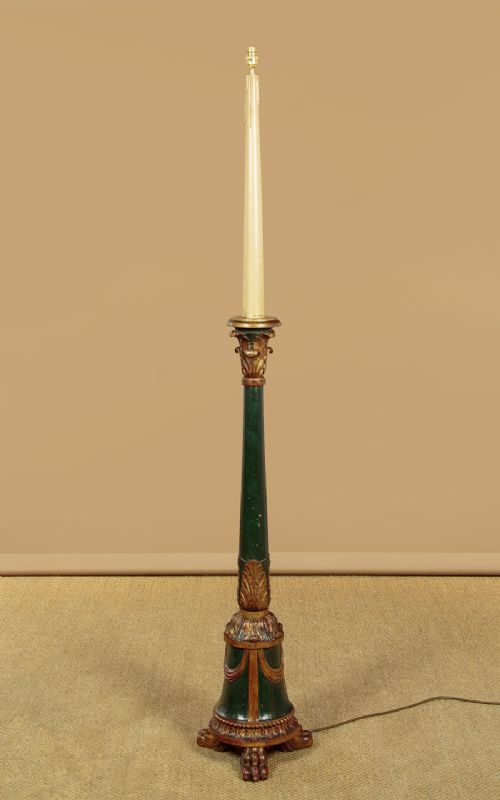


Tall Wood Floor Lamp
A tall wood floor lamp brings upright presence and vertical lighting to a room, drawing the eye upwards through period craftsmanship.
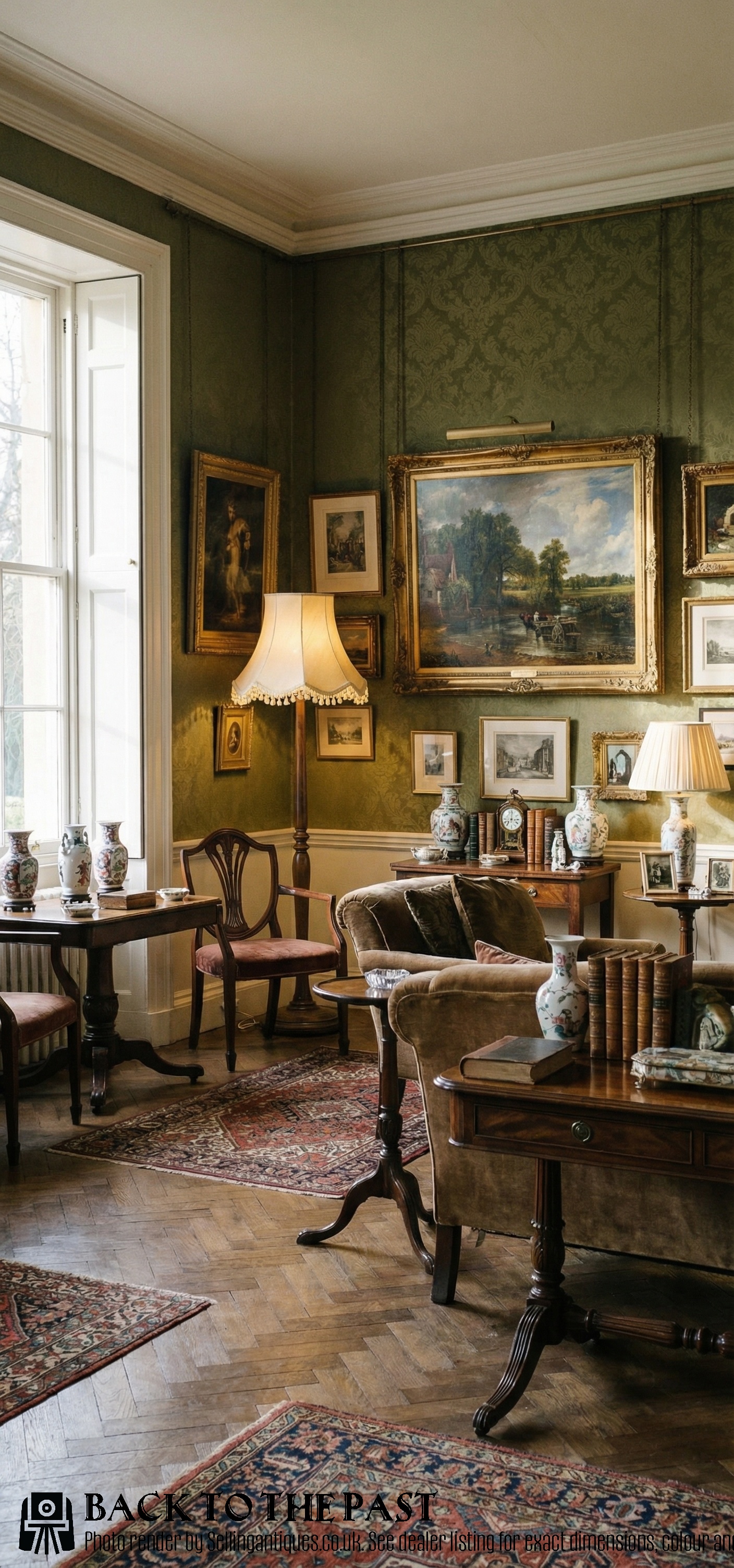
Tall Wood Floor Lamp
A tall wood floor lamp provides vertical illumination while serving as a substantial architectural element in a room. These pieces appear in forms such as standard lamps, lantern stands, and torchieres.
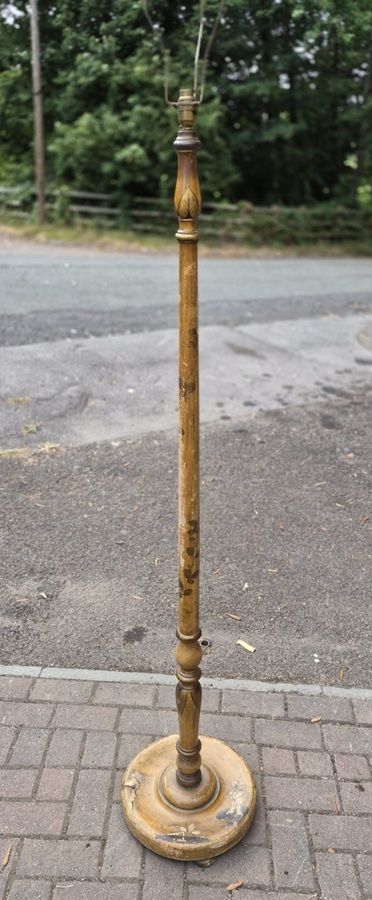
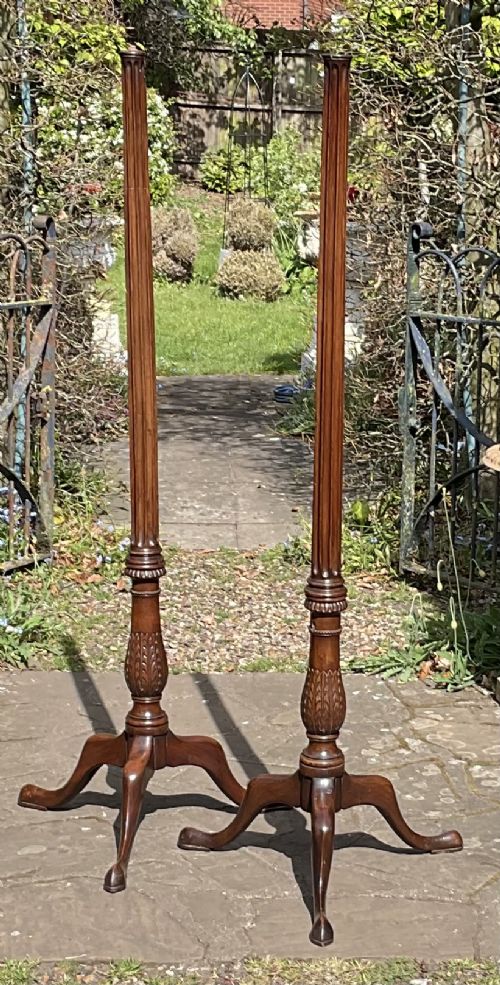
The selection ranges from Georgian mahogany and Victorian painted examples to Edwardian Chinoiserie and 1930s turned beech pieces. Standard lamps and floor lamps form the core of what is available.
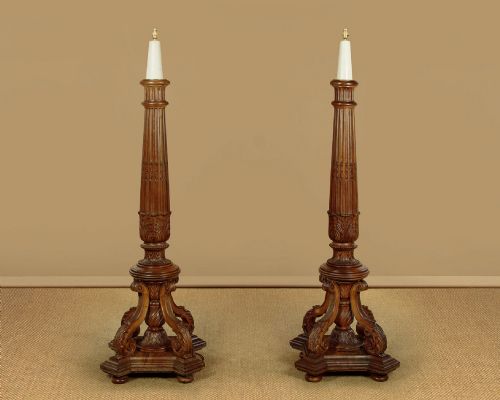
Origins stretch across British, Italian, Anglo-Indian, and Chinese traditions, encompassing styles from Neoclassical Revival to Italian Baroque.
Materials and construction
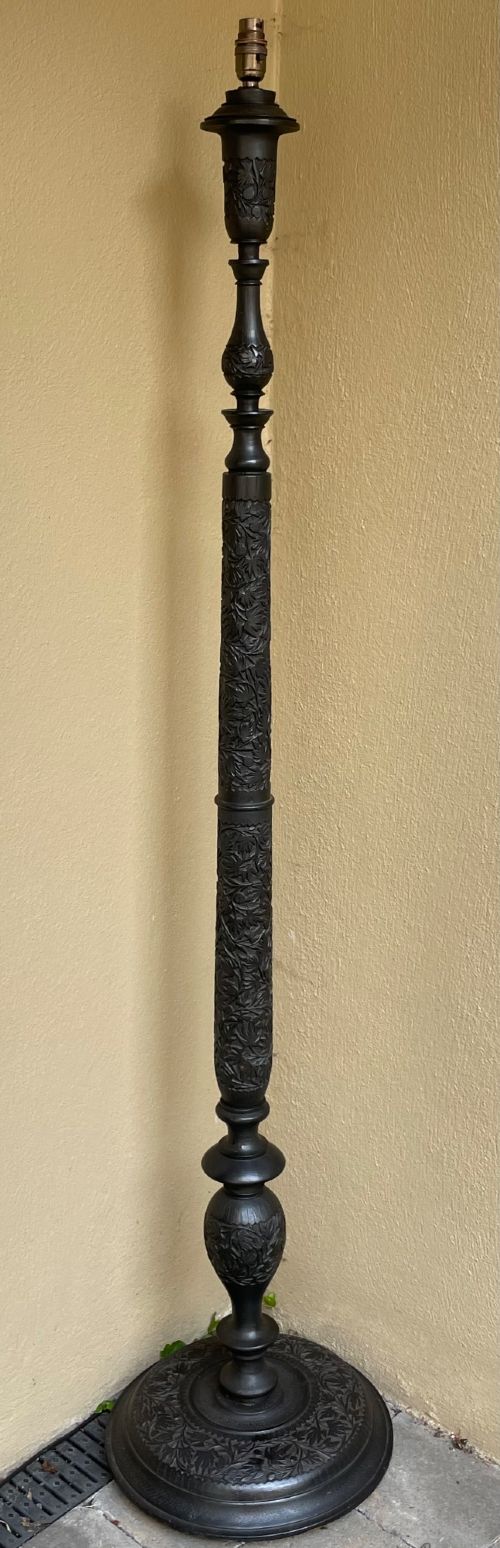
Makers utilised various timbers including mahogany, walnut, oak, beech, pine, and hardwood to construct the upright shafts and weighted bases. Wood is frequently carved, turned, or painted to achieve the desired silhouette.
Surface decoration often involves parcel gilt, giltwood, or intricate Chinoiserie painting upon the wooden ground. Brass elements occasionally appear alongside marbleised finishes to provide structural detail or contrast.
Tall Wood Floor Lamp Retail Price Guide 2026
Typical asking prices for tall wood floor lamp among the pieces listed under this phrase on Sellingantiques today, from the lower quarter to the upper quarter. They describe what is for sale here now, not the wider market.
Object forms include standard lamps, lantern stands, and torchieres executed in styles from Chinoiserie to Italian Baroque.
Distinctions in quality
The depth of hand-carving in the wood and the crispness of gilded or painted details distinguish finer examples from simpler turned standards. Superior pieces display harmonious proportions across the base, column, and capital.
The integrity of the timber and the weight distribution of the base dictate the stability and enduring presence of the standard lamp. Original surface treatments, whether aged giltwood or painted Chinoiserie, carry greater distinction than later alterations.
The Tall Wood Floor Lamp Glossary
- Standard lamp
- A tall freestanding floor lamp designed to hold a light fitting at an elevated height. This term appears frequently alongside floor lamp in historical listings.
- Torchiere
- A tall ornamental stand, originally designed to carry a torch and later adapted for lighting. These pieces often feature elaborate carving and elevated platforms.
- Giltwood
- Wood that has been coated with gold leaf or a gold-coloured metallic finish. This technique highlights carved details on Italian Baroque and revival pieces.
- Chinoiserie
- European artistic style reflecting Chinese motifs and decorative techniques. It is seen on painted standard lamps from the Victorian and Edwardian periods.
- Lantern stand
- A specialised wooden support designed to display a hanging lantern or light source. Examples include carved hardwood Dragon forms from the nineteenth century.
Tall Wood Floor Lamp: Frequently Asked Questions
How do I choose the right height?
Consider the ceiling height and the scale of surrounding furniture when selecting a tall lamp. Most standard lamps reach well over five feet to distribute light effectively.
Ensure the proportions of the wooden shaft complement the room's volume without overpowering seating areas.
Where should I place a floor lamp?
Position these pieces in corners or beside substantial armchairs where they can anchor the space visually. They work well to illuminate dark corners or provide ambient lighting.
Keep them clear of high-traffic walkways to protect delicate carved wooden details and gilded finishes.
How do I care for wooden lamp standards?
Dust the turned or carved wood regularly with a dry, soft cloth to prevent buildup in crevices. Avoid harsh chemical polishes that might damage antique painted or gilded surfaces.
Condition exposed hardwood periodically with appropriate conservation wax if the timber appears dry.
How do I identify the period?
Examine the turning style, joinery methods, and surface decoration for clues to the era of manufacture. Georgian and Victorian pieces show different turning profiles compared to 1930s or Art Deco examples.
Stylistic revivals, such as Neoclassical or Italian Baroque, often borrow motifs from earlier centuries while retaining construction traits of their actual date.