





Tall Victorian Glass Flute
These tall victorian glass flute pieces are slender drinking vessels and grand decorative vases designed to catch the light.
Tall Victorian Glass Flute
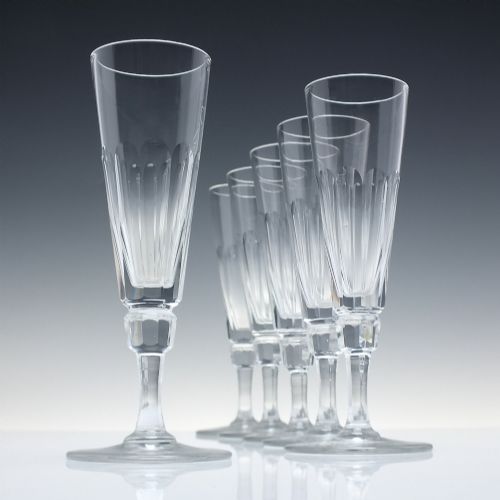
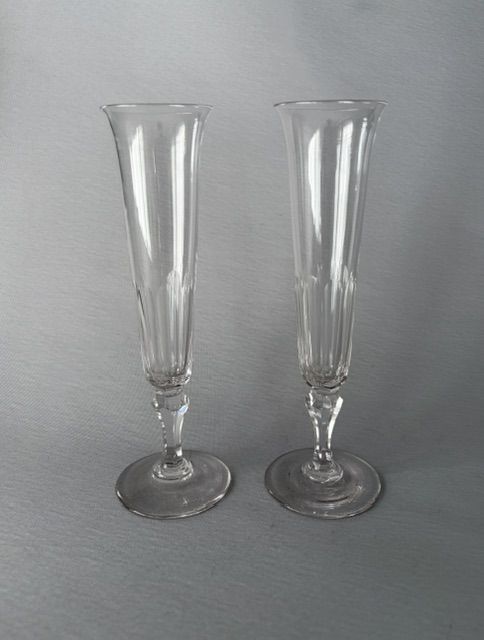
A tall victorian glass flute encompasses both delicate drinking vessels for champagne and imposing decorative vases shaped like trumpets or lilies. Buyers searching this phrase will find a mix of drinking glasses from the mid nineteenth century and much larger floor or table display pieces.
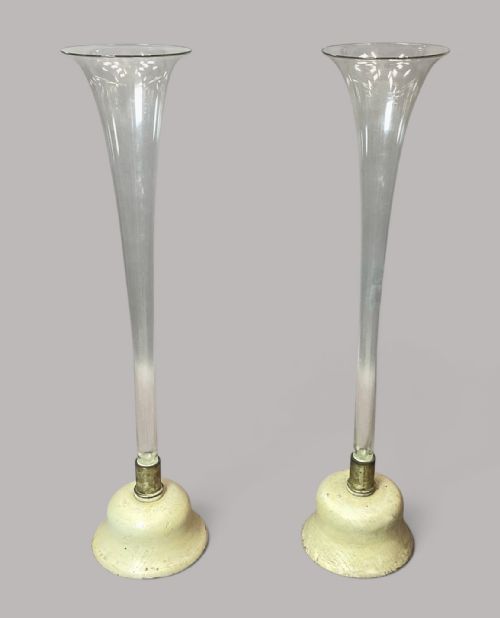
The domestic drinking glasses typically date from around eighteen fifty, featuring slender bowls intended for sparkling wine. By contrast, the taller display items reach significant heights, with some trumpet vases measuring up to forty inches.
Origins span British production alongside continental examples from Germany, reflecting diverse domestic and decorative uses across the period. Forms range from simple straight-sided silhouettes to flared trumpet profiles and Corinthian column lamp bases.
Materials and construction
Makers utilised heavy flint glass and lead crystal to achieve clarity and structural stability in tall vessels. Cut glass ornamentation provides deep faceted patterns that refract light along the length of the stem or body.
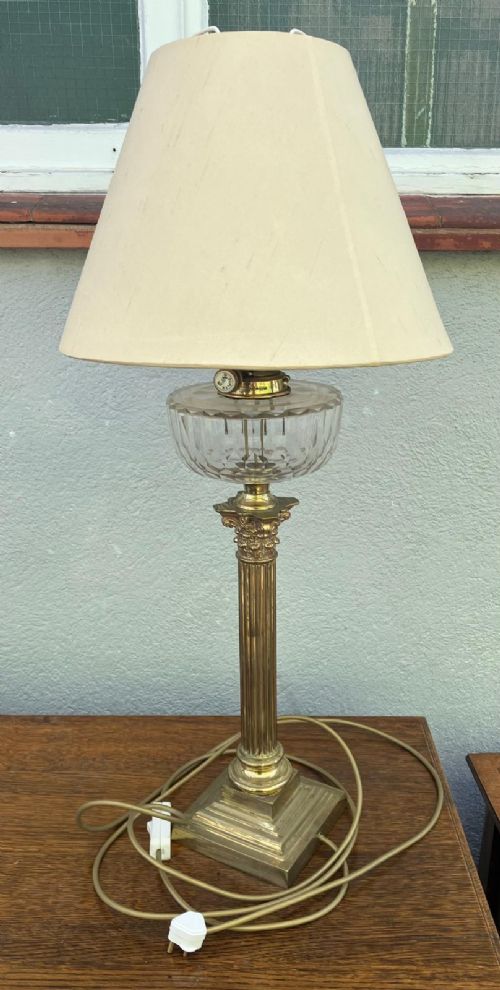
Selected pieces incorporate mixed media, mounting glass shafts onto heavy brass bases such as Corinthian column designs. Fabric components also appear on electrified table lamps adapted from earlier lighting forms.
Tall Victorian Glass Flute Retail Price Guide 2026
Typical asking prices for tall victorian glass flute among the pieces listed under this phrase on Sellingantiques today, from the lower quarter to the upper quarter. They describe what is for sale here now, not the wider market.
Some of these monumental trumpet vases reach forty inches tall, demanding considerable ceiling clearance.
Assessing quality and execution
Quality rests in the precision of the glass cutting and the uniformity of the metal or glass components. Crisp, deep facets demonstrate superior skill compared to softer, shallower surface polishing.
Proportion dictates the success of pieces reaching extreme heights, where balance across a slender stem or trumpet flare requires careful thermal control during cooling. Colour saturation in cranberry glass should remain even throughout the body without muddy patches.
Powell·Nazeing
The Tall Victorian Glass Flute Glossary
- Flint glass
- A heavy, clear glass containing lead oxide that increases brilliance and weight. It provides the necessary heft for tall, slender forms.
- Cranberry glass
- Transparent red glass produced by adding gold chloride to the molten mixture. The resulting shade ranges from pale pink to deep ruby.
- Trumpet vase
- A vessel widening gradually from a narrow base to a flared rim. This silhouette dominates the taller decorative items in this category.
- Neoclassical Revival
- A nineteenth century design movement drawing inspiration from classical Greek and Roman architecture. It appears here in architectural lamp bases like the Corinthian column.
Tall Victorian Glass Flute: Frequently Asked Questions
What were tall victorian glass flute items used for?
Drinking vessels served champagne and sparkling wines during formal nineteenth century dining occasions. The larger trumpet and lily vases functioned as striking centrepieces for grand entrance halls and drawing rooms.
Pairs of these tall vessels were frequently placed on mantelpieces or flanking fireplaces to balance interior decorative schemes. Some examples were later converted into lighting with brass bases and fabric shades.
How do I care for antique glass vessels?
Wash delicate items by hand in lukewarm water using mild detergent, avoiding sudden temperature changes that might crack the material. Dry them carefully with a soft lint-free cloth to maintain the clarity of the crystal.
Keep heavy floor vases positioned safely away from heavy foot traffic to prevent accidental knocks against the tall stems. Brass components benefit from dry dusting rather than harsh chemical polishes.
Are these items strictly British in origin?
While many drinking glasses and studio pieces originate in Britain, continental European workshops also produced substantial quantities of tall decorative glassware. German makers contributed distinct styles during the late nineteenth century.
Design influences crossed borders freely during the Victorian era, leading to shared motifs across different European glasshouses.
How do I distinguish between drinking flutes and vases?
Drinking glasses feature narrow bowls scaled for hand holding and drinking, often supplied in matching sets. Vases stand at much greater heights, sometimes reaching up to forty inches, with wide trumpet openings unsuited for beverages.
Weight and wall thickness also differentiate the two forms, with display pieces utilising heavier glass to support their elevated stature.