
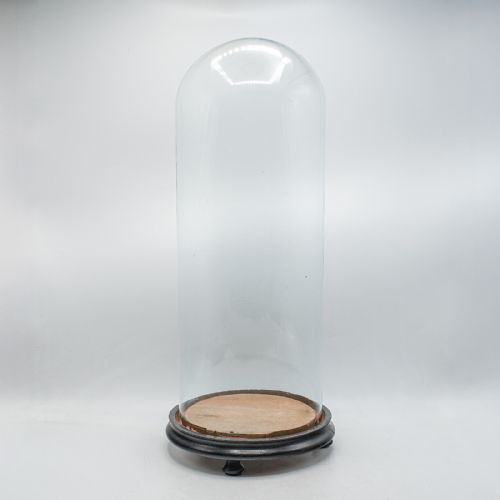


Tall Victorian Glass Dome
Tall Victorian glass dome pieces are protective covers for display items, offering a clear view of prized specimens.
Tall Victorian Glass Dome
When you search for a tall victorian glass dome, you are looking at nineteenth and early twentieth century display vessels used to protect delicate items. The pieces on this page span the Victorian and Edwardian eras, alongside items dated around nineteen hundred.
You are most likely to meet display domes and cloches configured as taxidermy showcases, specimen cases, and collector containers. These items typically rest upon bases made from ebonised wood, walnut, timber, or marquetry.
The forms vary from oval diorama domes to large clock domes and ornament showcases. Many examples serve to house preserved birds, animals, or faux flowers under clear glass.
Materials and construction methods
The primary materials recorded in these listings are glass for the covers and various woods for the bases. Makers utilised ebonised wood, plain timber, walnut, and marquetry to construct sturdy platforms for the heavy glass covers.
Internal displays frequently incorporated fabric and velvet to line the bases and cushion the showcased specimens or artificial flowers. The glass elements were blown and formed into tall enclosures designed to fit precisely into their wooden grooves.
Listings on this site feature items from the Victorian and Edwardian periods, including pieces dated around nineteen hundred.
Distinctions in quality
Quality across these display domes depends upon the finish of the wooden base and the clarity of the blown glass. Finer examples feature detailed marquetry, solid walnut, or carefully applied ebonised finishes rather than plain timber.
The presence of fitted interior linings, such as velvet or specialised fabric for collector specimens, separates standard display cases from more elaborate presentation pieces. The weight and smoothness of the glass cover further indicate the standard of production.
The Tall Victorian Glass Dome Glossary
- Dome
- A rounded glass cover used to protect and display decorative objects or specimens. These pieces sit atop a matching wooden base.
- Cloche
- A bell-shaped glass cover traditionally utilised for display or protection. The term describes similar vessels to display domes.
- Ebonised
- Wood treated to imitate ebony, providing a dark and uniform finish. This treatment appears frequently on Victorian display bases.
- Marquetry
- Inlaid wood designs applied to furniture and display bases. It adds decorative geometric or floral patterns to the wood.
- Diorama
- A three-dimensional scene enclosed within a display case. Oval versions appear among these collector items.
Tall Victorian Glass Dome: Frequently Asked Questions
What fits inside a tall victorian glass dome?
These enclosures traditionally house taxidermy specimens, delicate ornaments, and glass vases containing faux flowers.
Collectors also use them to protect valuable artefacts and natural history specimens from dust.
How do you clean the glass domes?
The glass covers lift away from their wooden bases to allow separate cleaning.
Use a soft cloth and mild glass cleaner on the exterior while keeping moisture away from antique wooden bases.
Are the wooden bases original?
Most listings feature bases made from ebonised wood, walnut, or timber that match the period of the glass.
Materials like marquetry and velvet lining indicate the specific style of the Victorian or Edwardian manufacturing era.
How do I identify an Edwardian dome?
Edwardian pieces date from the early twentieth century and share similar taxidermy display functions with Victorian examples.
Makers continued utilising glass covers on wooden bases during this transition in style and period.