
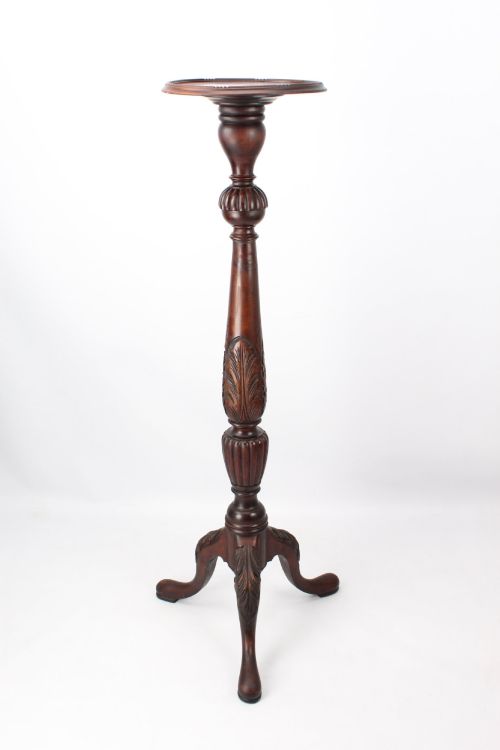
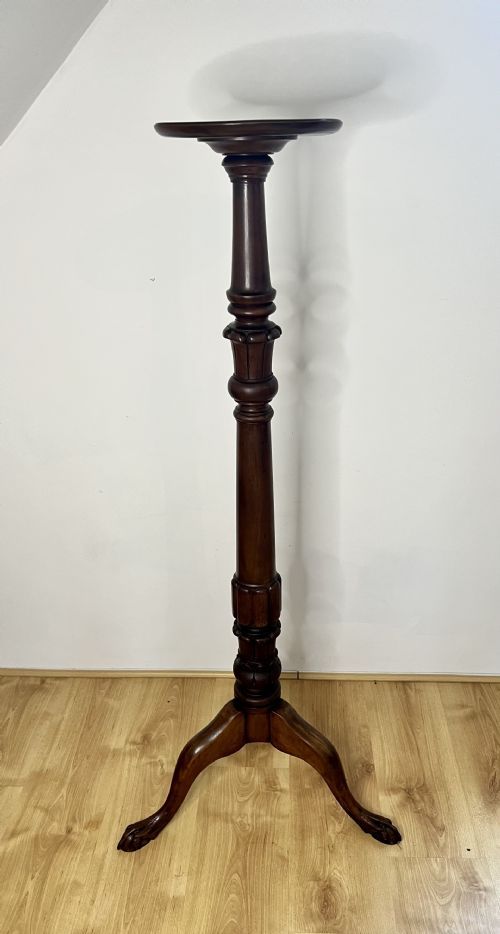
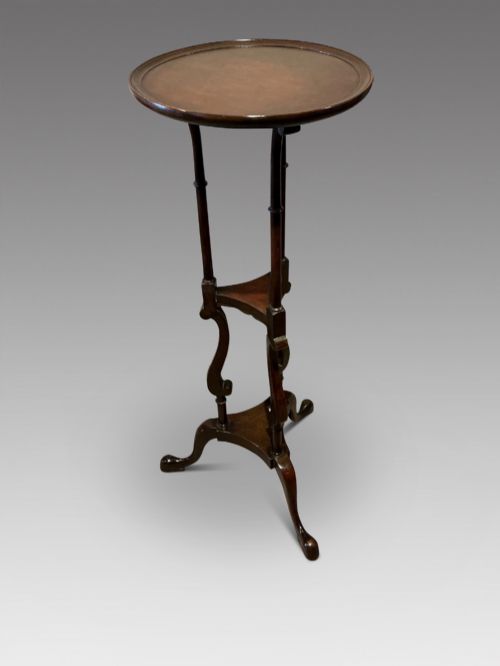
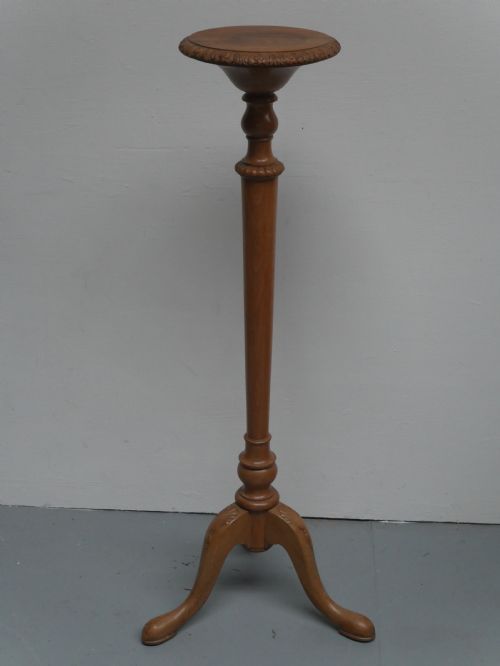

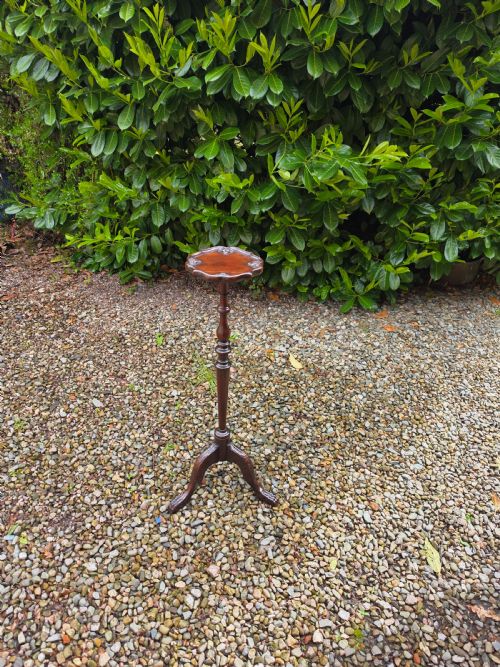
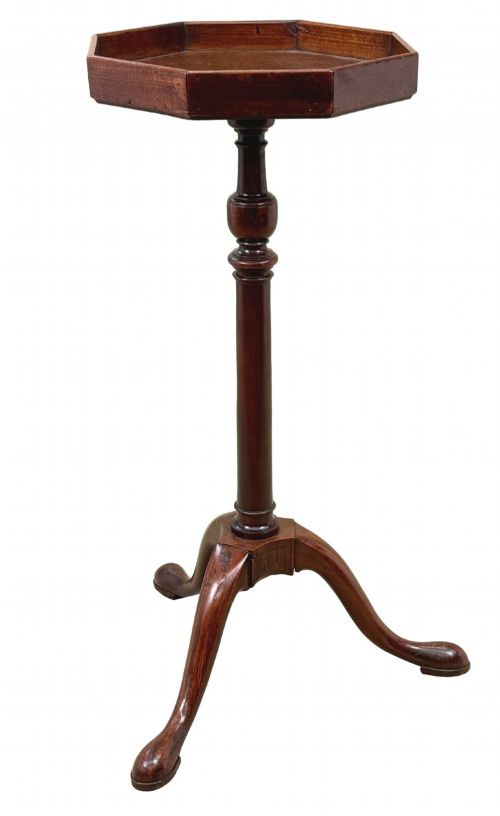


Tall Tripod Plant Pedestal
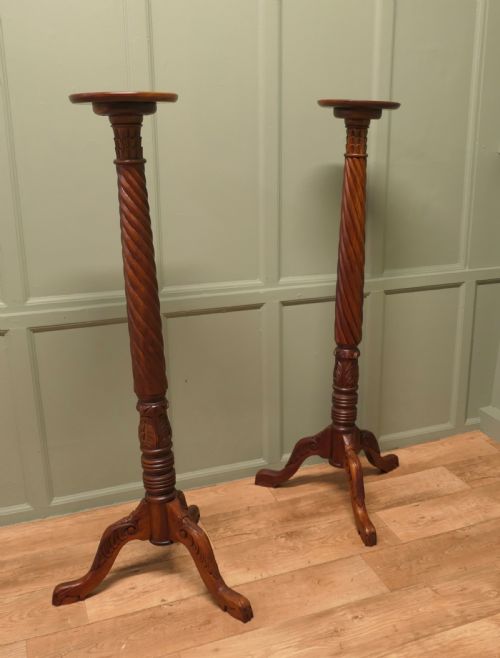
These tall tripod plant pedestals elevate urns and florals with slender grace, bringing vertical rhythm and antique character to empty corners.
Tall Tripod Plant Pedestal
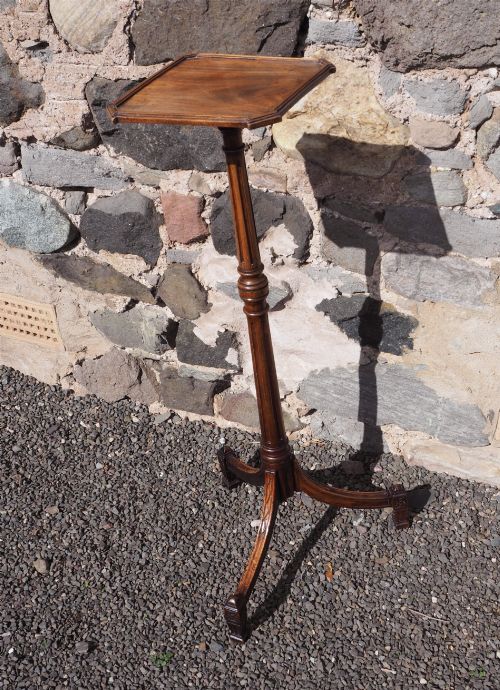
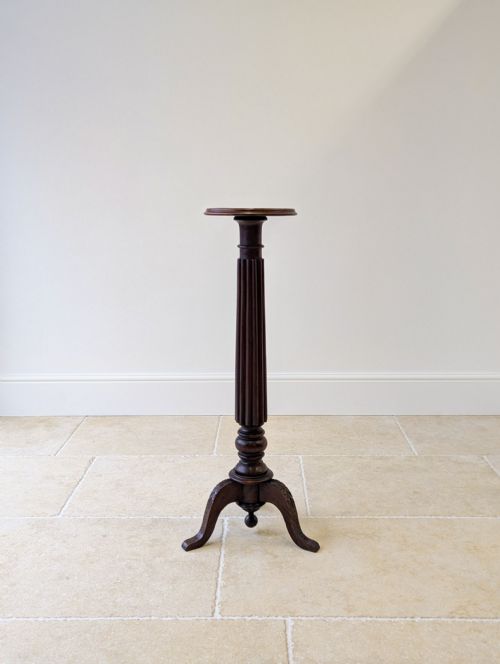
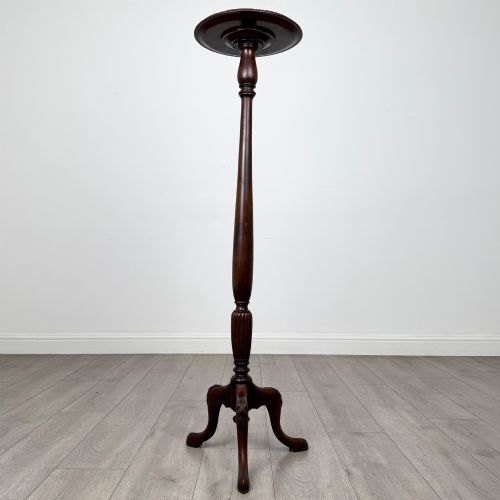
A tall tripod plant pedestal stands on three slender legs beneath a narrow upper surface designed to support a floral urn or decorative jardinière. When you search for a tall tripod plant pedestal, you encounter slender stands that elevate greenery and lighting to eye level.
The selections span from the eighteenth century through the Edwardian era, encompassing Georgian proportions and later revivals. Mahogany and walnut versions predominate, frequently taking the traditional form of the torchere or tall candle stand.
Makers adapted these tall supports across generations, applying neoclassical carving, marquetry, and brass mounts to simple tripod frames. The resulting forms serve equally well today as plant stands, torcheres, and display pillars.
Materials and Construction
Cabinetmakers constructed these pedestals primarily in mahogany and walnut, occasionally incorporating fruitwood marquetry, satinwood, oak, or brass details. Timber selection dictated the stability of the long central column and the three supporting legs.
Joinery techniques combined turned shafts with tenoned legs, ensuring the narrow profile remained balanced when weighted at the top. Carved acanthus leaves, fluting, and inlaid floral motifs decorated the shafts and tops of finer examples.
One remarkably honest maker marked their walnut stand with a nod to British motoring prestige.
Grading Quality
Quality rests upon the crispness of the timber carving and the stability of the tripod base relative to the height of the column. Superior examples display hand-carved details and dense cabinet timbers rather than simple turned mouldings.
The harmony of proportion between the narrow top and the three spreading feet separates standard production from exceptional pieces. Surface patina and intact original timber finishes further distinguish the finer stands.
The Tall Tripod Plant Pedestal Glossary
- Torchere
- A tall stand originally intended to carry a candle or torch, now frequently adapted to support plants or decorative urns. These slender pieces provide vertical height in domestic interiors.
- Tripod
- A three-legged base providing stable support for a narrow central column. This arrangement allows the stand to remain steady on uneven floors.
- Jardiniere
- An ornamental pot or stand designed to hold growing plants or flowers. They often feature galleried edges to contain moisture.
- Marquetry
- Decorative inlay work using various coloured woods to create pictorial or geometric patterns on the surface. Cabinetmakers applied this technique to tabletop surfaces.
- Neoclassical
- A style drawing inspiration from classical antiquity, characterised by symmetry, straight lines, and classical ornamentation. It appears frequently in revival pieces.
Tall Tripod Plant Pedestal: Frequently Asked Questions
What is a torchere stand?
A torchere stand is a tall, slender piece of furniture designed to elevate a light source or decorative object. They feature a narrow top supported by a central column and a tripod base.
In modern rooms, they serve effectively as plant stands or display pedestals for sculpture and ceramics.
How do I style a tall plant pedestal?
Place a trailing plant or a decorative ceramic bowl on top to utilise the vertical height. They fit neatly into neglected corners or beside seating areas.
Ensure the weight of the pot remains balanced over the three feet to maintain stability.
Are these stands stable for plants?
The tripod base provides a wide footprint that keeps the tall column balanced under standard decorative weights. Heavier pots require careful centring on the platform.
Traditional joinery ensures the legs support the vertical load securely without rocking.
How do I identify the period?
Examine the timber species, carving style, and construction methods used on the central shaft and feet. Georgian and Victorian pieces show distinct differences in moulding profiles and decorative motifs.
Revival pieces often combine earlier stylistic elements with turn-of-the-century manufacturing techniques.