
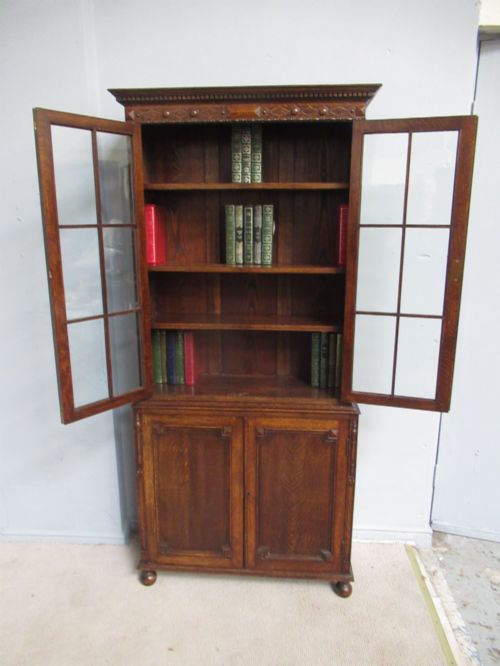
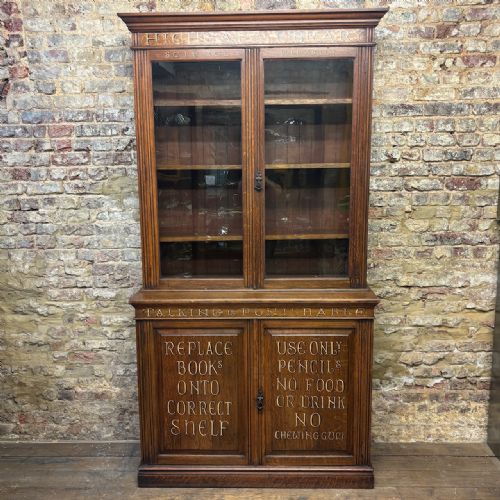
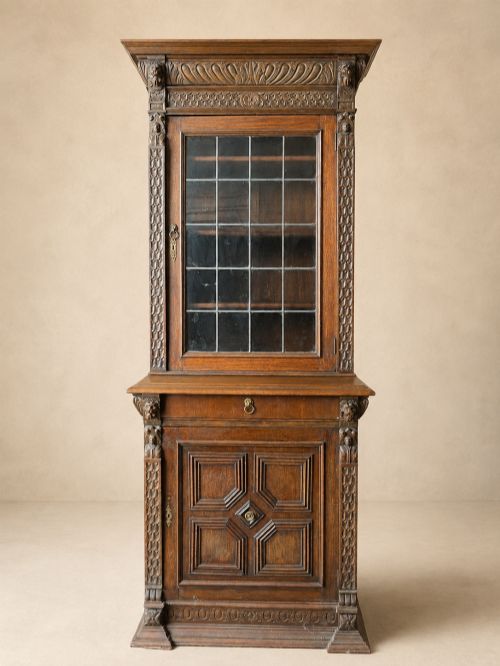
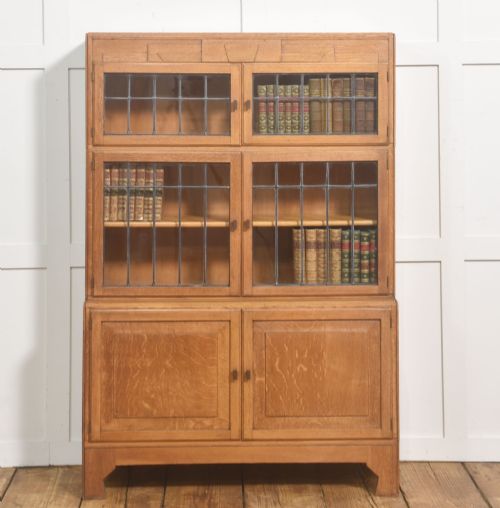
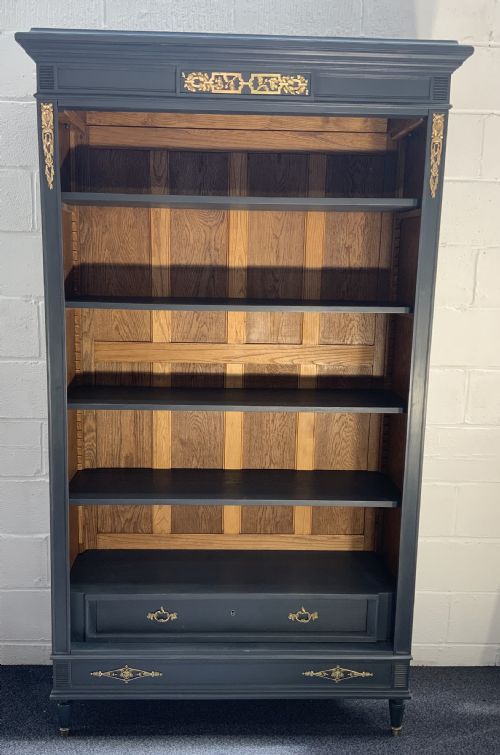
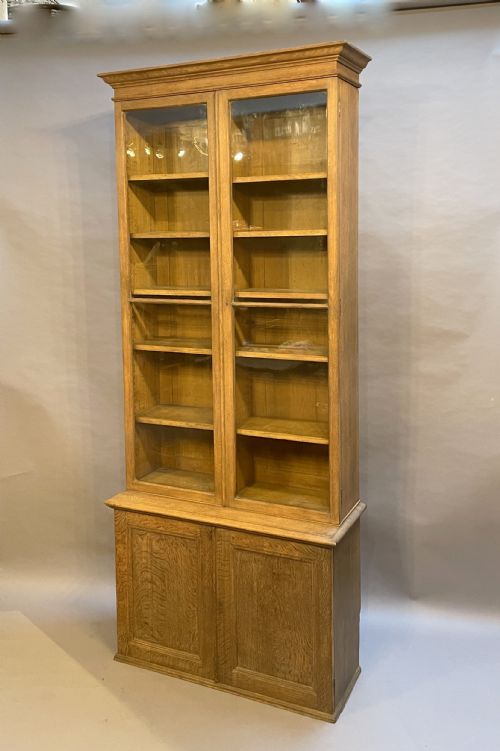


Tall Oak Display Cabinet
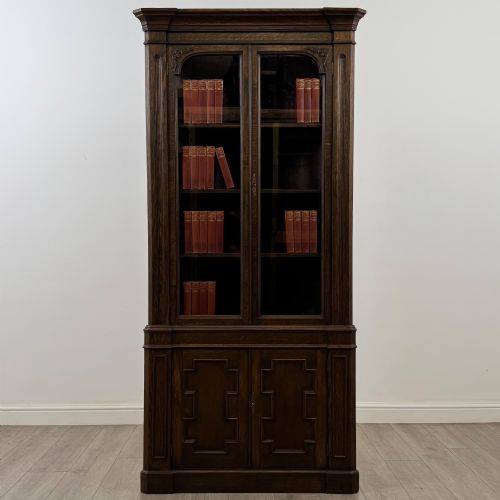
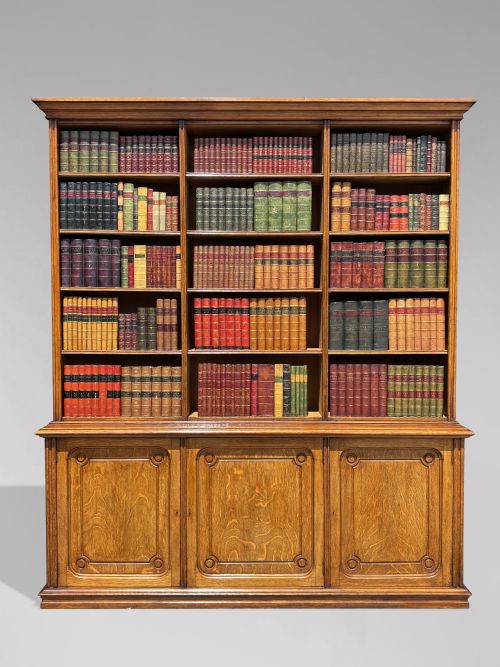
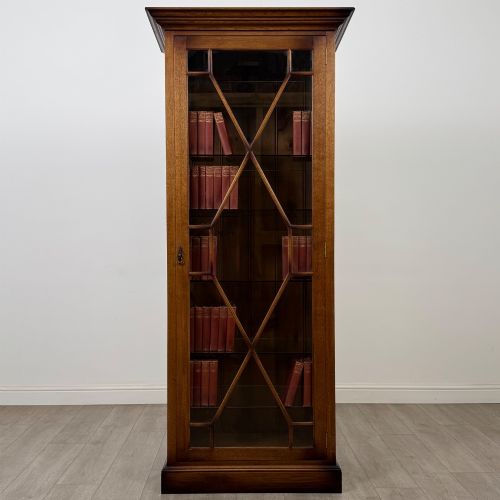
A tall oak display cabinet brings upright presence to a room, storing books and collections behind glazed or open fronts.
Tall Oak Display Cabinet
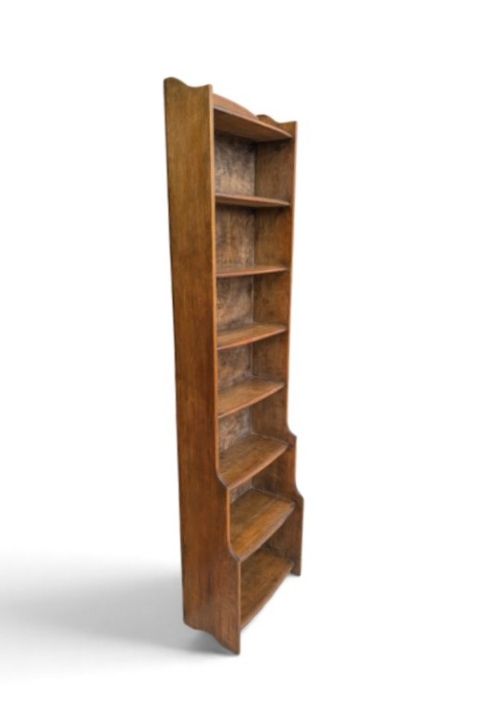
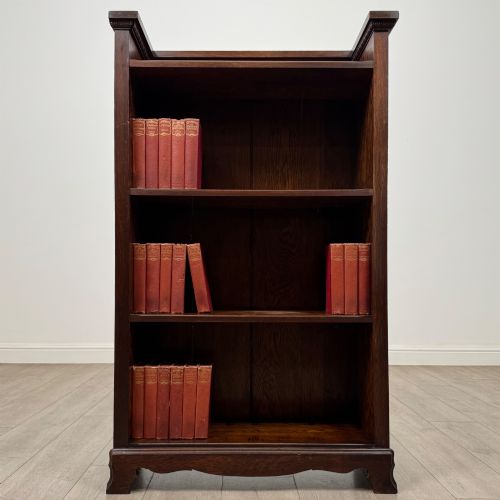
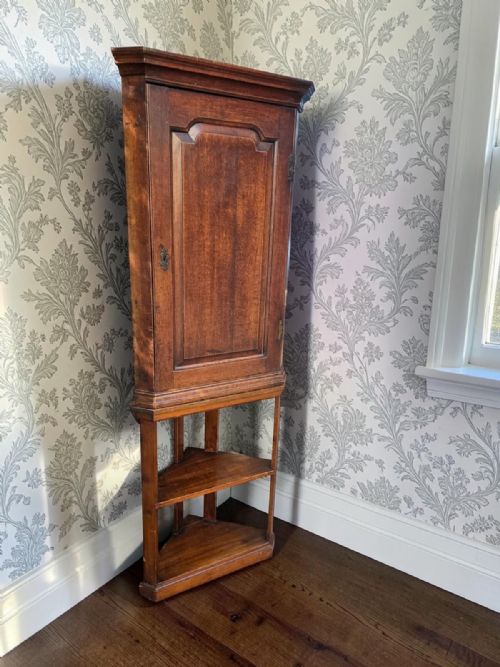
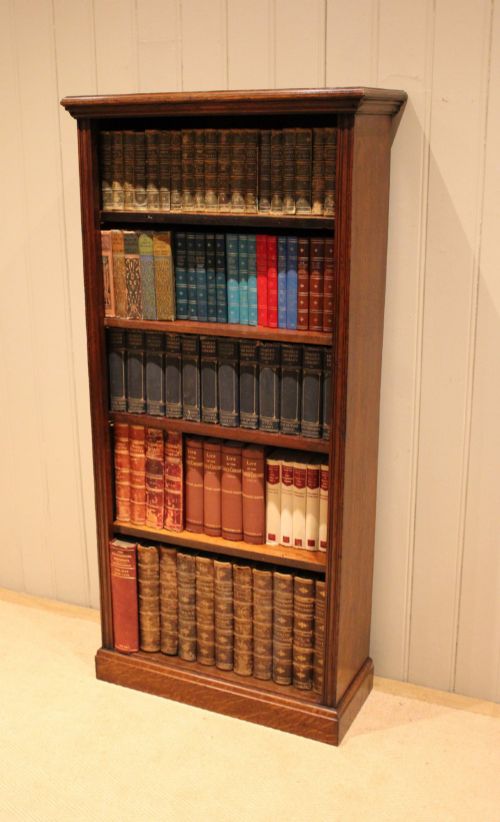
When you search for a tall oak display cabinet, you find vertical storage pieces designed to showcase books and objects. The examples on this page span the Victorian and Edwardian eras alongside the early twentieth century, taking the form of bookcases, corner cupboards, and vitrines.
Many of these items reach upwards with adjustable shelves or glazed doors, while others use open fronts or stands. French and English origins appear alongside continental Jacobean and Gothic revival styles, showing variety in height and proportion.
Materials and Construction
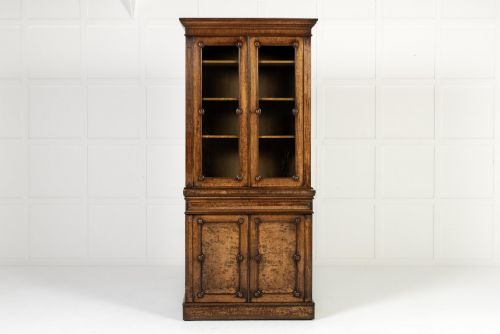
Makers built these pieces primarily in solid or figured oak, occasionally turning to pollard oak for distinctive grain patterns. Glass panels, leaded sections, and brass embellishments complete the doors and mounts.
Structural elements include carved details, beaded edges, and adjustable shelving systems. Iron hardware and painted wood surfaces also appear across the historical range of pieces.
Listings here feature oak across Victorian, Edwardian, and Regency periods, alongside materials like lead, brass, and pollard oak.
Distinctions in Quality
The distinction between standard utility items and finer pieces rests in the handling of the timber and the depth of the carving. Richly figured pollard oak and crisp Gothic revival or Jacobean carving elevate a piece well above plain commercial joinery.
Proportion and glazing quality also separate workshop output. Well-balanced vertical lines, substantial cornices, and original leaded or clear glass panes distinguish the better examples from simpler school or library shelving.
Howard and Sons·Minty·A Blain and Son Liverpool
The Tall Oak Display Cabinet Glossary
- Pollard oak
- Timber taken from trees that were headed back, producing a dense, highly figured grain pattern. This decorative wood often marks out superior nineteenth-century furniture.
- Vitrines
- Glass-sided display cabinets designed to show porcelain and curiosities from all angles. They appear in Art Deco and period forms.
- Gothic Revival
- A nineteenth-century design movement drawing on medieval ecclesiastical architecture. Pieces in this style display pointed arches, tracery, and heavy carved mouldings.
- Corner cupboard
- A cabinet built with a triangular footprint to fit snugly into room angles. These items stand on the floor or mount upon a separate stand.
Tall Oak Display Cabinet: Frequently Asked Questions
What is a tall oak display cabinet used for?
These cabinets serve to house libraries, collections, and decorative objects while keeping dust away behind glass or open shelving. Their vertical format maximises storage capacity without taking up excessive floor space.
Historically, variations ranged from school library bookcases to domestic corner cupboards and grand glazed display units. They anchor a room by drawing the eye upward while offering practical organisation.
How do I date a tall oak cabinet?
Dating relies on observing stylistic markers, hardware, and construction methods. Victorian and Gothic revival pieces often feature heavy carved ornamentation, while Edwardian and 1920s examples lean towards cleaner lines or Art Deco geometry.
Secondary woods, backboards, and fastener types provide further clues to age. Comparing the specific moulding profiles and glass characteristics helps narrow down the decade of manufacture.
Are the shelves adjustable?
Many of the tall bookcases and display cabinets include adjustable shelving systems supported by wooden racks or metal pins. This adaptability allows the interior to accommodate books of varying heights or mixed collections of display items.
Some earlier or simpler open front designs feature fixed shelves integrated directly into the vertical sides. Checking the shelf support mechanism confirms whether the interior layout can be reconfigured.
How do I style a tall cabinet in a modern home?
A tall oak cabinet works well as a focal point in a living room, study, or hallway. Pairing the warm grain of the wood against neutral walls lets the vertical proportions stand out.
Grouping books by colour or mixing ceramics with stacked volumes creates visual balance behind the glass doors. The interior space benefits from careful curation rather than overcrowding.