

Tall Nightstands Pair
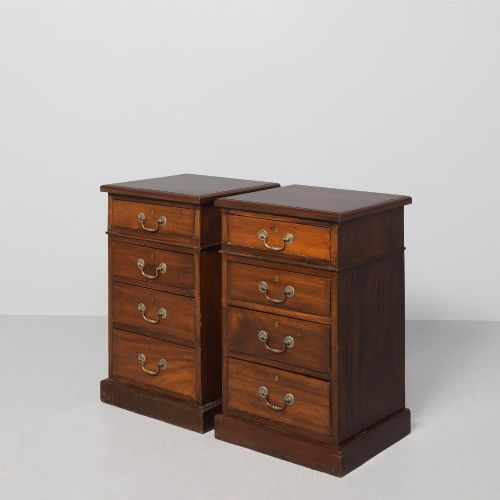
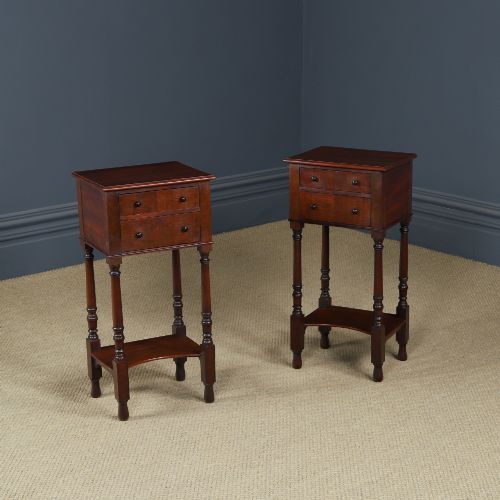
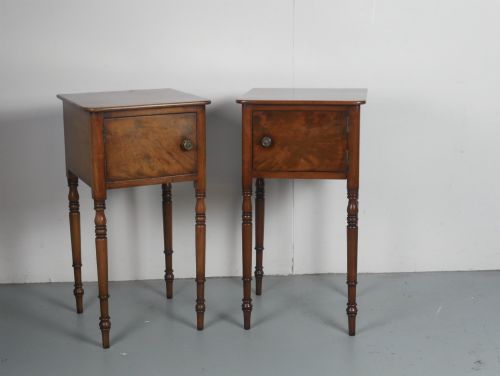
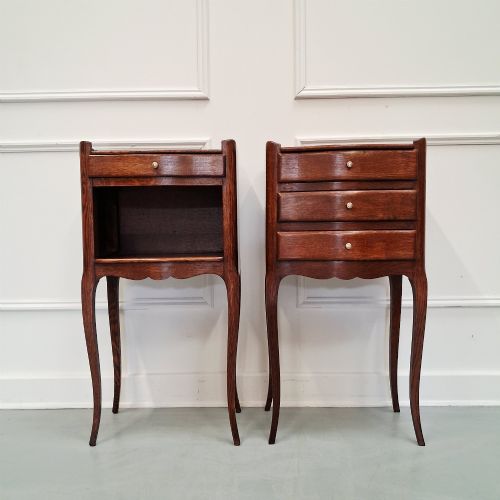
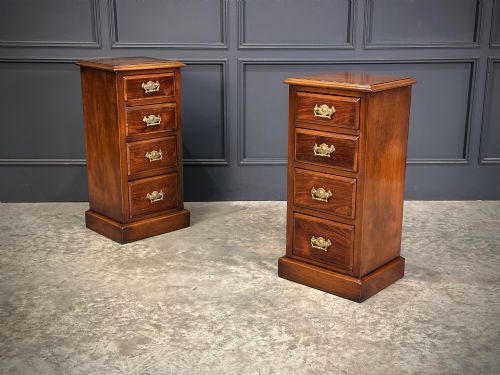
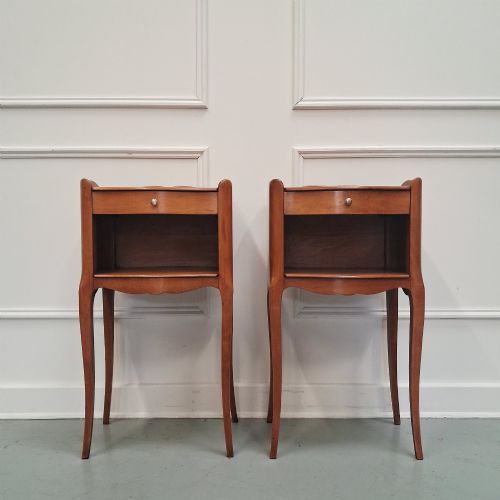
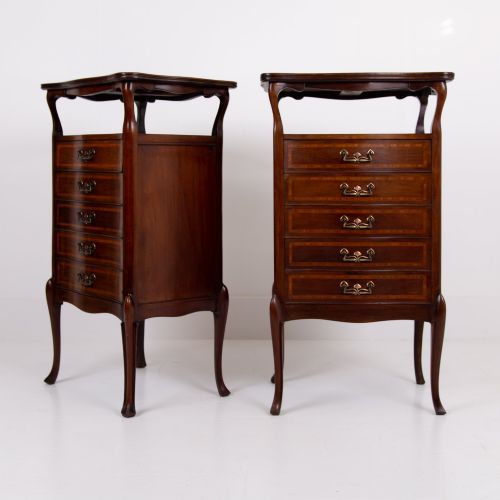
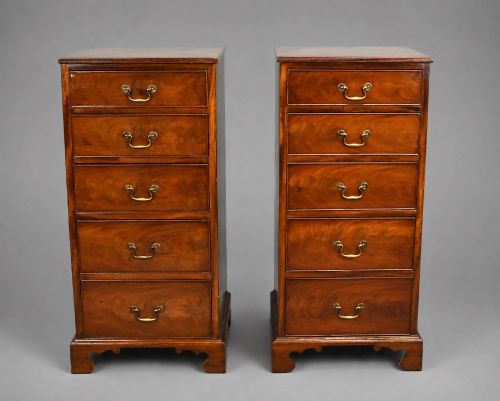
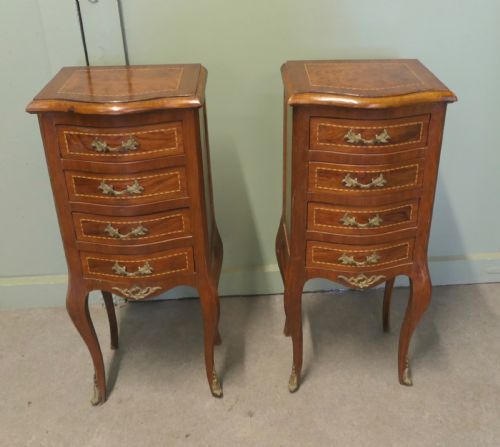
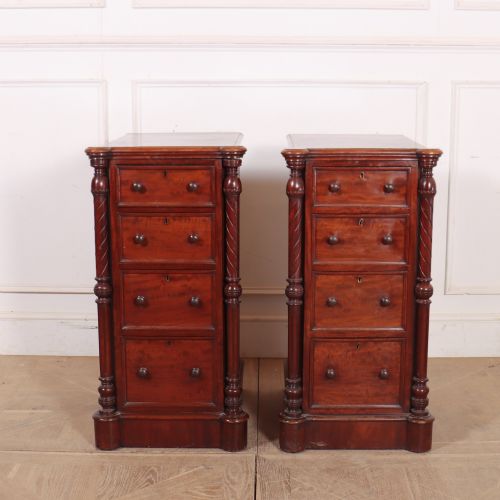
These tall nightstands pair matching cabinets and chests by the bed, bringing symmetry and generous storage to the bedroom.
Tall Nightstands Pair
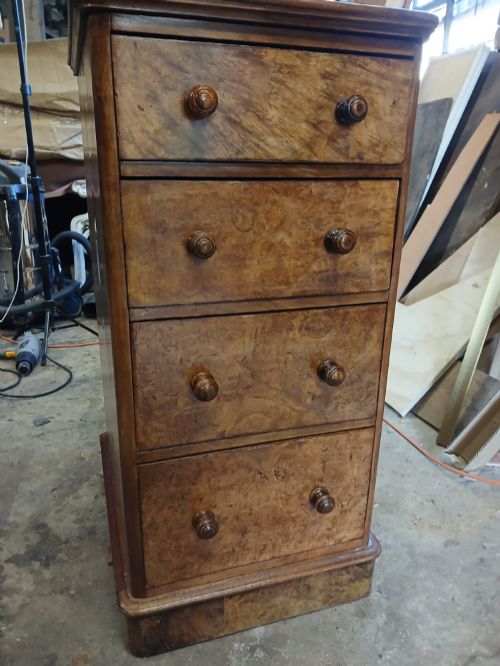
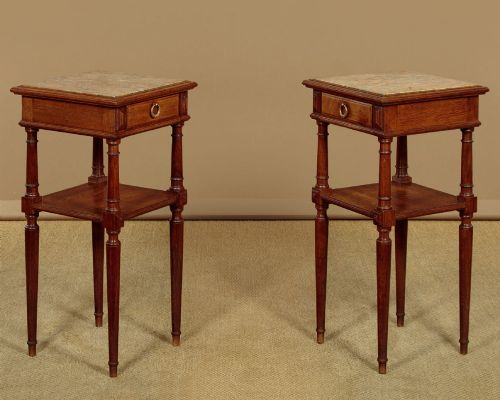
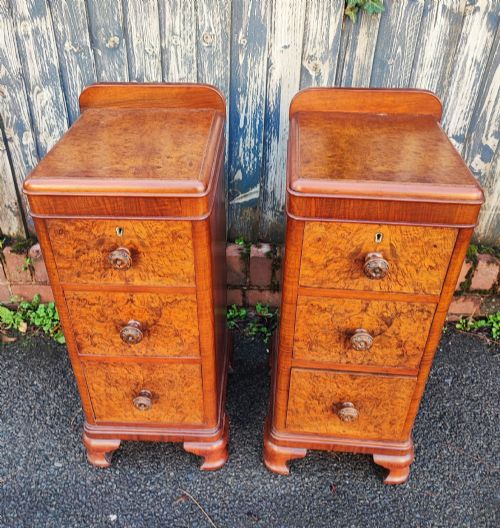
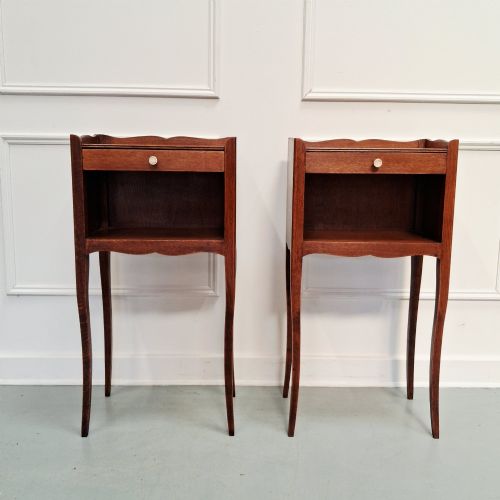
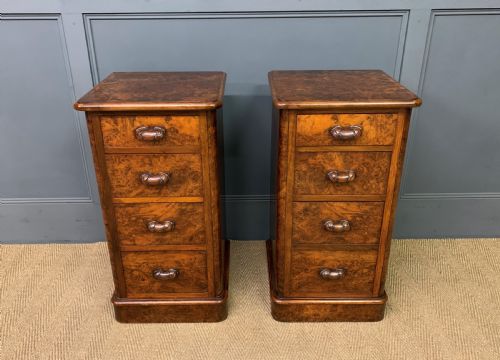
A tall nightstands pair comprises matched bedside tables, lockers or small chests designed to stand symmetrically on either side of a bed. Buyers seeking this phrase encounter formats ranging from Victorian burr walnut cabinets to Art Deco walnut designs and French or English mahogany chests.
The selection spans periods from the nineteenth century through the Edwardian era to the 1930s, incorporating bedside cupboards, pedestal lockers and four-drawer side tables. These pieces provide vertical capacity alongside small footprints, accommodating both traditional and modern bedroom layouts.
How they were made
Cabinet makers utilised dense hardwoods such as mahogany, walnut and oak as the foundational structure, frequently applying figured veneers like burr walnut, kingwood and rosewood to visible surfaces. Marquetry, parquetry and ormolu mounts add decorative detail to specific French and English examples.
Surfaces often feature contrasting materials, pairing timber carcases with inset marble tops or incorporating brass handles and mounts. Joinery relies on traditional drawer construction and sturdy pedestals to support the vertical proportions.
Tall Nightstands Pair Retail Price Guide 2026
Typical asking prices for tall nightstands pair among the pieces listed under this phrase on Sellingantiques today, from the lower quarter to the upper quarter. They describe what is for sale here now, not the wider market.
Some nineteenth-century French pedestals are tall enough to make you wonder if people slept in very high beds indeed.
What varies in quality
Quality rests in the selection of timber veneers and the crispness of marquetry or parquetry work across both items in a matched pairing. Finer examples display carefully book-matched grains on burr walnut or kingwood surfaces that mirror each other symmetrically.
Construction standards appear in the weight and stability of the carcase, the integration of marble tops, and the refinement of brass or ormolu hardware. Consistency between the two pieces determines the overall cohesion and success of the pair.
Wyle and Lochead Glasgow
The Tall Nightstands Pair Glossary
- Bedside locker
- A closed cabinet with a door or drawers, designed to keep chamber items out of sight beside the bed. These offer more enclosed volume than open lamp tables.
- Parquetry
- Geometric wood mosaic patterns assembled from small veneer pieces to form decorative floors or tabletop designs. This technique showcases precise woodworking skill.
- Ormolu
- Gilt-bronze decorative mounts applied to furniture, particularly prevalent on French pieces from the nineteenth and early twentieth centuries. It provides metallic contrast against dark timbers.
- Burr walnut
- Timber taken from a tree growth that produces swirling, highly figured grain patterns prized for decorative veneer work. It creates a rich, mottled visual texture.
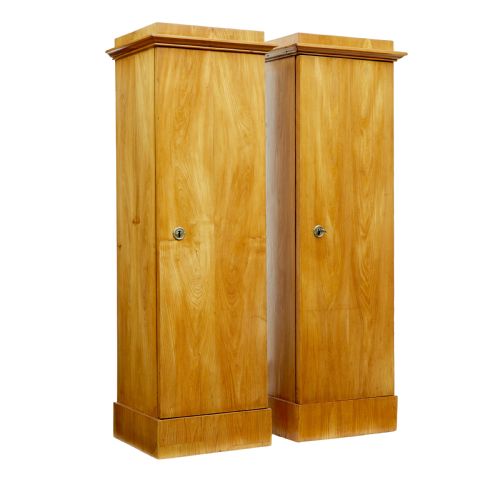
- Pedestal cupboard
- A narrow, column-like cabinet raised on a base, combining a tall profile with a compact floor footprint. They are frequently found in nineteenth-century bedroom suites.
Tall Nightstands Pair: Frequently Asked Questions
What is a tall nightstands pair?
A tall nightstands pair consists of two matched bedside tables or small chests built with elevated proportions. They provide extra vertical storage while maintaining a narrow footprint beside the bed.
Such pairings ensure visual symmetry in the bedroom, utilising matching timbers, heights and hardware across both pieces.
How were these cabinets used?
These pieces served to hold chamber items, books and lighting within arm's reach of the bed. Enclosed cupboards and drawers kept personal belongings neatly concealed.
Top surfaces accommodated lamps and clocks, while lower compartments offered hidden storage for night-time essentials.
How do I style them at home?
Position them flanking the bed to anchor the room's layout with balanced vertical lines. Matching table lamps on top reinforce the symmetrical arrangement.
Their elevated storage makes them suitable for rooms where standard low tables lack sufficient capacity for books or modern bedside items.
How can I tell the periods apart?
Victorian and nineteenth-century examples often feature solid mahogany or burr walnut with heavy proportions and deep mouldings. Edwardian and 1930s pieces introduce lighter satin birch, parquetry veneers or streamlined Art Deco curves.
French pieces frequently incorporate kingwood, marble tops or ormolu mounts, distinguishing them from simpler English oak or mahogany designs.