


Tall Metal Floor Lamp
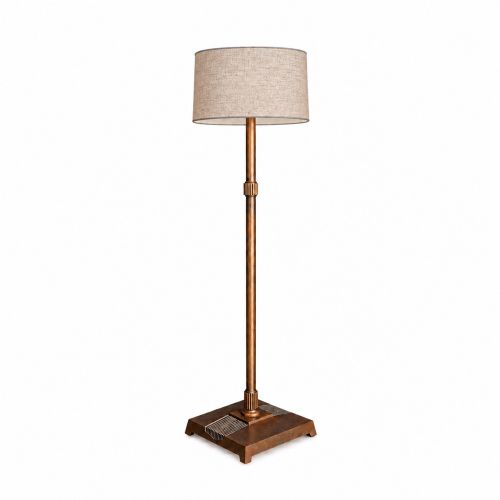
A tall metal floor lamp brings height and focused illumination to a room, spanning periods from the eighteenth century to the art deco era.
Tall Metal Floor Lamp
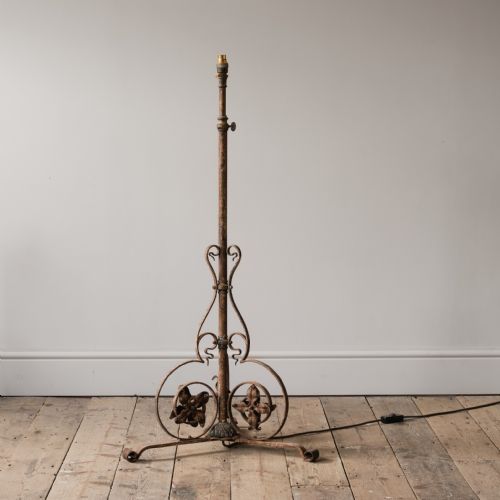
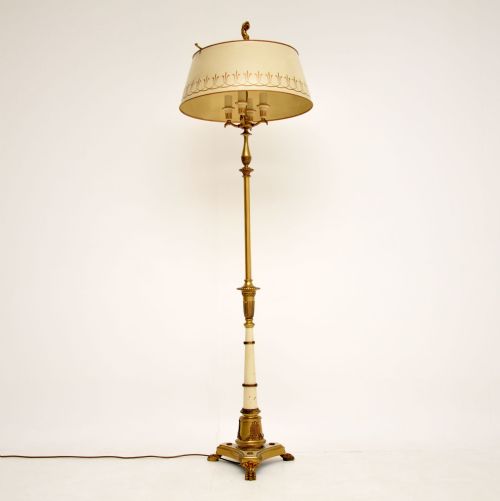
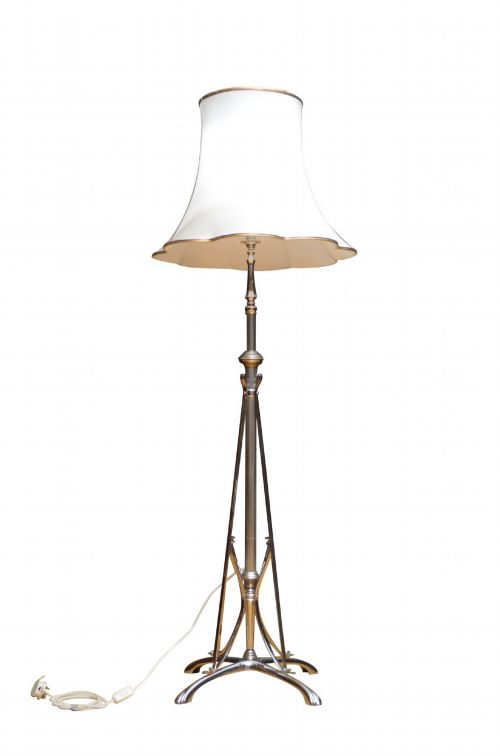
The most common versions met on this page range from Victorian and Gothic Revival iron standards to streamlined art deco chrome uplighters and French neoclassical designs. Makers utilised materials like brass, wrought iron, bronze, cast iron, chrome, and tole, often pairing the metal uprights with fabric shades or adjustable mechanisms.
Styles vary from the florid curves of art nouveau brass and copper lamps to the restrained elegance of Swedish neoclassical pieces and Italianate Baroque standards. Buyers will also find functional adaptations, such as adjustable blacksmith made floor lamps and lantern stands originally designed for candles or gas light.
Methods of construction
The construction of a tall metal floor lamp relies on blacksmithing, casting, and metal-spinning techniques applied to brass, wrought iron, cast iron, bronze, and chrome. Blacksmith made pieces show hand-hammered textures and visible joins, whereas industrial examples utilise cast components and turned shafts.
Makers integrated adjustable height mechanisms and pivoting arms using threaded collars, internal weights, and heavy bases to maintain stability given the significant height of the standards. Surface finishes range from silvered plating and gilt metal to patinated tole and polished brass, occasionally complemented by onyx inserts.
One French standard comes complete with a built-in wine tray, ensuring your refreshment stays within arm's reach while you read.
Assessing quality in metal standards
Quality in a tall metal floor lamp rests upon the weight and integrity of the metalwork, the substance of the base, and the precision of any adjustable extending parts. Substantial cast iron, heavy wrought iron, and thick-gauge brass denote superior manufacture compared to thin sheet metal constructions that lack rigidity.
Artistic execution distinguishes standard production from exceptional pieces, visible in the chiselling of bronze mounts, the hand-forged detail of blacksmith work, and the fidelity of art nouveau or neoclassical cast ornament. The presence of original surface treatments, whether gilt metal, silvering, or patinated tole, further separates masterwork examples from later alterations.
The Tall Metal Floor Lamp Glossary
- Standard Lamp
- A tall floor-standing lamp designed to illuminate a room from a raised light source. These pieces typically feature a weighted base and an upright shaft supporting a burner, bulb holder, or candle platform.
- Torchere
- An ornate tall stand originally intended to carry a torch or candle, later adapted for gas or electric lighting. In art deco and neoclassical design, these take the form of slender columns with upward-pointing bowls.
- Uplighter
- A floor lamp directing its light upwards toward the ceiling rather than downwards. Chrome examples from the nineteen thirties use this configuration to bounce ambient light across a space.
- Tole
- Painted or lacquered sheet metal, frequently used in French lighting pieces. It provides a coloured, matte finish that holds decorative detail well.
- Lantern Stand
- A tall metal frame designed to support an enclosed lantern. Evidence shows these executed in heavy wrought iron during the eighteenth and nineteenth centuries.
Tall Metal Floor Lamp: Frequently Asked Questions
What periods do these lamps cover?
The pieces span the eighteenth, nineteenth, and early twentieth centuries. Styles range from Gothic Revival and Victorian country to art nouveau and art deco.
Craftsmanship evolves from hand-forged wrought iron standards to mass-produced chrome uplighters of the nineteen thirties.
How were these lamps originally powered?
Early versions functioned as floor candle holders, floor candelabras, and lantern stands utilising wax or oil. Later Victorian and Edwardian examples often adapted gas light fittings before electrification.
Many surviving pieces have since been rewired for modern domestic use while retaining their original metal frames.
Are these lamps height adjustable?
Many examples feature adjustable extending mechanisms built into the metal shaft. These allow the user to raise or lower the light source according to the room layout.
Solid cast iron and fixed-height architectural standards remain static, prioritising stability over mechanical adjustment.