

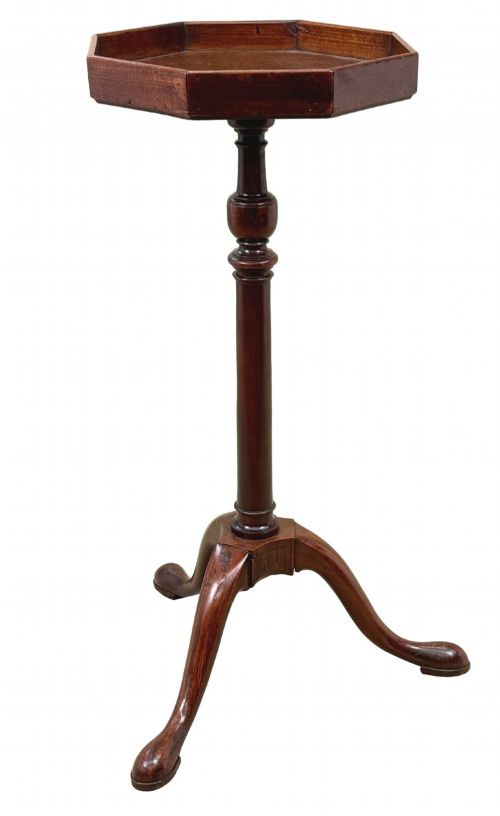


Tall Mahogany Tripod Stand
A tall mahogany tripod stand brings height and sculptural presence to a corner, carrying plants, lamps or urns with steady grace.
Tall Mahogany Tripod Stand
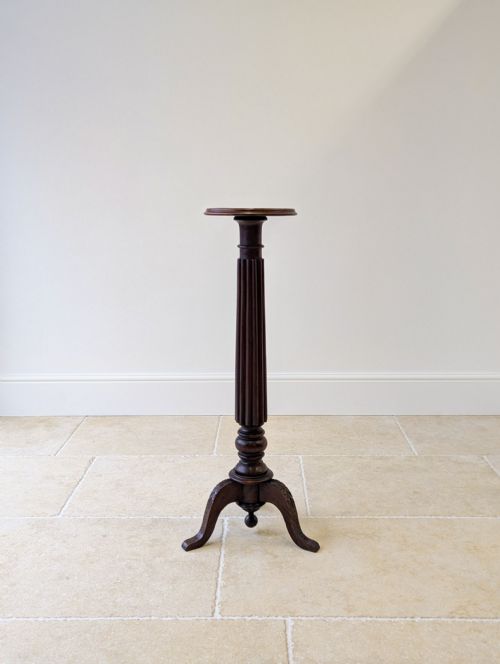
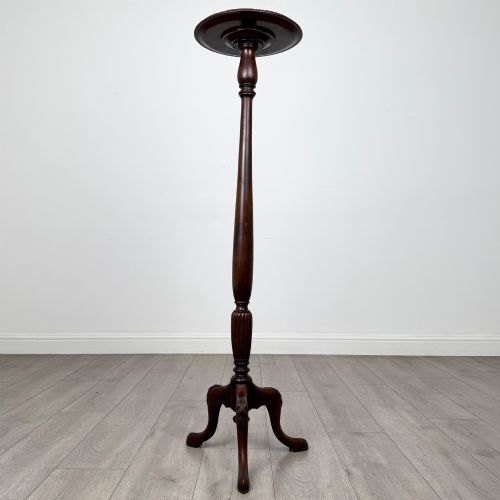
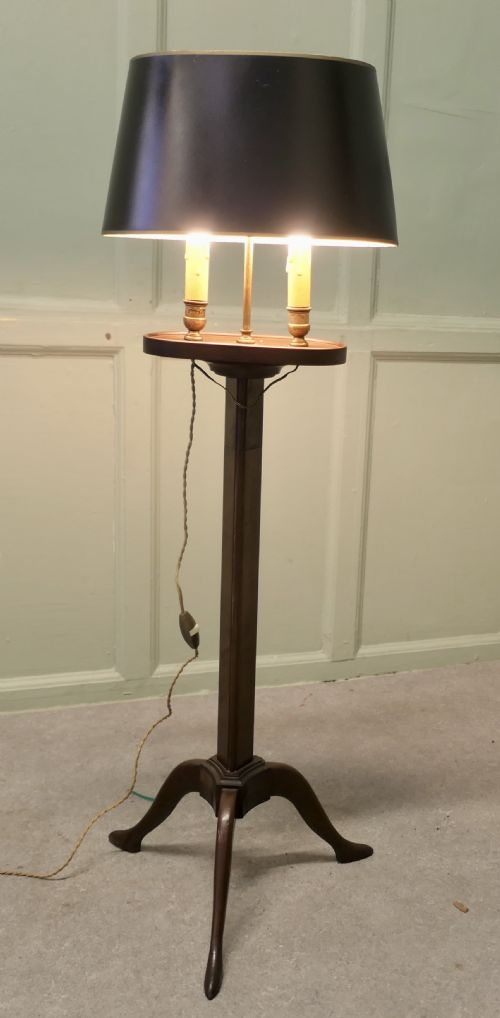
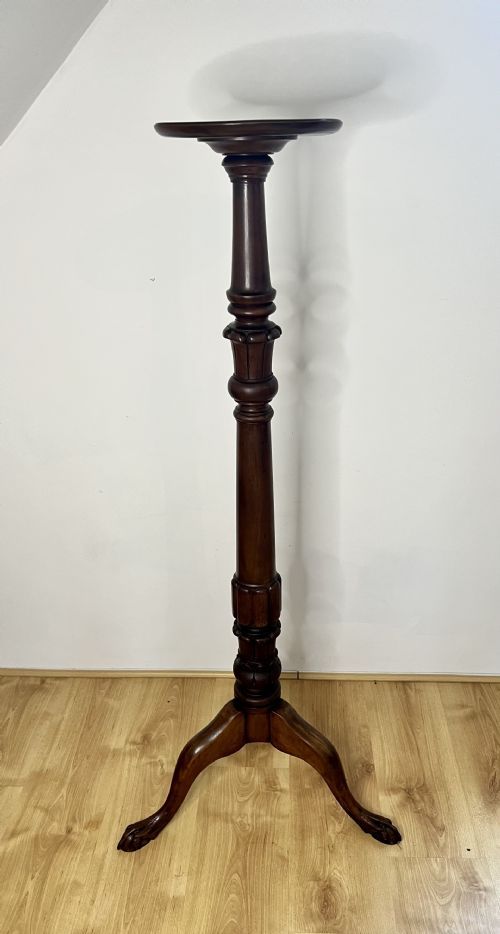
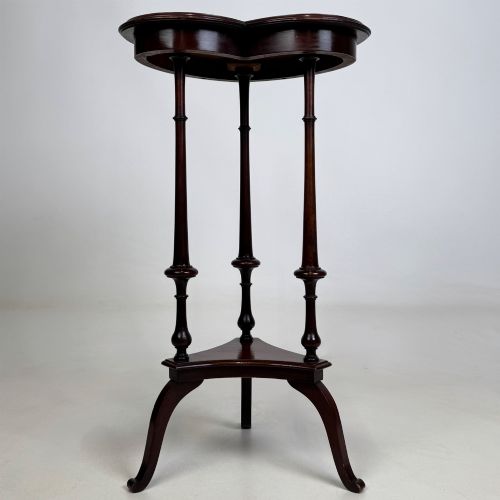
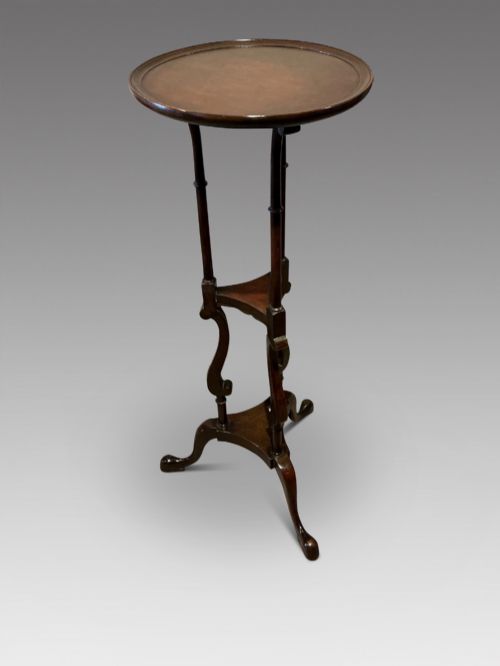
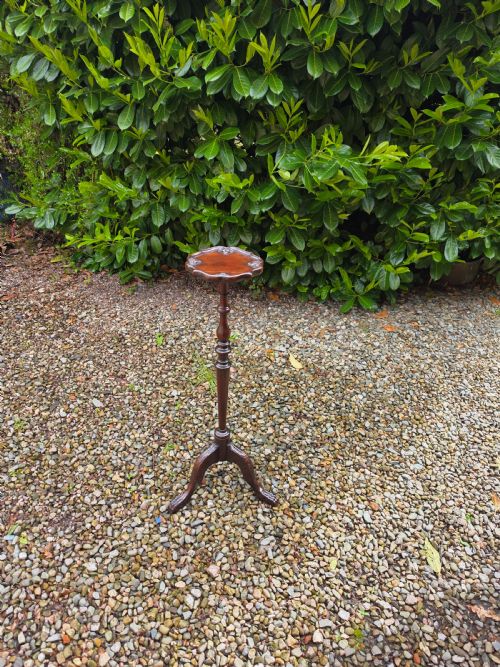
A tall mahogany tripod stand typically takes the form of a torchere, plant stand or pedestal, designed to elevate decorative objects within a room. These slender pieces utilise three splayed legs to maintain stability while supporting a small top surface high above the floor.
The selections span several eras, from 18th-century Georgian examples to Victorian, Edwardian and early 20th-century revivals. The form frequently appears as a torchere or plant stand, often incorporating carved columns, rope twist details or inlaid satinwood accents.
Victorian and Edwardian interpretations dominate the current selection, alongside Georgian originals and later revival pieces. Buyers encounter various column profiles, including reeded shafts, fluted stems and bobbin turnings, all supported by tripod bases.
How they were made
Makers relied primarily on solid mahogany and hardwood timbers, occasionally incorporating satinwood for decorative inlay work. The structural components frequently utilise brass fittings, particularly on adjustable mechanisms or revolving sections.
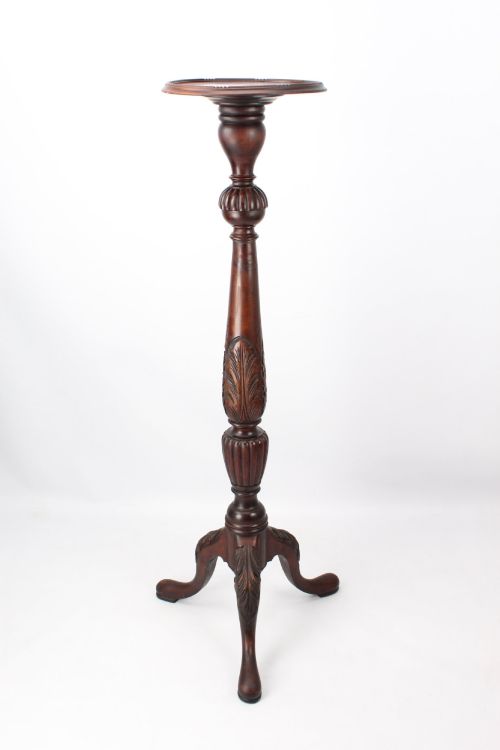
Turning lathes shaped the central shafts into columns, rope twists or fluted pillars, while hand-carving added detail to capitals, knees and tripod feet. Joinery techniques ensured the three splayed legs joined securely to the central stem to support weight at height.
Several stands double as resting places for bust sculptures, proving that Victorian homeowners liked to converse with silent company.
What varies in quality
The depth and crispness of hand-carving set finer examples apart from simpler turned versions, particularly on the capital, stem and scroll feet. Vigorous carving on a rope twist column or acanthus-leaf knee indicates a higher level of craftsmanship during production.
Timber selection and structural integrity define the overall calibre of a piece. Dense, well-figured mahogany paired with sturdy tripod joinery ensures longevity and balance when the stand holds a heavy jardiniere or lamp.
The Tall Mahogany Tripod Stand Glossary
- Tripod base
- A three-legged support structure that provides stability for tall, narrow furniture. The splayed legs distribute weight outward from the central shaft.
- Jardiniere
- An ornamental pot or stand for holding plants or flowers. In these listings, it often describes the expanded top surface designed to contain a plant receptacle.
- Rope twist
- A carved decorative motif on a column resembling the strands of a twisted rope. This technique creates texture and movement along the vertical shaft.
- Satinwood
- A pale, durable hardwood used for contrasting inlay and stringing on mahogany furniture. It provides bright visual accents against darker timber.
Tall Mahogany Tripod Stand: Frequently Asked Questions
What were tall mahogany tripod stands used for?
Historically, these slender stands held candles or oil lamps to illuminate dark corners of large rooms. Over time, their purpose shifted towards displaying prized plants, urns, busts or decorative items.
Today, they serve the same decorative function, bringing vertical interest and focal points to empty spaces in modern interiors.
How do I style a torchere stand at home?
Place a tall mahogany tripod stand in an unadorned corner, beside a seating area, or framing a doorway where vertical height is needed. A trailing houseplant, a heavy ceramic bowl or a reading lamp makes an ideal top display.
Ensure the stand sits on a flat surface away from heavy foot traffic to maintain stability given its height and narrow footprint.
How can I tell a Georgian stand from a Victorian revival?
Georgian originals, dating from the 18th century, typically exhibit restrained, elegant proportions with precise, deep hand-carving and dense timber. Revival pieces from the Victorian and Edwardian eras often feature heavier proportions or stylistic details borrowed from earlier centuries.
Examining the construction methods, tool marks and wear patterns underneath the top and around the feet helps clarify the age of the piece.
Are these stands sturdy enough for heavy plants?
Most tripod stands are engineered to balance weight evenly across three splayed legs, providing reliable support for moderate loads. However, heavy stone planters or large ceramics require careful consideration of the stand's base width and overall weight distribution.
Ensuring the floor is level and the central column remains tight in its socket prevents wobbling when heavier objects rest on top.