
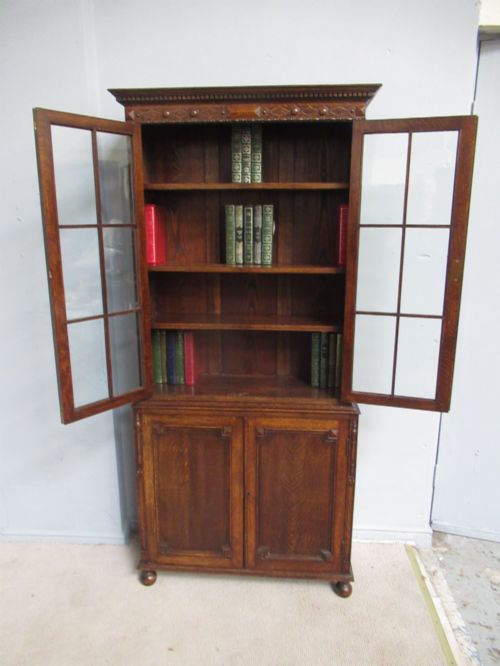
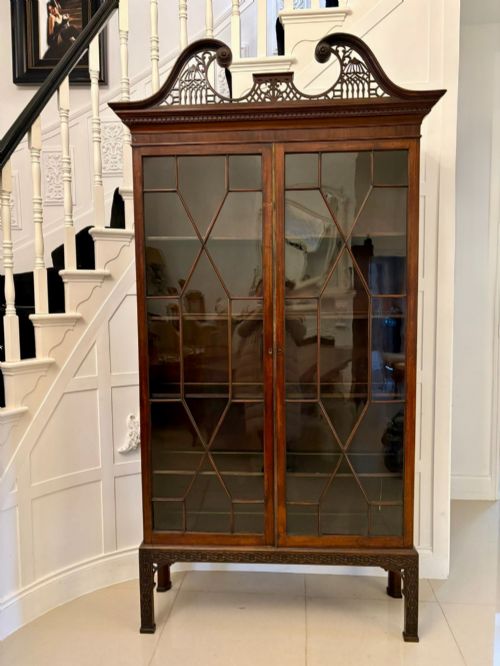
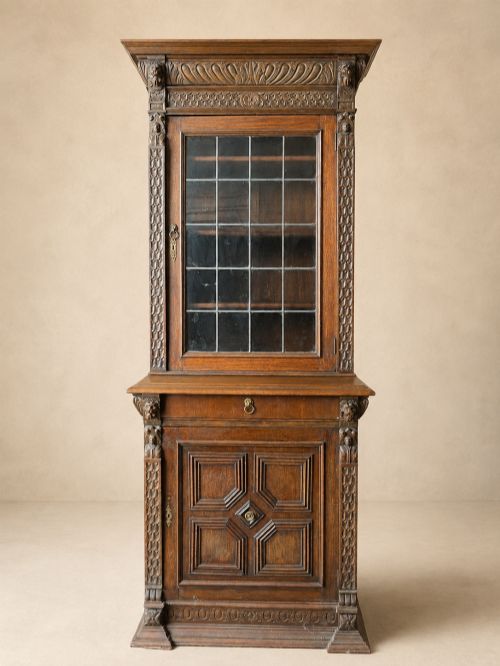
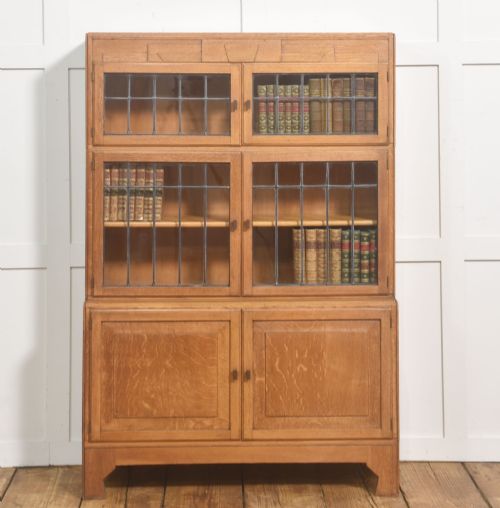

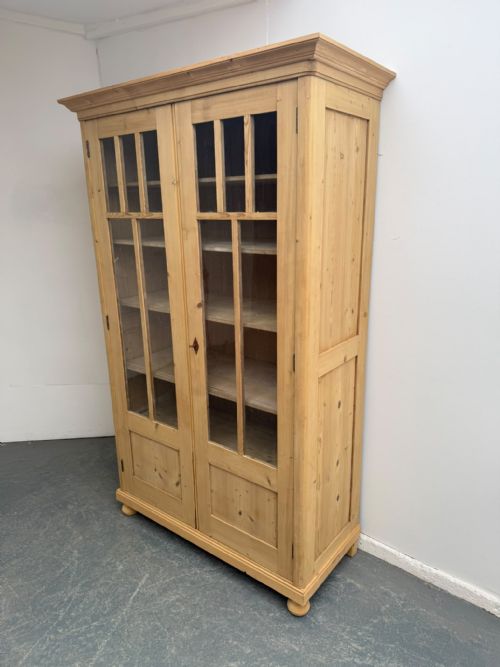
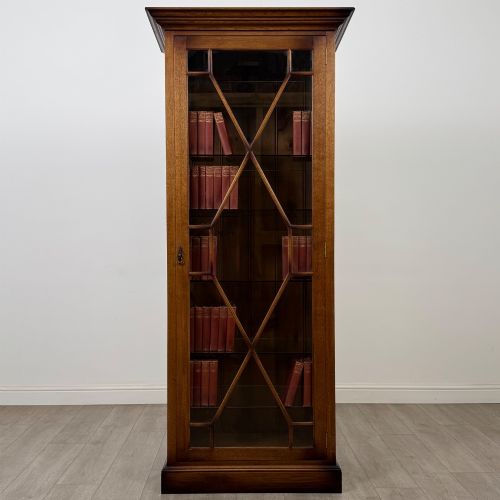
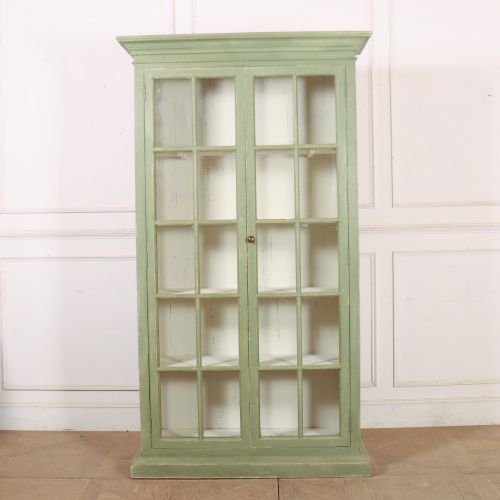
Tall Glass Cabinet
A tall glass cabinet holds books, specimens and curiosities safely behind clear panels while lifting them into the vertical space of a room.
Tall Glass Cabinet
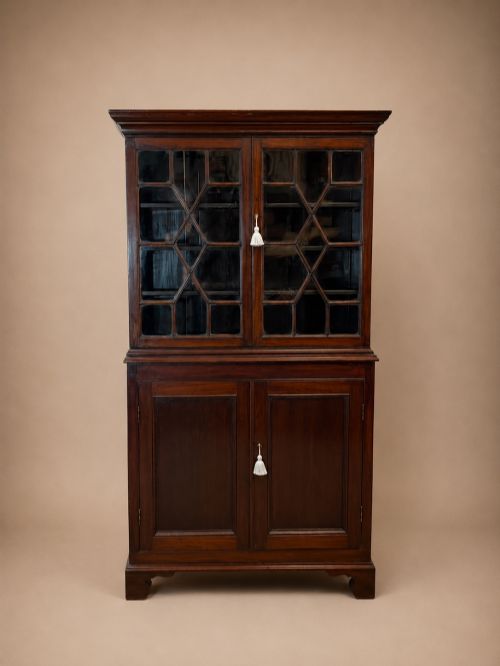
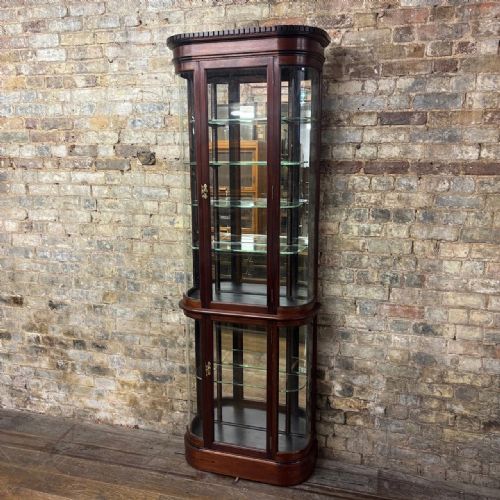
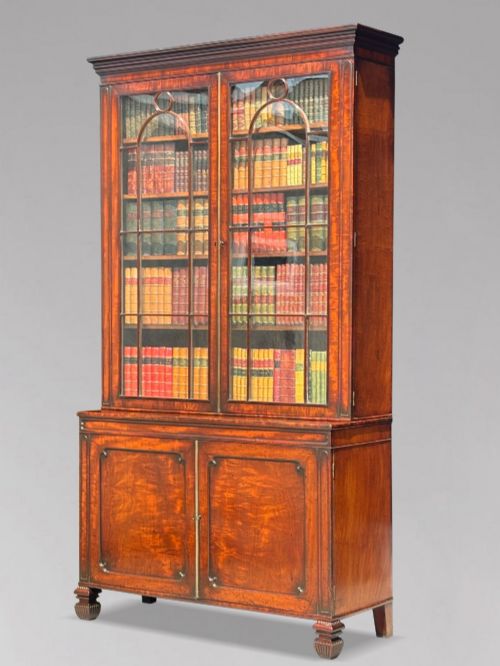
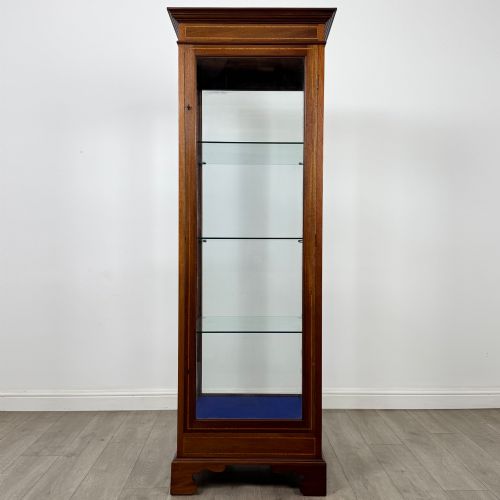
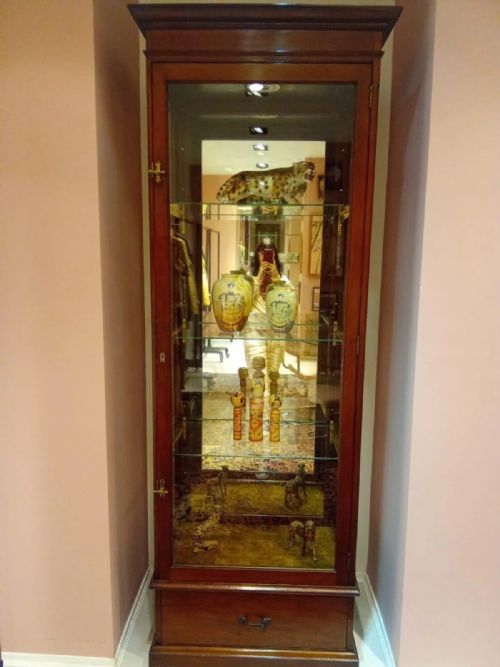
A tall glass cabinet spans several eras of design, ranging from Victorian bookcases and Edwardian shop display units to Art Deco towers. These pieces provide vertical storage and exhibition space, using glazed doors or panels to keep contents visible while protecting them from dust.
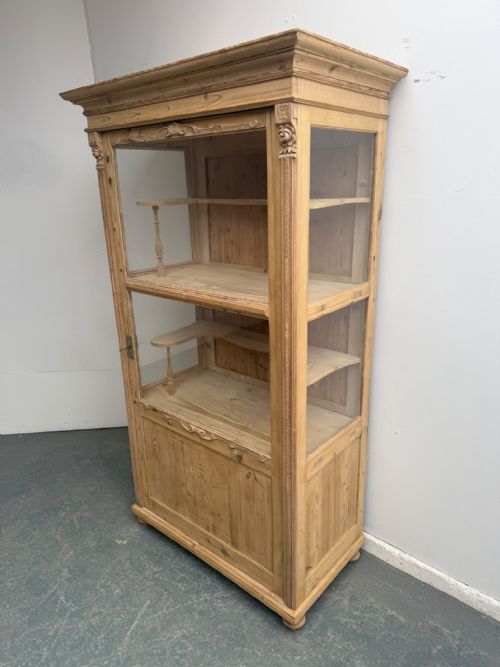
Buyers encountering this selection will find domestic glazed bookcases alongside commercial shop display cabinets and freestanding vitrines. Mahogany and oak dominate the timber frames, supported by occasional examples in pine, walnut, ebonised wood and steel.
Origins stretch from English workshops to continental Europe, encompassing styles from Gothic Revival and Georgian proportions to clean Art Deco lines. The taller formats naturally draw the eye upward, making them practical centrepieces for libraries, drawing rooms and retail interiors.
Materials and construction
Cabinet makers relied primarily on dense timbers such as mahogany and oak to support the heavy weight of glass panes and shelved books. Joinery techniques involved precision framing for glazed doors, sometimes incorporating brass hardware, lead cames and satinwood crossbanding.
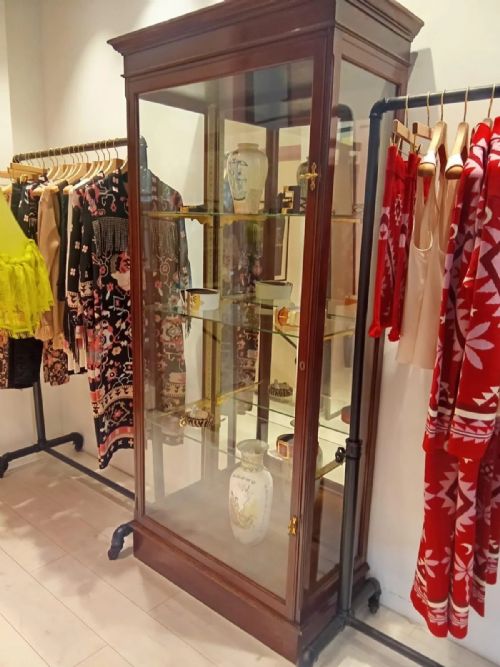
Commercial and domestic pieces diverged in their internal engineering, with shop display units frequently integrating adjustable glass shelves and metal framing. Back panels typically used secondary timbers, while surface finishes varied from polished French polish and wax to ebonised treatments and painted pine.
Several glass domes in the collection once served to preserve Victorian taxidermy birds and delicate wax flower arrangements.
Judging quality and craftsmanship
Quality rests in the crispness of the timber mouldings, the stability of the tall frame, and the clarity of the original glass panes. Superior examples display thoughtful proportions, seamless door alignment, and cabinetwork that remains rigid despite the height.
Finer pieces incorporate subtle decorative elements such as crossbanding, fine carving, or specialised hardware like brass and iron mountings. The distinction between a standard utility bookcase and a high-status display cabinet lies in the selection of figured veneers and the refinement of the internal joinery.
Minty
The Tall Glass Cabinet Glossary
- Astral glazing
- A method of dividing glass panels into smaller panes using slender wooden bars called astragals. This technique creates a light, geometric grid across the door front.
- Bijouterie cabinet
- A glazed display table or tall cabinet designed specifically for small valuables, jewellery and curiosities. They often feature velvet-lined interiors and glazed tops or sides.
- Globe Wernicke
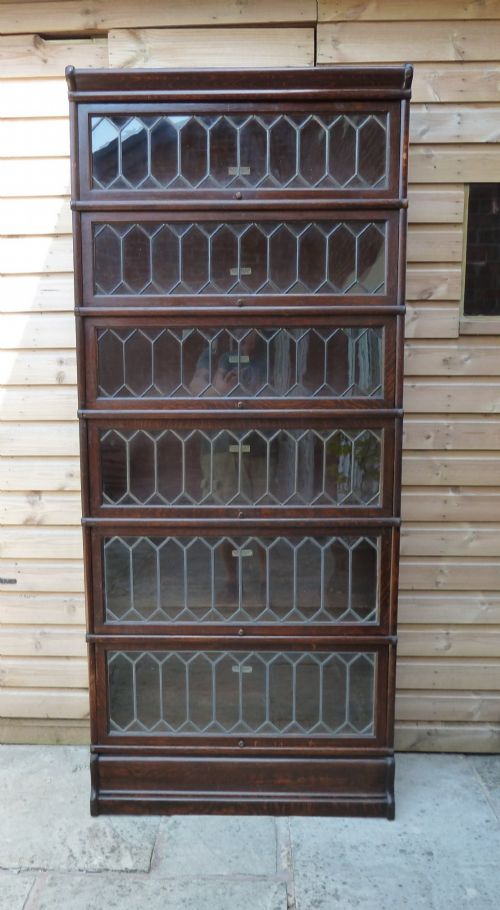
- A sectional bookcase system patented in the late nineteenth century. These units consist of stacked, modular lawyer bookcases with upward-lifting glass doors.
- Ebonised wood
- Timber treated with chemical stains or black finishes to imitate costly ebony. This dark surface treatment appeared frequently on nineteenth-century and Art Deco furniture.
- Display dome
- A blown glass cover mounted on a wooden or fabric-covered base. These enclosures protected taxidermy, clocks and delicate specimens from dust while permitting all-around viewing.
Tall Glass Cabinet: Frequently Asked Questions
How do I clean the glass safely?
Use a lint-free cloth and a mild glass cleaning solution applied directly to the cloth rather than the cabinet. Avoid spraying liquid near antique wooden frames or lead cames to prevent moisture damage.
Take care around older float or cylinder glass, which can be thinner and more fragile than modern panes. Wipe gently along the grain of any surrounding wood or brass elements.
Where should I place a tall cabinet?
Position tall cabinets against structurally sound interior walls away from direct sunlight and strong heat sources. Sunlight fades timber veneers and dries out historic finishes, while radiators cause wood to warp.
Ensure the floor surface is level so the tall frame remains stable and the glazed doors swing freely. Wall anchoring straps can provide extra safety in busy household rooms.
How do I distinguish Victorian from Edwardian pieces?
Victorian cabinets generally feature heavier proportions, deeper wood tones, and decorative carvings influenced by Gothic Revival or Renaissance styles. Mahogany and walnut dominate this mid to late nineteenth-century period.
Edwardian furniture tends to be lighter in scale, often incorporating brighter mahogany finishes, satinwood crossbanding, or simpler glazed shop display formats. The lines become straighter and more refined toward the early twentieth century.