


Tall French Writing Desk
A tall french writing desk offers a vertical workspace that combines enclosed storage with a pull-down writing flap, bringing classical continental elegance to a room.
Tall French Writing Desk
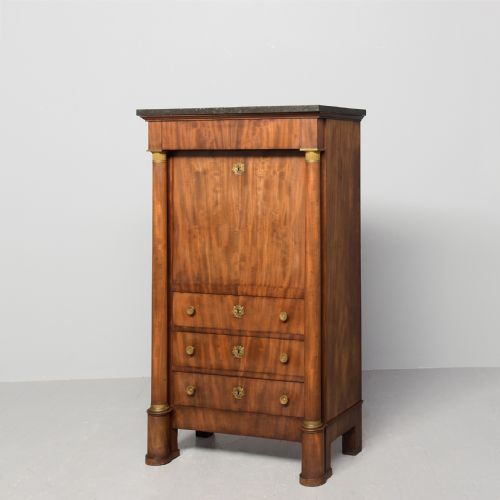
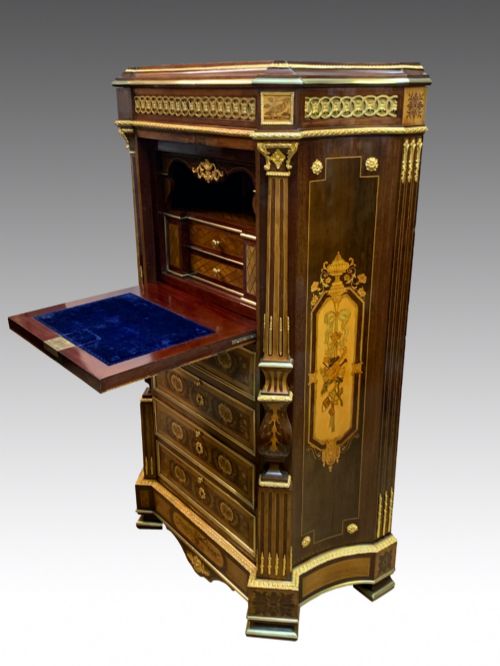
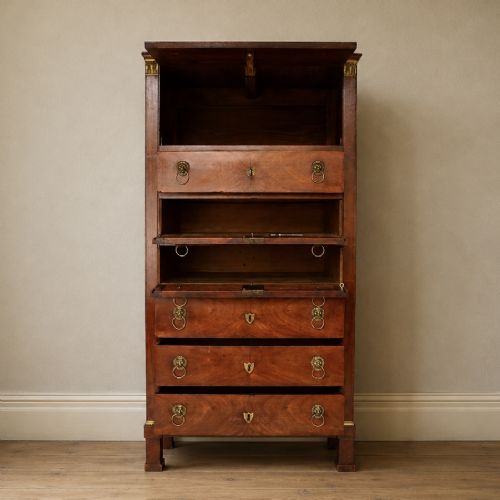
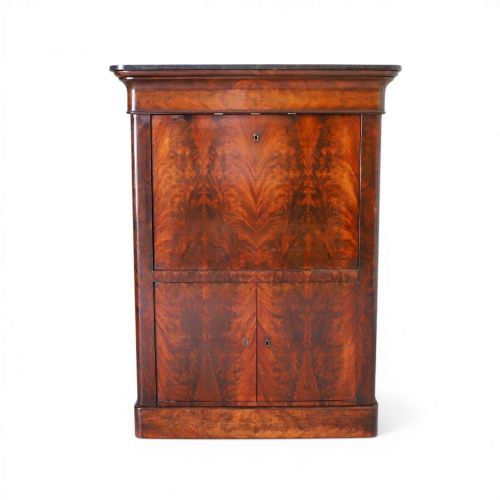
A tall french writing desk typically takes the form of a secretaire à abattant or escritoire, designed to maximise workspace while maintaining a compact footprint against a wall. These pieces feature a drop-front writing surface that conceals fitted interior compartments, drawers and hidden compartments.
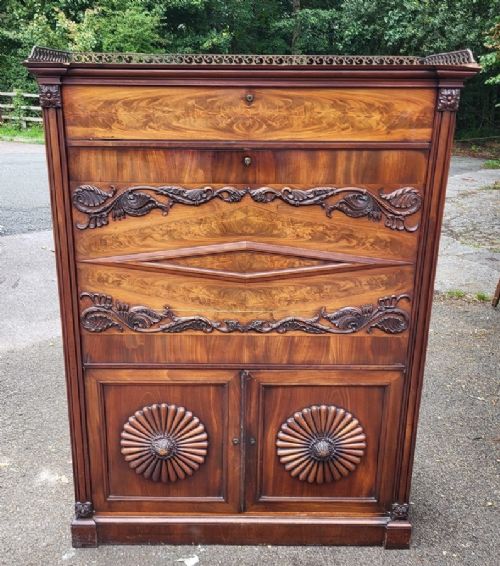
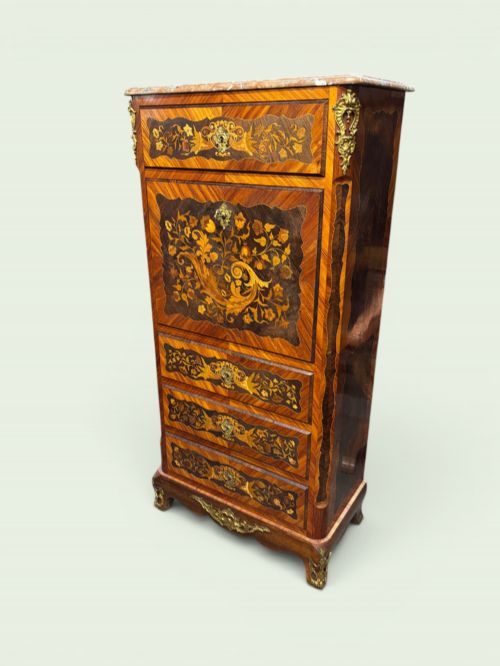
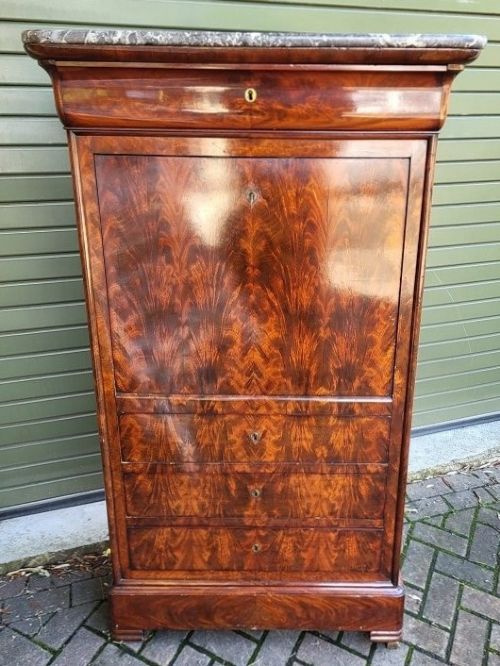
The selections available here span the nineteenth century, including examples from the Victorian era and periods inspired by French empire and Louis styles. Cabinet forms range from flame mahogany writing cabinets to marquetry inlaid walnut and kingwood pieces.
Makers and workshops of the period utilised tall proportions to house extensive stationery and correspondence behind a lockable fall front. Buyers will find variations in timber choice, from rich mahogany and rosewood to intricate marquetry and parquetry veneers.
What varies in quality
The refinement of the timber veneers and the intricacy of the marquetry inlay set individual pieces apart. Superior examples feature continuous grain patterns, balanced parquetry and dense, well-figured flame mahogany.
The execution of the ormolu mounts and the precision of the interior cabinet work indicate the workshop standard. Smooth operation of the drop-front hinges and well-fitted internal pigeonholes distinguish finer cabinetry.
Several desks conceal secret drawers behind dummy partitions, designed for stashing private correspondence or small valuables.
Maison Krieger·Millet
The Tall French Writing Desk Glossary
- Secretaire à abattant
- A tall writing cabinet featuring a vertical drop-front flap that opens to form a desk surface. This form conceals small drawers and pigeonholes within.
- Ormolu
- Gilded bronze mounts applied to furniture for decorative effect. These cast ornaments highlight the structural lines and corners of the cabinet.
- Marquetry
- Decorative veneer work formed by fitting together small pieces of coloured wood, shell or ivory to create pictorial designs. It covers the exterior surfaces of finer writing desks.
- Parquetry
- Geometric wood inlay patterns arranged in repeating motifs such as cubes or chequers. This technique decorates the surfaces of continental cabinets.
- Escritoire
- A writing cabinet or desk equipped with a sloping or drop writing flap. The term often describes tall vertical writing furniture.
Tall French Writing Desk: Frequently Asked Questions
How do I use the drop front?
The drop-front flap releases via a key lock to rest horizontally on support brackets, creating a stable writing surface. When closed, it locks securely to keep correspondence out of sight.
Inside, small drawers and pigeonholes remain accessible for organising letters and small items while the desk is in use.
Where should I place a tall desk?
These vertical cabinets suit studies, drawing rooms or bedrooms where floor space is limited. Their height draws the eye upward while the narrow footprint requires minimal wall clearance.
Position the cabinet away from direct heat sources to protect the delicate wood veneers and marble tops from thermal stress.
How do I identify a nineteenth century piece?
Nineteenth century examples often display characteristic French empire or Louis revival styling, combined with dense timbers like flame mahogany, kingwood or walnut. Construction methods include hand-cut dovetails on internal drawer boxes and traditional veneer thicknesses.
Makers' stamps or brass plaques occasionally appear on the carcase or mounts to confirm the workshop origin.
What is the difference between an escritoire and a secretaire abattant?
An escritoire generally refers to a writing cabinet with a fall front, while secretaire abattant is the specific French term for a tall wall-mounted writing cabinet with a vertical drop flap.
Both forms serve the same practical function of combining vertical storage with a fold-down writing surface.