
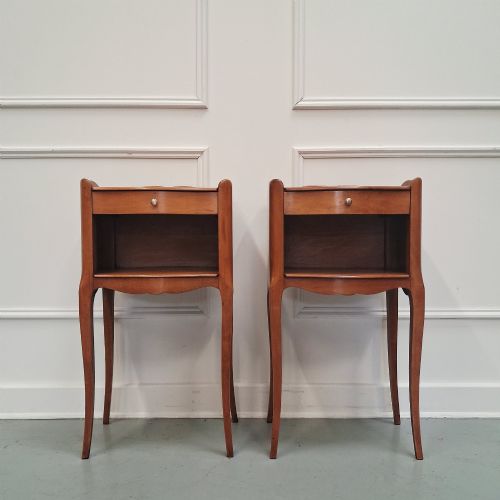
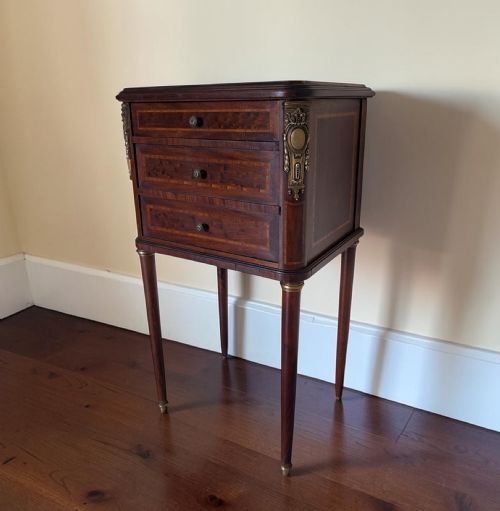
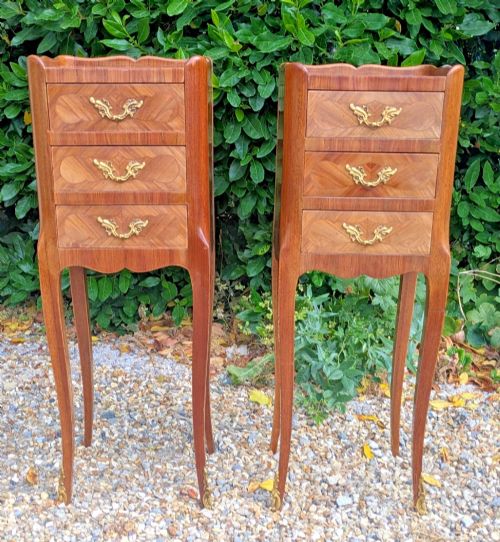
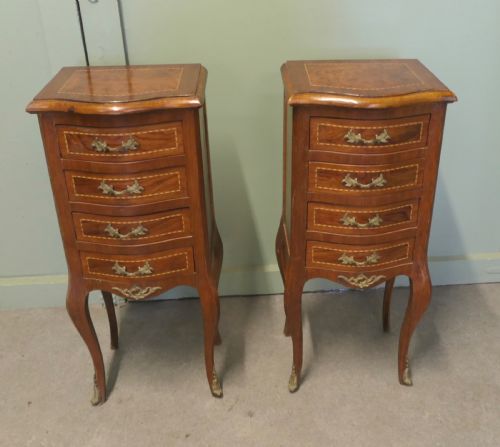



Tall French Side Tables
These tall french side tables bring slender proportions and decorative presence to a room, offering useful surface space beside a bed or in a corner.
Tall French Side Tables
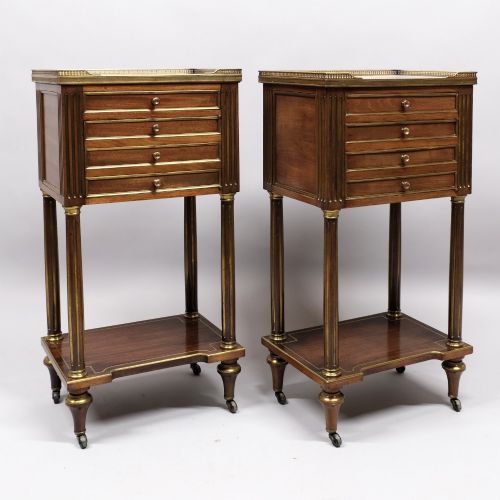
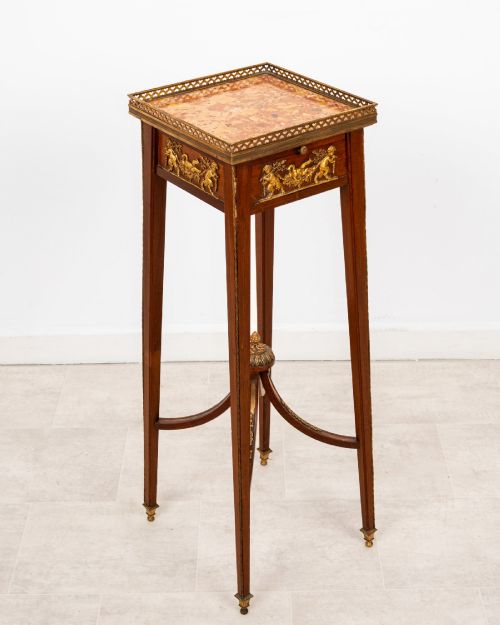
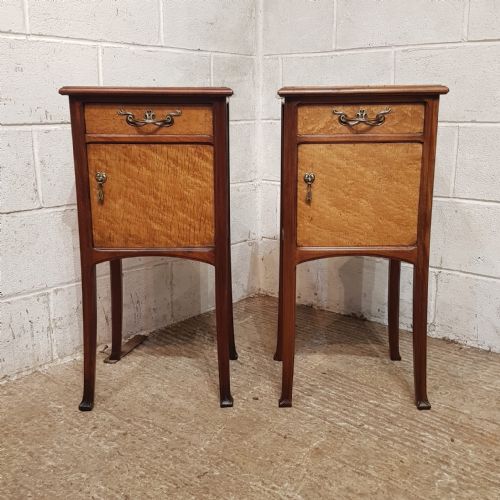
When searching for tall french side tables, you encounter an array of bedside cabinets, occasional tables and narrow console pieces spanning from the nineteenth century into the nineteen-thirties. These pieces emerge in styles ranging from provincial expressions to formal Louis XV and XVI revivals, alongside Empire and Neoclassical designs.
The most common forms on this page are bedside cabinets and tall side lockers featuring single drawers, cupboards, or open tiers. They adapt easily to modern interiors as lamp stands or display surfaces in bedrooms and hallways.
Origins trace across various French regions and workshops, encompassing everything from walnut bedside cupboards with tambour fronts to marble-topped occasional tables. The selection balances domestic utility with decorative cabinet-making traditions.
Materials and Construction
Cabinet-makers utilised dense hardwoods including mahogany, walnut, rosewood and kingwood, frequently applying burr veneers and floral marquetry to primary surfaces. Carved details and painted wood finishes appear across provincial and revival pieces alike.
Many of these tables incorporate inset marble or onyx tops, protected by raised wooden galleries or brass rims. Ormolu mounts, brass handles and side locking mechanisms provide structural reinforcement and decorative accent to the timber frames.
Forms range from compact bedside cabinets and tambour-front stands to demi-lune console tables.
Quality and Craftsmanship
Distinction in these pieces lies in the precision of the cabinet-making, the selection of figured veneers, and the crispness of any applied bronze or brass mountings. Finer examples display seamless drawer construction, well-matched wood grain, and heavy stone tops that sit flush within their wooden surrounds.
Proportion and decorative restraint set certain tables apart from mass-produced alternatives. Pieces showing thoughtful marquetry work or sophisticated styling in the manner of established makers demonstrate superior workshop output.
François Linke
The Tall French Side Tables Glossary
- Ormolu
- Gilt-bronze mounts applied to furniture for decorative effect. This technique was widely utilised in French cabinet-making throughout the eighteenth and nineteenth centuries.
- Marquetry
- Inlaid patterns of wood veneers assembled to create decorative designs on furniture surfaces. Craftsmen select contrasting timbers to build floral or geometric motifs.
- Tambour
- A flexible sliding shutter formed of narrow strips of wood glued to canvas, allowing access to enclosed cabinet spaces. It appears on compact bedside stands and cupboards.
- Demi-lune
- A half-moon shape characteristic of console tables and cabinets designed to stand flat against a wall. This profile saves floor space while providing a usable surface.
- Galleried
- Featuring a raised metal or wooden rim around the edge of a table top. This rail prevents small items or glassware from rolling off the surface.
Tall French Side Tables: Frequently Asked Questions
What rooms suit tall french side tables?
These tables find a natural home beside high beds where standard bedside units sit too low. Their narrow footprints also suit hallways, alcoves, and drawing rooms as occasional display surfaces.
The vertical emphasis allows them to provide storage drawers or cupboards without taking up excessive floor space in compact interiors.
How do I identify a revival style?
Revival pieces borrow decorative vocabulary from earlier periods like the reign of Louis XV or the First Empire. You will notice characteristic cabriole legs, scrollwork, or neoclassical symmetry reinterpreted by later nineteenth and twentieth-century workshops.
Examining the construction methods, interior secondary woods, and hardware usually reveals whether a piece dates to the original period or a later revival.
What is the purpose of a marble top?
Marble and onyx tops provided a durable, heat-resistant, and water-resistant surface for washing jugs and glasses in nineteenth-century bedrooms. They added weight and stability to slender furniture frames.
Today, these stone surfaces introduce contrasting texture and colour to wooden cabinet pieces while remaining practical for everyday use.
Are these tables sturdy enough for daily use?
Solid hardwood construction and traditional joinery make these tables robust for holding lamps, books, and daily essentials. Heavier stone tops add substantial weight that helps anchor the piece.
Careful handling of delicate veneers and periodic checks of joints ensure these antiques remain functional in active modern homes.
How do I distinguish different wood types?
Mahogany offers a deep reddish-brown tone with a straight grain, while walnut displays richer figures and darker colour variations. Exotic timbers like kingwood and rosewood feature striking contrasting grain patterns often highlighted in panel veneers.
Lighting and close inspection of the surface grain help separate solid timbers from decorative veneer applications.