

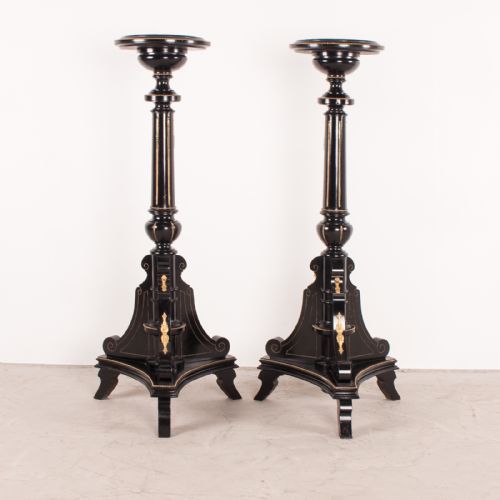
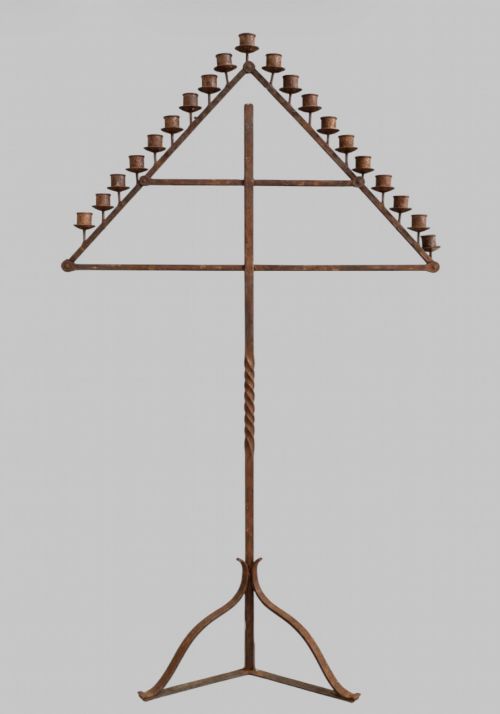


Tall Floor Candle Stands
These tall floor candle stands bring grand vertical illumination and sculptural presence to a room, drawn from centuries of European and Asian craftsmanship.
Tall Floor Candle Stands
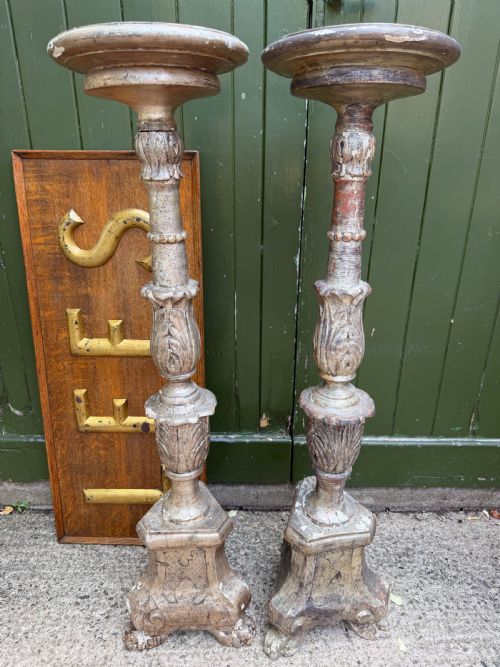
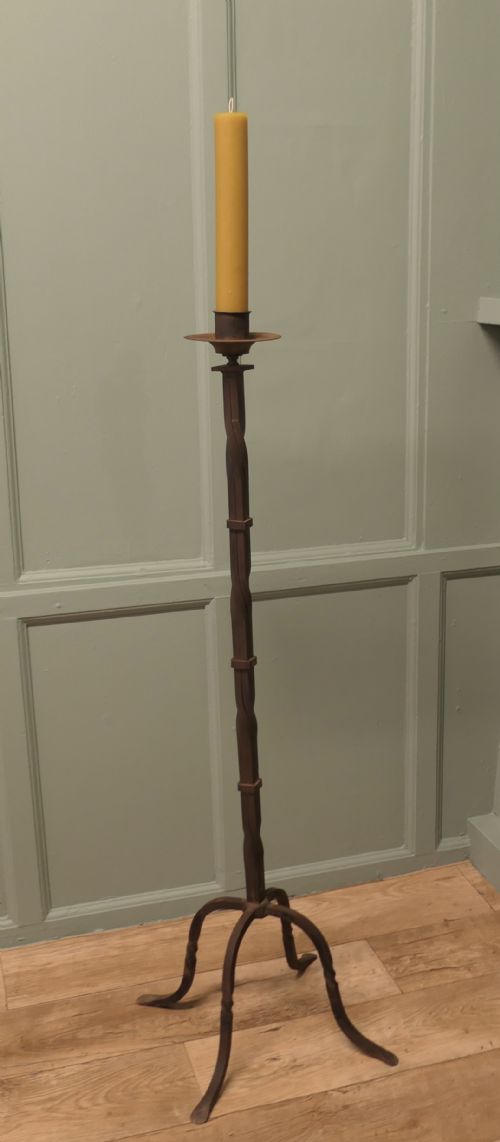
Tall floor candle stands encompass an array of heavy vertical holders designed to support illumination from floor level, ranging from church altar pieces to domestic torcheres. When searching for tall floor candle stands, a buyer encounters substantial timber, iron, and brass objects primarily originating from the eighteenth and nineteenth centuries.
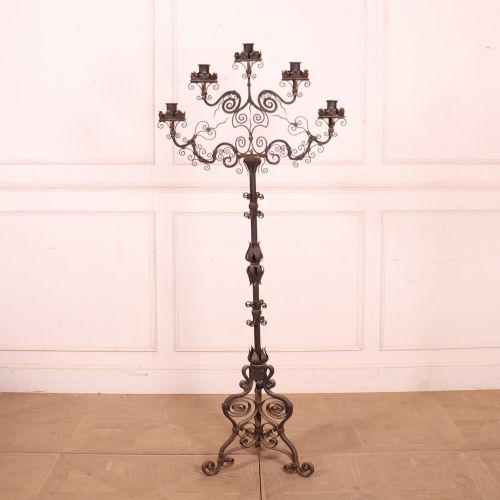
The selection on this page relies heavily on Italian and French stylistic traditions, spanning Baroque, Regency, and Gothic Revival aesthetics. Forms shift between carved wooden columns, architectural wrought iron frames, and slender torcheres designed to elevate light sources safely above ground.
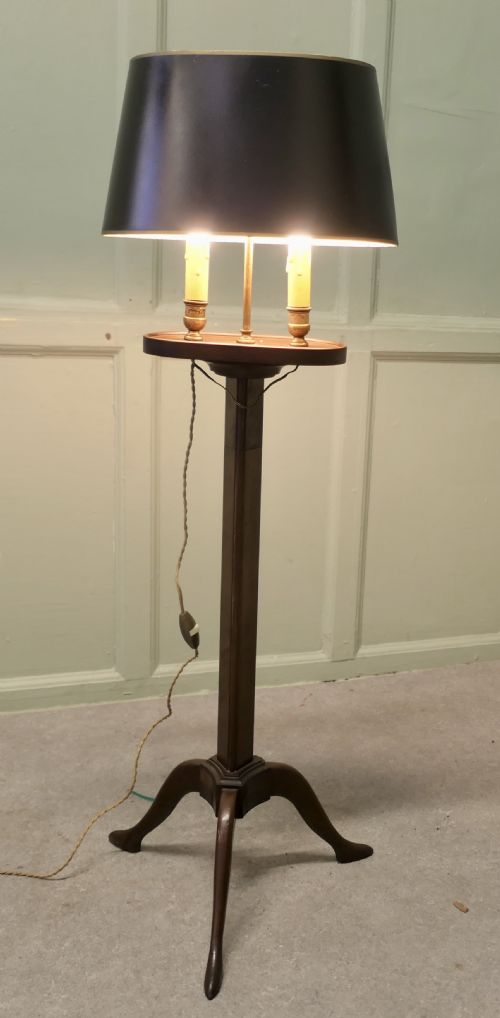
Many examples double as standard lamps or conversion pieces, reflecting how earlier lighting fixtures adapt to modern domestic interiors. The variety includes pairs of matching columns alongside singular architectural statements and graduated sets.
Materials and construction methods
Makers utilised timber, iron, and brass as primary structural mediums, shaping them through hand-carving, blacksmithing, and casting techniques. Carved wood examples often combine pinewood or hardwood with gesso, silvering, or giltwood surfaces to create reflective decorative finishes.
Metal stands employ wrought iron for sturdy architectural frames, alongside cast brass and painted metal for detailed column sections. Joinery and assembly reflect period workshop practices, from pinned wooden joints to heavy blacksmith-forged brackets.
Tall Floor Candle Stands Retail Price Guide 2026
Typical asking prices for tall floor candle stands among the pieces listed under this phrase on Sellingantiques today, from the lower quarter to the upper quarter. They describe what is for sale here now, not the wider market.
Several dragon lantern stands bring a fierce mythological guard to domestic hallways.
Distinguishing quality and craftsmanship
Quality rests in the crispness of the hand-carved detail and the structural integrity of the vertical shaft. Finer pieces demonstrate proportional balance and deliberate surface finishing, such as detailed polychrome, genuine gilding, or precise blacksmith work.
Lesser examples display repetitive machine shaping or heavy modern alterations that obscure the original period form. The depth of the surface patina and the integration of original mounts or prickets further separate standard utility items from decorative statements.
The Tall Floor Candle Stands Glossary
- Torchere
- A tall ornamental stand designed to support a light source, typically a candle or lamp. These tall supports elevate illumination within larger reception spaces.
- Giltwood
- Timber treated with a thin layer of gold leaf over a prepared gesso ground. This finish provides a luminous, reflective surface popular in baroque decorative schemes.
- Pricket
- A sharp metal spike set into the top of a candlestick to hold a wax taper in place. Altar sticks frequently utilise this method of candle attachment.
- Corinthian
- An architectural order featuring ornate capitals decorated with acanthus leaves. This classical column style often appears on nineteenth-century standard lamps and candlesticks.
- Altar-type
- Descriptive of heavy, monumental candle holders originally produced for ecclesiastical settings. These pieces feature grand proportions to suit large ceremonial spaces.
Tall Floor Candle Stands: Frequently Asked Questions
What is a torchere?
A torchere is a tall stand designed to elevate a light source, functioning historically as a decorative lighting support in grand interiors.
These pieces use slender columns or heavy pedestals to raise candles well above floor level.
How were church candle holders used?
Ecclesiastical candle holders stood beside altars or within chancels to provide ceremonial illumination during services.
Their heavy proportions ensured stability when supporting large wax tapers.
Are these stands wired for electricity?
Many surviving stands retain their original candle platforms or prickets, while others have undergone conversion to standard lamps.
Buyers should examine the wiring status of individual pieces to determine if they function with modern bulbs.
How do I identify a nineteenth-century piece?
Nineteenth-century stands often display revival styles such as Gothic, Baroque, or Art Deco, executed in cast iron, brass, or carved wood.
Tool marks, material composition, and traditional joinery methods help establish the age of the structure.