



Tall Brass Pricket Holder
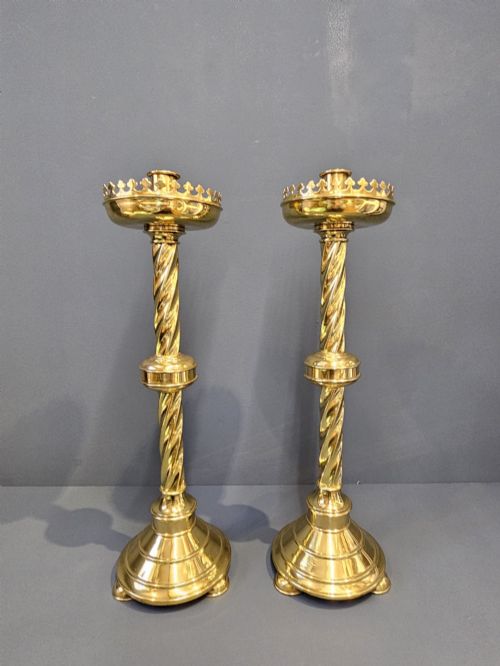
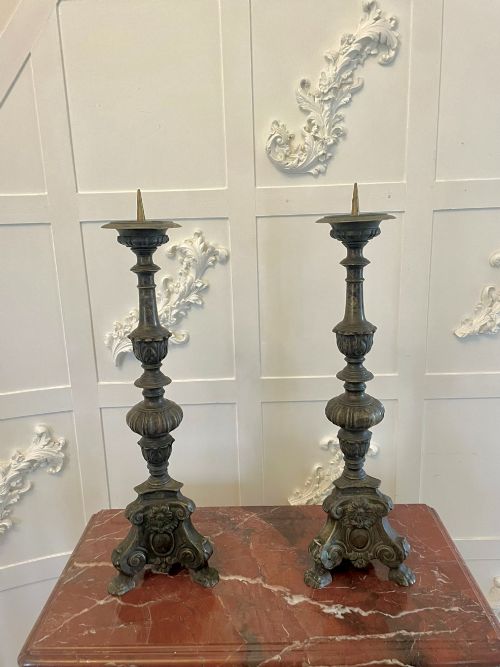
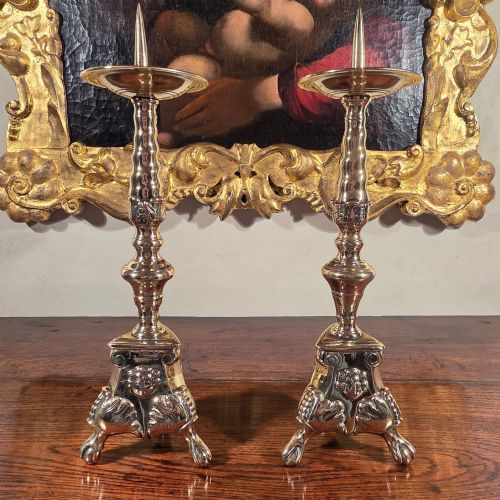
These tall brass pricket holder examples are substantial liturgical and decorative fixtures that anchor a room with vertical presence.
Tall Brass Pricket Holder
A tall brass pricket holder is a commanding candle stand designed to support tapers on a central upward-pointing spike rather than inside a socket. Buyers searching this phrase encounter substantial church candlesticks, altar appointments, and floor-standing fixtures dating from the eighteenth century through the mid-twentieth century.
The selections available here lean heavily toward nineteenth-century Victorian Gothic revival designs, alongside occasional eighteenth-century examples and turn-of-the-century Amsterdam School or Art Nouveau pieces. Forms range from heavy table candlesticks to imposing floor-standing candle holders fashioned in pairs or single monumental pieces.
Materials extend beyond pure brass to include bronze, copper, wrought iron, and mixed media incorporating hardwood or gilt metal accents. These pieces originate from domestic and ecclesiastical settings, reflecting both British and continental European craftsmanship across various historical styles.
Materials and construction
These items are constructed primarily from cast brass, bronze, and copper, often utilising heavy casting techniques to achieve stability for tall stems. Metal components are frequently turned, chased, or assembled from multiple joined sections to create multi-tiered bases and knopped shafts.
Mixed materials appear in specific periods, combining brass or bronze with wrought iron supports and hardwood elements to add structural weight and visual contrast. Surface finishes vary from polished bright metal to dark patinated bronze and aged copper.
Tall Brass Pricket Holder Retail Price Guide 2026
Typical asking prices for tall brass pricket holder among the pieces listed under this phrase on Sellingantiques today, from the lower quarter to the upper quarter. They describe what is for sale here now, not the wider market.
Several pieces combine heavy cast brass with unexpected wooden elements, proving that even liturgical metalwork occasionally needed a sturdy timber backbone.
Evaluating quality and proportion
Quality in a tall brass pricket holder rests upon the crispness of the casting, the balance of the proportions, and the integrity of the original components. Finer examples display deeply chased ornamentation and substantial metal thickness that prevents tipping.
The sophistication of the design dictates the tier, distinguishing standard ecclesiastical production from ambitious Gothic revival or Amsterdam School studio pieces. Surface patination and the presence of matching original drip pans or pricket spikes further separate standard items from superior specimens.
The Tall Brass Pricket Holder Glossary
- Pricket
- A sharp metal spike atop a candlestick designed to impale the base of a candle to hold it secure. This form predates standard socket holders.
- Gothic Revival
- An architectural and decorative style popular during the nineteenth century that revived medieval forms, pointed arches, and ecclesiastical motifs. It heavily influences Victorian church metalwork.
- Amsterdam School
- An architectural and artistic movement from the early twentieth century characterised by expressionist forms, traditional craftsmanship, and dynamic silhouettes. Pieces from this school often mix metals.
- Kknop
- A bulging, decorative knob or swelling on the stem of a candlestick that provides both visual weight and a secure grip. They are frequently turned or faceted.
- Drip pan
- A wide saucer-shaped disc positioned below the pricket spike to catch melting wax before it reaches the shaft or table surface.
Tall Brass Pricket Holder: Frequently Asked Questions
How do I clean a tall brass pricket holder?
Dust gently with a soft dry cloth to preserve the existing surface patination.
Avoid aggressive metal polishes that strip historical age and darken crevices permanently.
What is the difference between a socket and a pricket?
A socket holds a candle inside a cup-like receptacle, whereas a pricket uses an upward-pointing spike.
Pricket holders require candles with a pre-drilled base or rely on the spike piercing the wax directly.
Where were these floor candlesticks originally used?
Many tall examples served inside churches and chapels for altar lighting and ceremonial processions.
Later pieces also found places in large domestic entrance halls and grand reception rooms.
How do I date a brass candlestick?
Dating relies on examining casting seam lines, tool marks, base construction, and stylistic ornament.
Victorian Gothic revival pieces display distinct medieval motifs compared to cleaner twentieth-century Amsterdam School lines.