



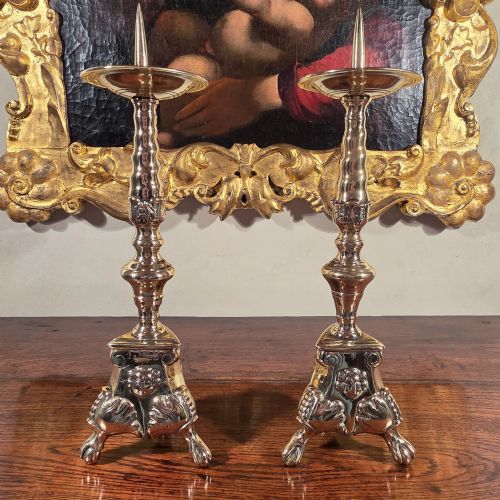
Tall Brass Light Stand
These tall brass light stand pieces span centuries of metalwork, offering striking vertical presence and functional illumination for any room.
Tall Brass Light Stand
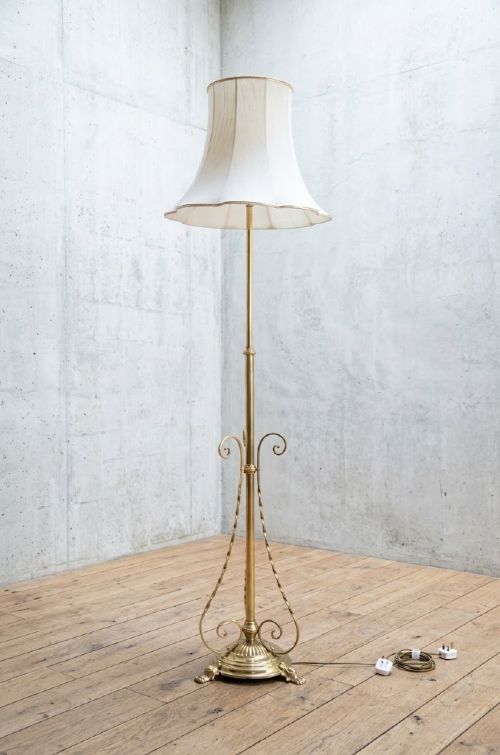
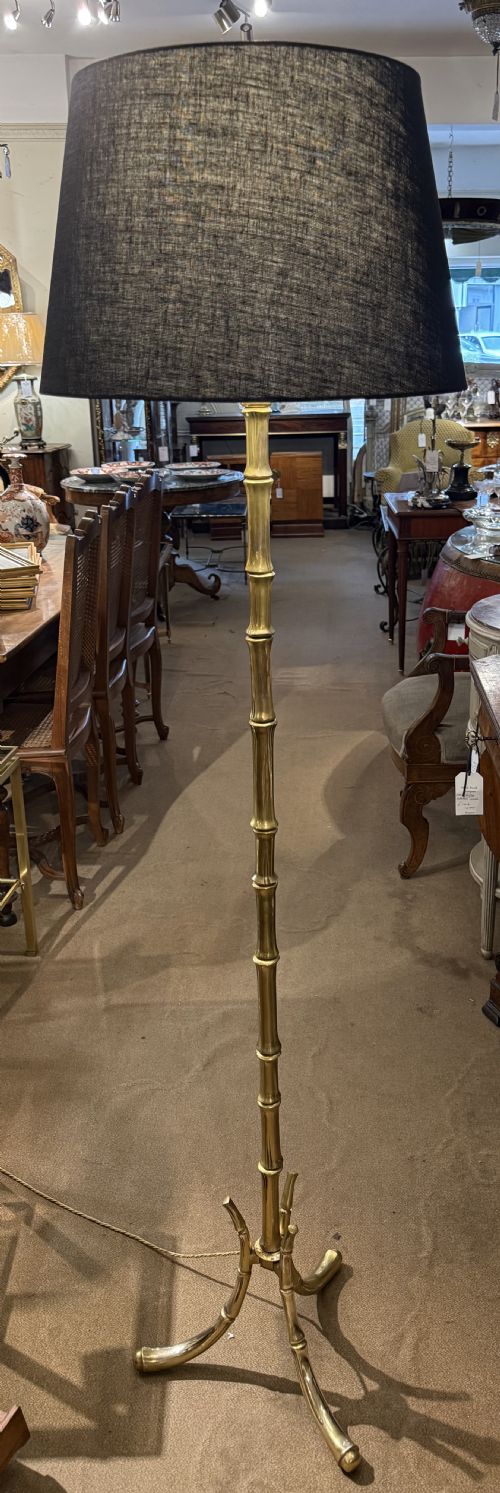
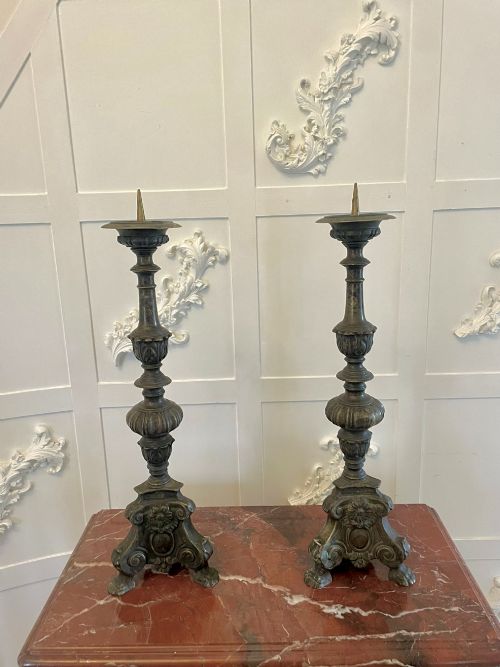
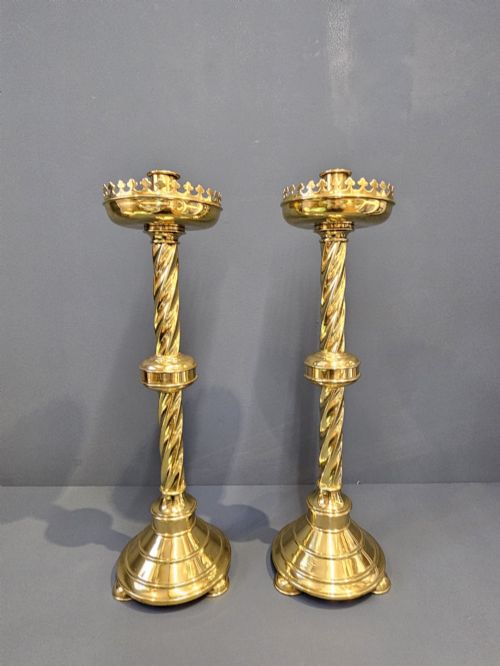
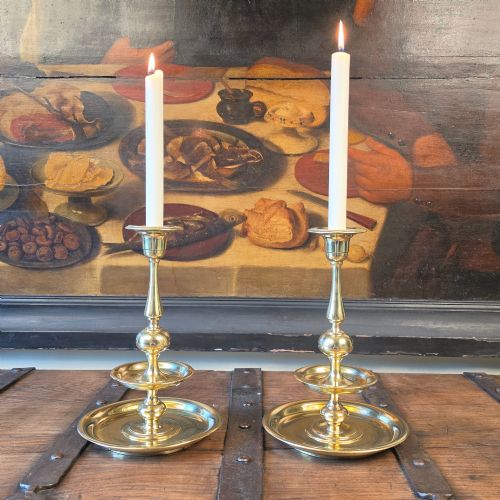
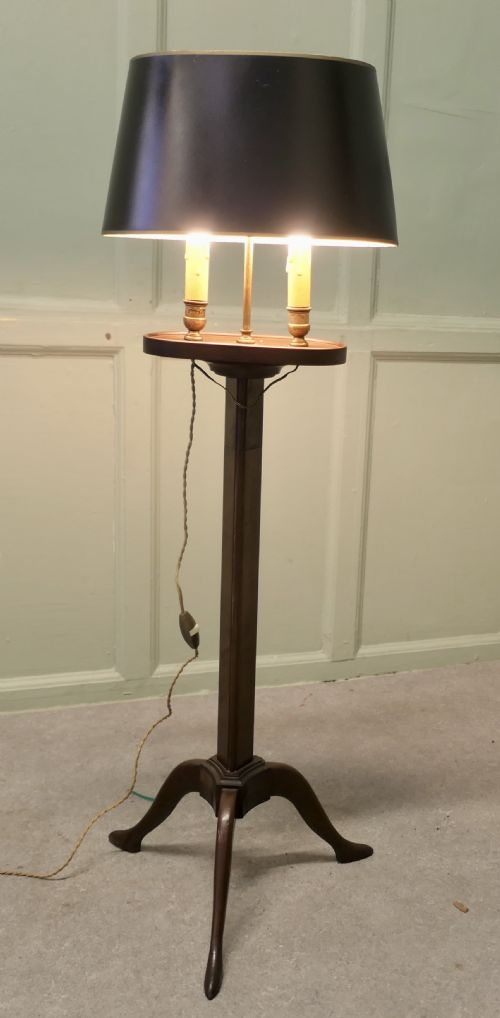
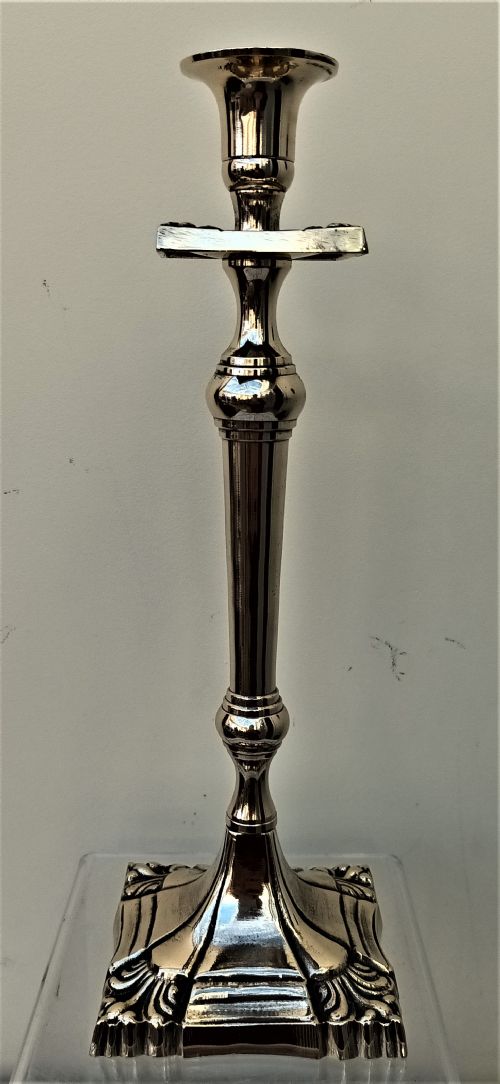
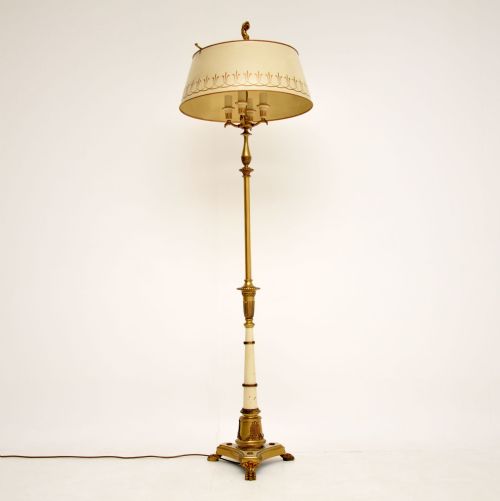
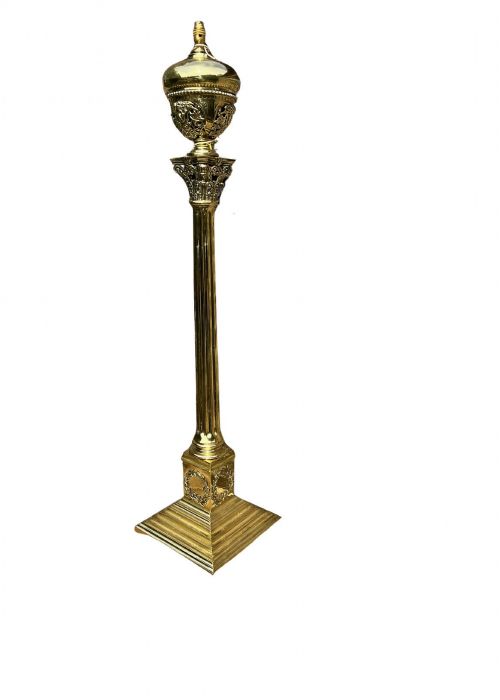
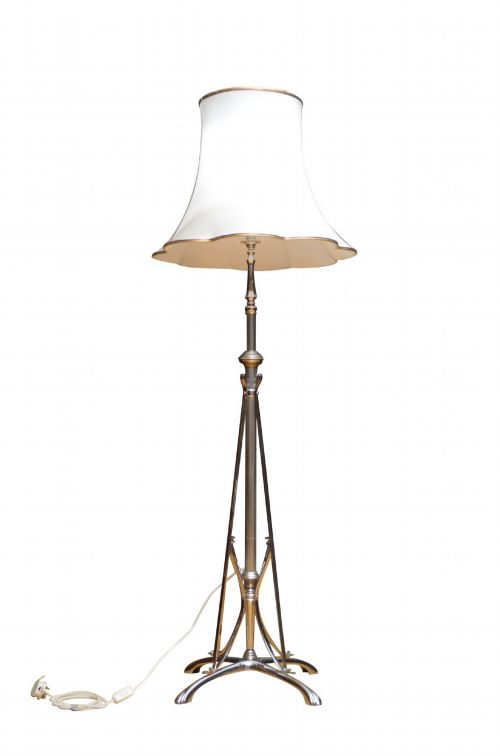
A tall brass light stand takes many forms across the centuries, appearing primarily as floor lamps, standard lamps, and towering church candlesticks. Buyers searching for a tall brass light stand will find examples ranging from Victorian Corinthian column designs to Arts and Crafts standards and ecclesiastical prickets.
The origins of these pieces stretch from English workshops to French studios and Dutch schools, spanning the Georgian, Victorian, and Edwardian periods. Floor lamps and adjustable standard lamps dominate the selection alongside paired altar candlesticks adapted for height.
Materials and Construction
Makers utilised cast and spun brass, often combining bronze, copper, and painted metal components to build rigid vertical shafts. Heavy bases provide stability for tall stems, while threaded joints and adjustable mechanisms allow height modification on specific standard lamps.
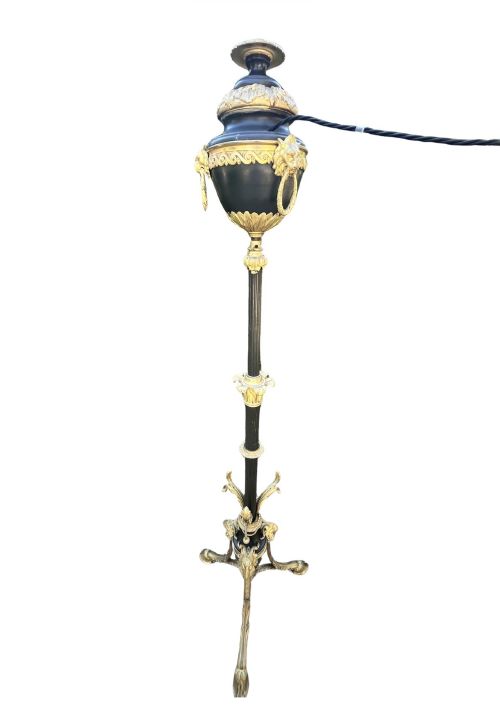
Surface treatments include polished finishes, dark patina, and gilt bronze applications. Seamed construction methods appear on older bronze and brass components, pointing to traditional foundry practices of the nineteenth century.
Masonic lodges commissioned tall decorated columns so secret that even the candlesticks needed extra height.
Design and Proportion
Quality rests in the heaviness of the metal gauge and the integrity of the proportions from base to capital. Superior examples show crisp casting detail on Corinthian columns or neoclassical motifs rather than soft, smoothed edges.
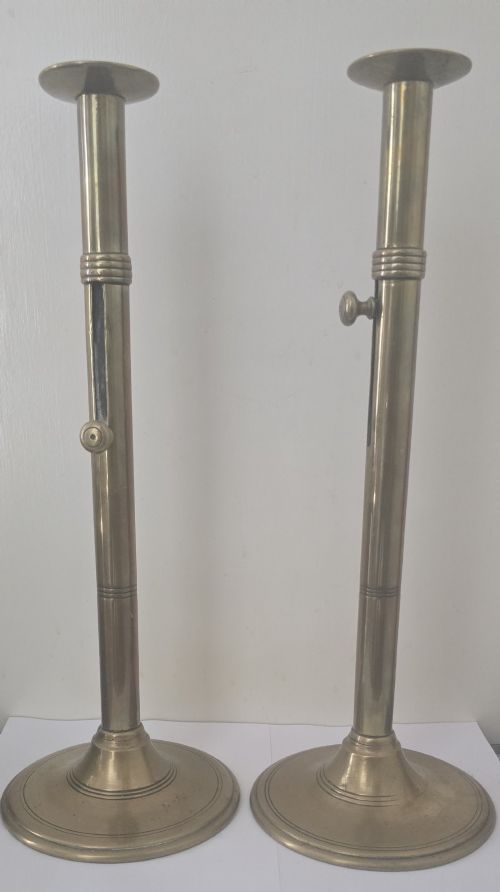
Mechanical elements such as side ejectors, screw keys, and adjustable stems operate with precision on better items. The weight distribution determines stability, separating solid pillar stands from lighter, more decorative alternatives.
Maison Bagues·James Clews
The Tall Brass Light Stand Glossary
- Pricket candlestick
- A candle holder featuring a central spike to secure a large wax candle rather than a socket. These spikes are commonly found on church and altar pieces.
- Corinthian column
- A classical architectural style applied to lamp standards and candlesticks, featuring an ornate capital decorated with acanthus leaves.
- Side ejector
- A small lever or push mechanism built into the side of a socket to lift the remaining candle stub. This device simplifies removal after use.
- Standard lamp
- A tall floor-standing lamp designed to illuminate a room from a raised position. They often incorporate weighted bases to support extended heights.
- Bouillotte lamp
- A shaded reading lamp originating in France, traditionally featuring adjustable twin candle arms mounted on a central metal shaft.
Tall Brass Light Stand: Frequently Asked Questions
How do I date a tall brass light stand?
Dating relies on stylistic clues such as neoclassical columns, Arts and Crafts motifs, or Victorian proportions. Manufacturing methods like seamed construction also point toward specific nineteenth-century decades.
Examining the wear patterns, screw types, and mounting techniques helps confirm the period of manufacture.
Were these originally made as electric lamps?
Many tall standard lamps began life as oil lamps or gas standards before conversion to electricity during the twentieth century. Earlier pieces started entirely as church candlesticks or floor candle holders.
Wiring updates are standard practice to allow safe domestic use while preserving the antique metalwork.
How do I clean a brass stand?
Routine maintenance involves gentle dusting with a soft cloth to protect the existing surface finish and accumulated patina. Harsh chemical polishes strip away age and character.
Keeping the metal dry prevents oxidation and preserves the historic tone of the brass.
Are church candlesticks stable enough for floor use?
Ecclesiastical candlesticks were built with heavy, wide bases designed to support tall candles securely on stone floors. Their substantial weight makes them well-suited as floor-standing decor.
Placement in low-traffic corners ensures stability in a modern room.