
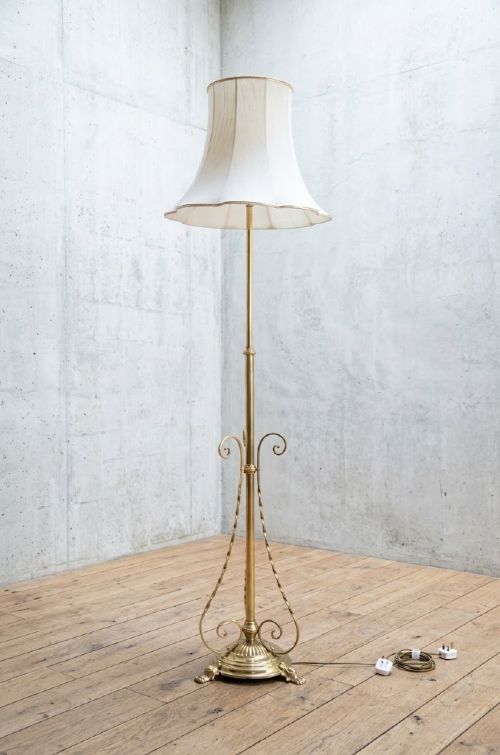
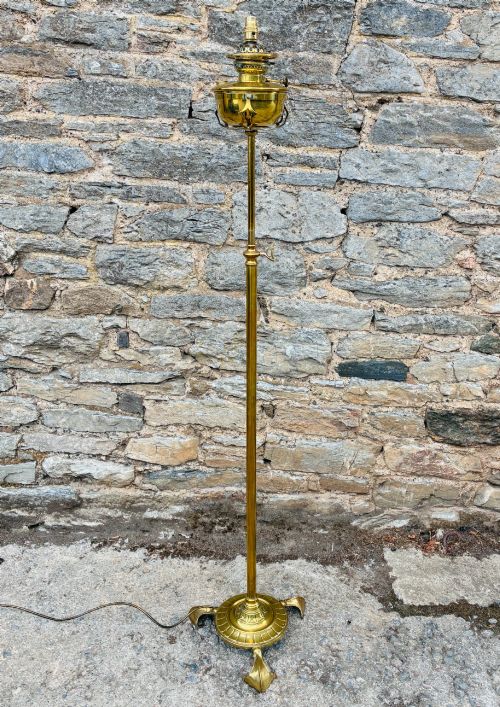
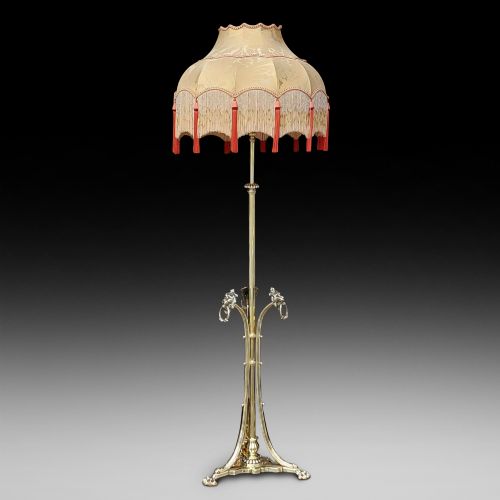
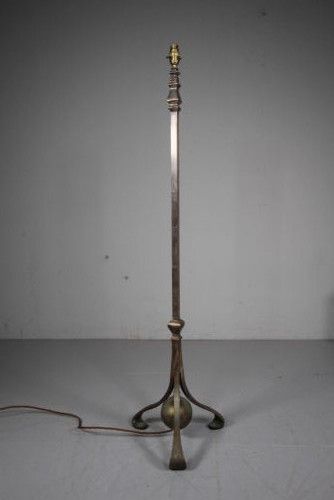
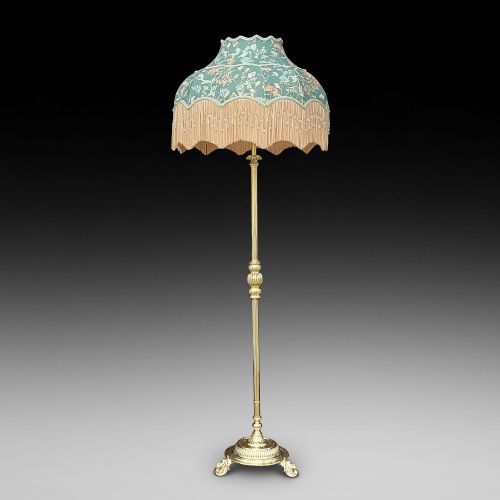
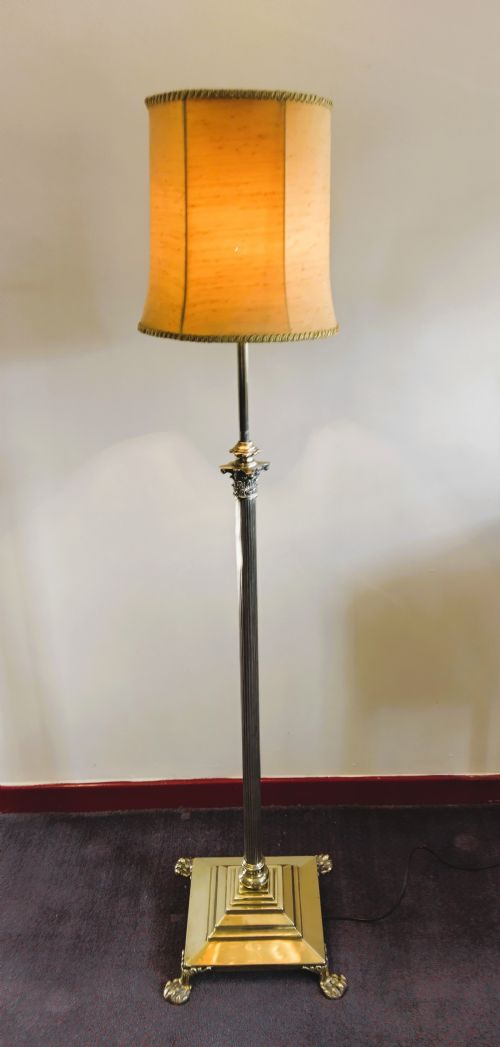


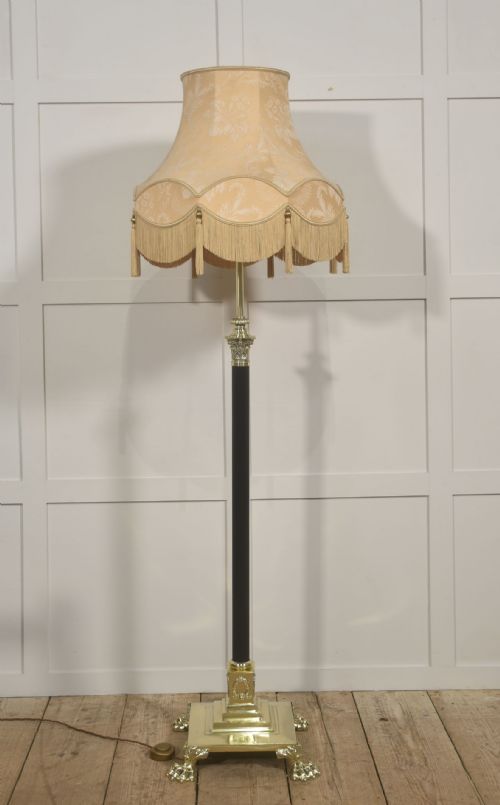


Adjustable Brass Standard Lamp
An adjustable brass standard lamp brings flexible, directed illumination and period character to a room through clever telescopic engineering.
Adjustable Brass Standard Lamp
An adjustable brass standard lamp is a tall floor-standing lighting fixture designed to alter its height or angle for reading and ambient tasks. When you browse this selection, you encounter pieces spanning from the Victorian and Edwardian eras through to the mid-twentieth century.
The most common formats on this page are telescopic brass columns and converted oil lamps, alongside distinctive Arts and Crafts and Art Nouveau designs. These floor lamps combine substantial metal stands with fabric or glass shades to anchor a corner of a traditional study or drawing room.
How they were made
Maker workshops utilised heavy brass, copper, and cast iron to build stable floor-standing bases that could support extended heights safely. Telescopic mechanisms relied on sliding inner tubes secured by thumbscrews or keys to adjust vertical reach.
Many survivors began as oil lamps with reservoirs and burners before being converted to electricity during later decades. Decorative details were cast, chased, or hammered by hand, pairing polished metal columns with marble, onyx, or earthenware elements.
Several heavy brass columns hide retired oil reservoirs inside, proving that past generations simply electrified what was already to hand.
What varies in quality
The distinction between standard production and finer pieces lies in the weight of the casting and the crispness of decorative motifs like Corinthian capitals or organic plant stems. Substantial gauge brass and weighted bases provide superior stability when the lamp is fully extended.
Engineering precision in the telescopic action also dictates worth, as smoother sliding mechanisms and secure locking keys demonstrate superior workshop execution. Finer examples retain integrated switches, original burners, and well-balanced proportions that prevent tipping.
W A S Benson
The Adjustable Brass Standard Lamp Glossary
- Telescopic
- A design featuring nested sliding tubes that allow the overall height of the standard lamp to expand or contract. This mechanism uses a key or screw to lock the upper shaft at the desired level.
- Standard lamp
- A traditional British term for a floor-standing lamp that positions a light source above seated height. They often include weighted bases to support heavy shades and extended reach.
- Corinthian column
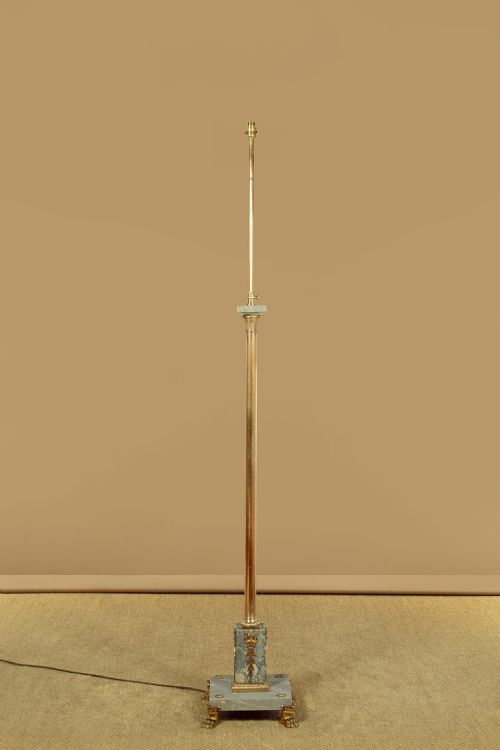
- An architectural column style featuring ornate, leaf-carved capitals often cast in brass for formal Victorian and Edwardian lamp standards. It provides a classical silhouette inspired by ancient stone architecture.
- Bouillotte lamp
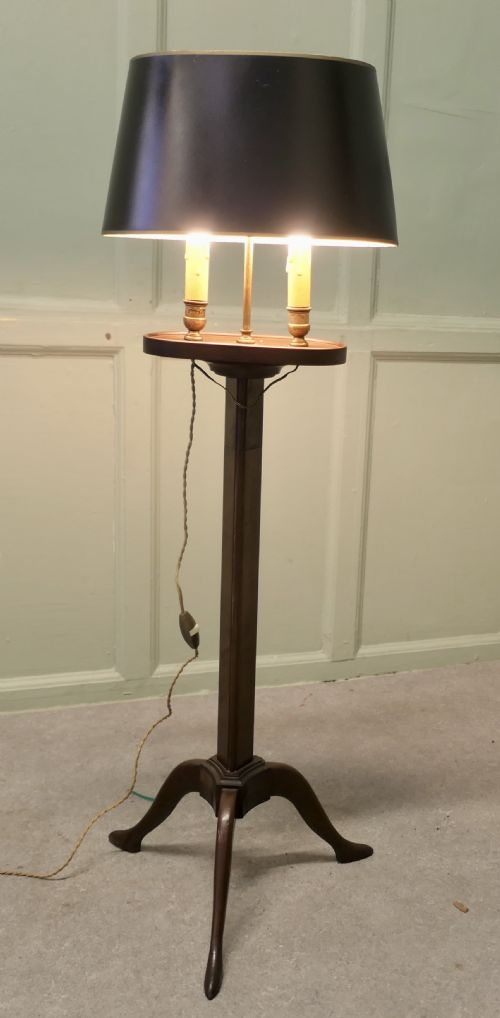
- A traditional table or floor reading light featuring multiple candle arms or a central stem beneath an adjustable shade. These designs originated in France for card games and desk work.
- Arts and Crafts
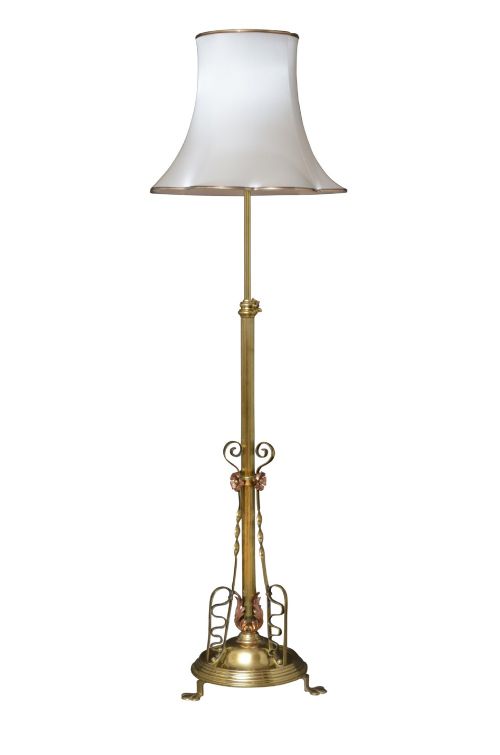
- A design movement prioritising visible craftsmanship, honest materials, and simple functional forms over mass-produced ornamentation. Lamps from this tradition often display hammered copper or straightforward brass tripod legs.
Adjustable Brass Standard Lamp: Frequently Asked Questions
How do I adjust the height safely?
Most models use a sliding inner shaft secured by a side thumbscrew or key. Support the upper section with one hand while loosening the fastener to prevent sudden drops.
Tighten the mechanism firmly once you reach the preferred height, and ensure the power cord has enough slack to move freely without straining internal wiring.
Were these originally electric?
Many Victorian and Edwardian examples started life as oil lamps featuring brass reservoirs, burners, and chimneys. These were subsequently converted to run on electricity during the twentieth century.
Converted pieces often retain their original wick keys and burner galleries, blending historical oil lamp mechanics with modern electrical safety fittings.
How do I choose the right shade?
Select a shade that matches the proportions of the heavy brass base and the period style of the standard lamp. Traditional Edwardian and Victorian designs often suit pleated silk or fabric empire shades.
Consider the drop of the lamp when fully extended to ensure the light source sits at a comfortable height for reading without glaring directly into seated eyes.
How do I date a brass standard lamp?
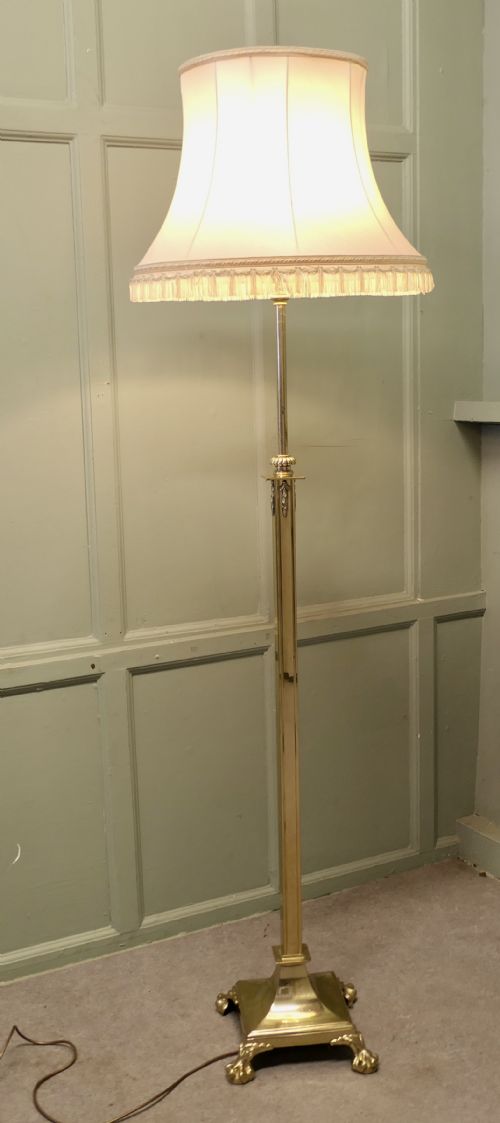
Examine the base styling, manufacturing techniques, and switch types to establish an approximate period. Corinthian columns and heavy stepped bases typically point to late nineteenth-century Victorian or Edwardian production.
Art Nouveau and Arts and Crafts examples display characteristic whiplash curves or hand-hammered copper surfaces dating from around nineteen hundred to the nineteen twenties.