




Tall Brass Altar Candlesticks
Tall brass altar candlesticks bring monumental vertical presence and ecclesiastical gravitas into a room, forged primarily during the Victorian and Gothic Revival periods.
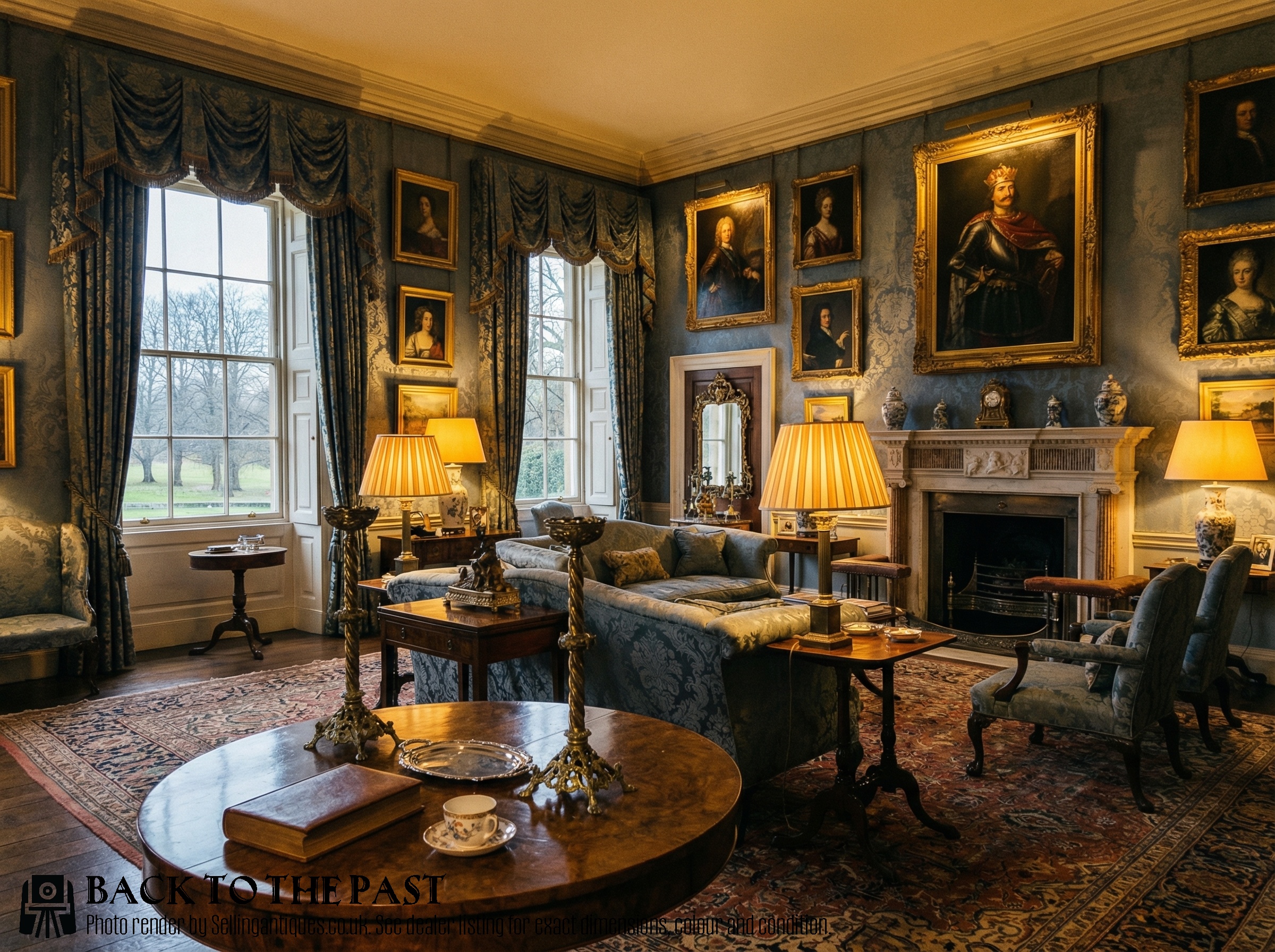
Tall Brass Altar Candlesticks
When you search for tall brass altar candlesticks, you encounter monumental church and ecclesiastical lighting designed for sacred spaces. These pieces stand significantly higher than domestic table lighting, commanding attention through sheer scale and proportion.
The selection here is dominated by Victorian and nineteenth-century examples, alongside earlier Georgian iterations and later twentieth-century interpretations. Most survive in matched pairs, though single items and graduated sets also appear.
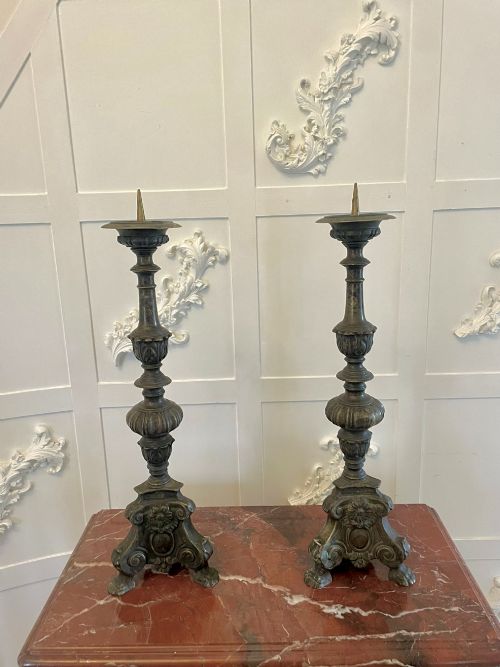
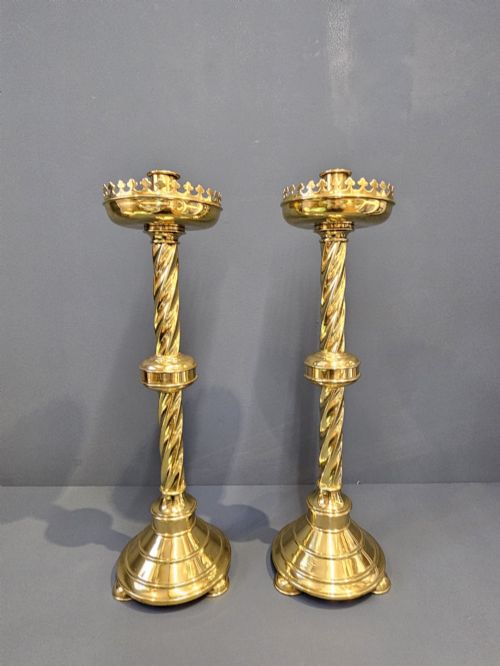
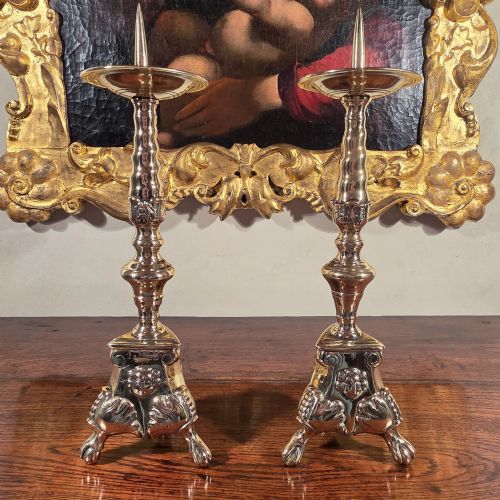
Forms range from strict Gothic Revival designs to elaborate Baroque styles and Amsterdam School variations. You will find standard socket designs alongside pricket candlesticks that impale the candle directly onto a central spike.
Materials and Construction Methods
The primary material is heavy cast and spun brass, often complemented by bronze, wrought iron, and occasional wooden elements. Founders utilised traditional casting techniques to create substantial bases, stems, and drip pans designed to support heavy candles safely.
Surface treatments vary from polished finishes to painted metal and gilt metal enhancements. Structural integrity relies on thick-gauge metal components assembled to bear considerable weight without listing.
Listings span the eighteenth, nineteenth, and twentieth centuries, uniting Georgian, Victorian, Gothic Revival, and Amsterdam School aesthetics.
Distinctions in Quality and Execution
Quality rests in the crispness of the casting detail and the heft of the metal used in the shaft and base. Superior examples exhibit deeply chased ornamentation, well-proportioned Corinthian or ecclesiastical capitals, and firm, stable bases.
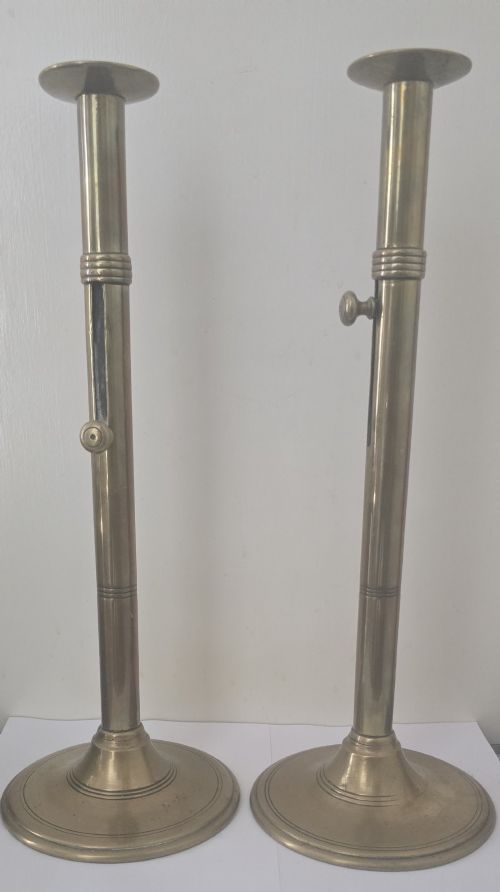
Lesser items show softer casting lines, lighter gauge metal, or clumsy later adaptations into table lamps. The presence of original side ejectors, prickets, or matching graduated heights elevates the desirability of a pair.
The Tall Brass Altar Candlesticks Glossary
- Pricket
- A sharp metal spike on top of a candlestick designed to hold a candle with a recessed base. This form is common in ecclesiastical pieces.
- Side ejector
- A mechanical lever or slot on the side of a socket used to push up the remaining candle stub. Georgian examples frequently feature this mechanism.
- Gothic Revival
- An architectural and decorative style popular in the nineteenth century featuring pointed arches and medieval motifs. Many ecclesiastical candlesticks adopt this aesthetic.
- Corinthian column
- A classical column style featuring ornate capitals decorated with acanthus leaves. Several Masonic and ecclesiastical candlesticks utilise this specific column form.
- Amsterdam School
- An architectural and decorative arts style from the early twentieth century characterised by expressionist forms and rich detailing. Pieces from this movement offer a distinct departure from strict Victorian revivalism.
Tall Brass Altar Candlesticks: Frequently Asked Questions
What is a pricket candlestick?
A pricket candlestick uses a sharp metal spike instead of a traditional socket to secure the candle in place. This design has ancient roots and was standard in churches.
Altar candles made for these spikes featured a hollow recessed base that rested directly upon the point.
How do I date these candlesticks?
Dating relies on stylistic clues such as the heavy ornamentation of Victorian Gothic Revival pieces or the clean lines of Georgian designs. Material composition and casting methods also help place an object in the eighteenth or nineteenth century.
Maker marks, where present, provide further clues, though many ecclesiastical pieces remain unsigned.
Were these used in homes?
While originally forged for churches, chapels, and Masonic lodges, these tall candlesticks were frequently repurposed for domestic interiors. Their grand scale makes them striking decorative objects for large mantels, sideboards, or hallways.
Some examples were later converted into table lamps to suit modern living spaces.
How do I clean antique brass?
Antique brass benefits from gentle dusting and minimal intervention to preserve its historic patina. Aggressive polishing removes the aged surface that collectors value.
Consult a specialist before applying any chemical cleaners to fragile gilt metal or painted surfaces.
What distinguishes church candlesticks from domestic ones?
Church candlesticks are substantially taller and heavier than domestic lighting, built to be viewed from a distance in large stone interiors. They often incorporate theological motifs, pricket spikes, and robust triangular or stepped bases.
Domestic candlesticks from the same eras are scaled for intimate rooms and tables.